
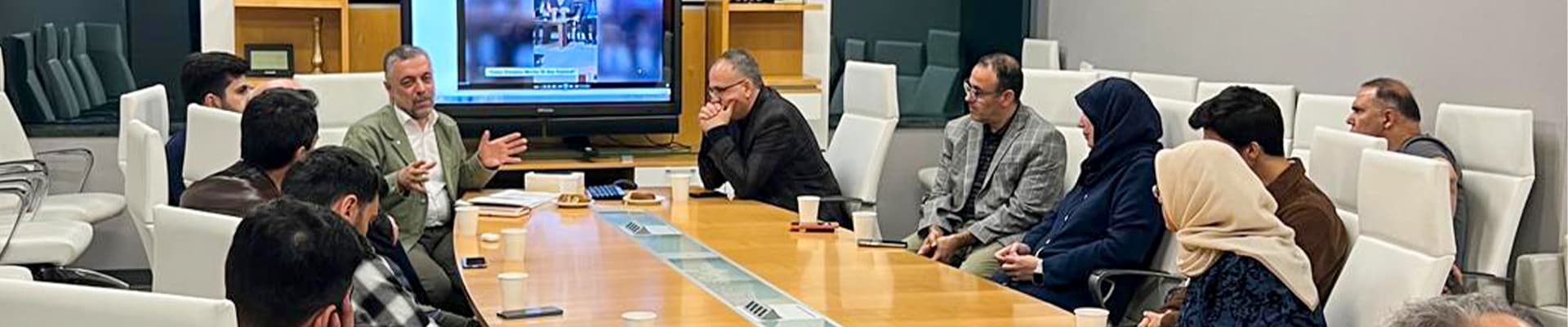
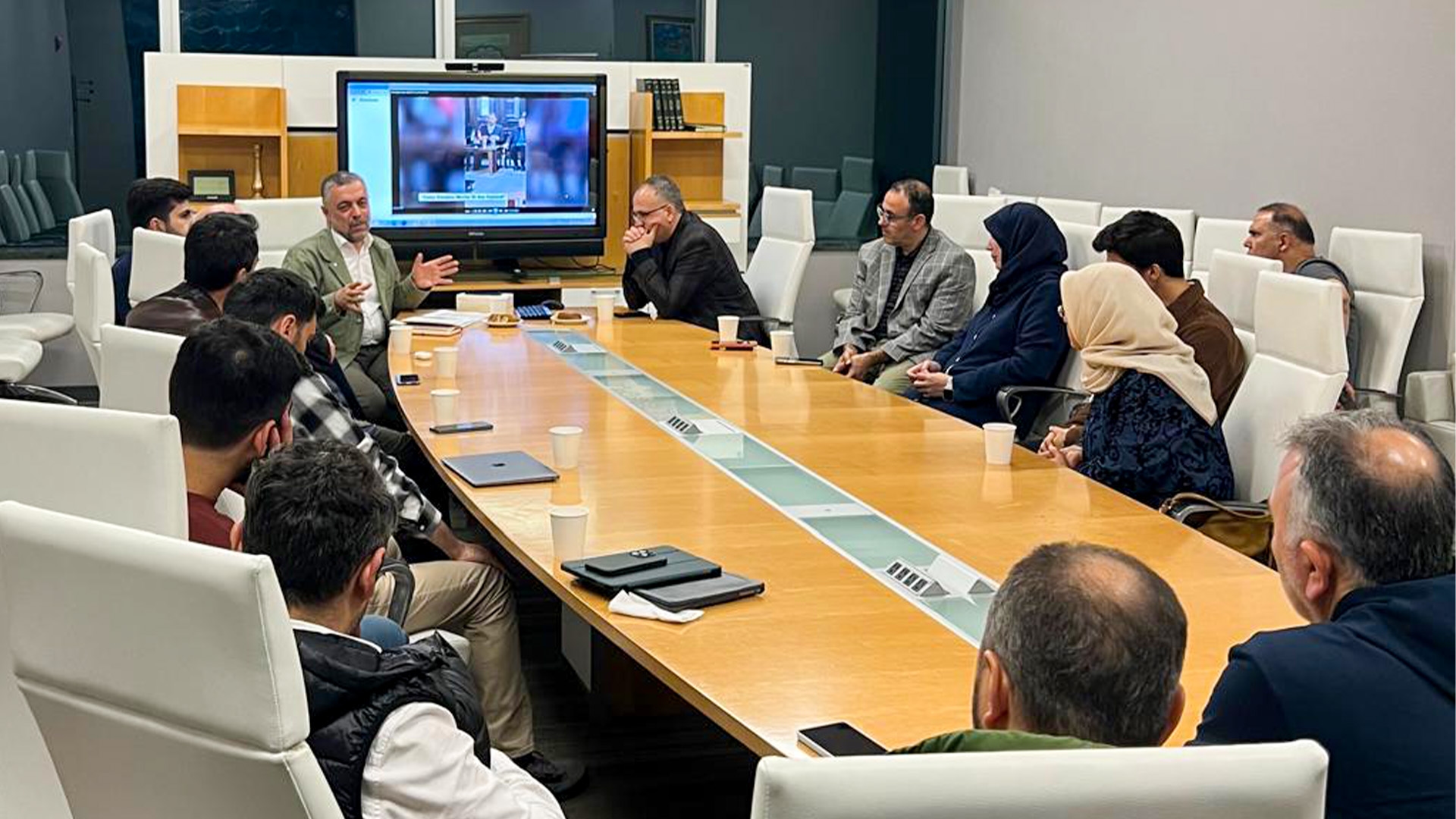
Turgay Aldemir’s speech at the Strategic Negotiation session on Civil Diaspora and Syria:
I. THE DESTINY AND GRIEF OF A GEOGRAPHY
Relations between Turkey and Syria are based on a deep-rooted historical and cultural integrity that extends beyond the political borders that emerged in the modern era. The social interaction, shaped especially on the Gaziantep-Aleppo axis, developed over centuries through shared trade networks, religious practices, daily life culture, and mutual forms of social solidarity, becoming one of the fundamental elements defining the identity of the region. For this reason, the crisis in Syria should be evaluated not merely as a humanitarian and political transformation in a neighboring country, but as a process that directly affects Turkey’s historical memory, cultural continuity, and regional social ties.
The meaning of Aleppo for Gaziantep carries the characteristic of an "urban twinship" shaped through shared life practices and cultural proximity, beyond an economic partnership. The borders drawn later in the region did not eradicate the shared memory and cultural interaction formed between the two societies over centuries; on the contrary, it made the sociological depth of these bonds more visible. Cities like Damascus, Aleppo, and Idlib represent a domain of brotherhood woven with shared faith, shared rituals, and shared cultural codes for a significant segment of Turkish society, rather than a foreign geography.
When we evaluate the effects of the Syrian crisis on the regional social structure, the historical continuity on the Gaziantep–Aleppo line, and the humanitarian, economic, and cultural dynamics emerging in this context:
1. Pre-War Portrait: Ancient Heritage and Strategic Nexus
Syria is not just a state in the Middle East; it is a nexus where the abundance of the Mediterranean, the security of Anatolia, and the ancient knowledge of Mesopotamia converge. Under Ottoman administration, Aleppo was the third largest and most strategic city of the empire after Istanbul and Cairo. As a "caravan city," Aleppo was a center where not only commodities but also cultures and religions blended. The "elegance and cleanliness" that Alexander Russell spoke of with admiration when he visited the city in the 18th century was actually a physical reflection of the "law of coexistence" in the region.
The strategic value of Syria is not limited only to its location on the Silk Road. This place is a "center of balance" where the regional order has been established or destroyed throughout history. In pre-regime Syria, there was a structure in which different faith groups lived by respecting each other's rights within a neighborhood culture. The bazaars (Souk) of Aleppo were places where Muslim, Christian, and Jewish merchants were subject to the same guild rules, and social peace was cemented with commercial ethics. This ancient structure was the cornerstone constituting the "asabiyyah" (spirit of social solidarity) of Syria.
2. The Devastation of Ba'ath: Weaponization of Diversity and Social Alienation
This immense ethnic and religious diversity possessed by Syria (Sunni, Alawite, Druze, Christian; Arab, Kurdish, Turkmen, Syriac) was transformed from a wealth into a "mechanism of governance and division" in the hands of the Ba'ath regime. Institutionalized since the 1960s, the Ba'ath ideology took society captive with "securitization" policies. Under the pretext of protecting minority rights, the regime established a "balance of fear" that actually provoked the entire society against each other.
Civil structures and religious communities, which are the natural dynamics of society, were forced to become pieces of the regime's intelligence (Mukhabarat) network. That "Ottoman urban peace," which is our shared historical heritage, was replaced by a rigid centralism and loyalty tests. The resistance shown by Aleppo against the French mandate in the 1920s and the local movement led by Ibrahim Hananu demonstrate how deep a vein the people of Syria actually possess for freedom and dignity. However, to dry up this noble vein, the Ba'ath regime placed every field from property rights to the education system into an ideological vice. People were rendered unable to trust each other or speak their true thoughts in the public sphere. A process of sociological "introversion" was initiated, which was the greatest harbinger of the approaching storm.
3. The Turning Point: The Cry of Daraa and the Regime's Choice of Brutality
By the year 2011, when the wave of "dignity and freedom" engulfing the region knocked on Syria’s door, the picture encountered was not a civil demand but a process of destruction initiated by the regime. The process, which began in Daraa with the pulling out of the fingernails of children who merely wrote freedom songs on the school wall, was the last drop for the patience of the Syrian people. The situation of "the trampling of human dignity," which we frequently emphasized in the Bülbülzade and BEKAM reports, appeared here as a state policy.
The regime responded to the people’s demand for prosperity and liberty not with reform, but with tanks, barrel bombs, and systematic massacres. The cry rising from Daraa spread in a short time to Homs, Hama, and finally to that ancient Aleppo. For the Syrian people, this was not just a desire for political change, it was a struggle for existence. In order to protect its power, the Ba'ath regime took the risk of turning the cities of Syria into ruins. The thousand-year-old architectural texture and sociological depth of the cities were sacrificed for the survival of the regime. This process, which began with peaceful demonstrations, evolved into one of the bloodiest and most complex civil wars in history due to the regime's conscious provocations and the imposition of "either me or chaos." After this point, there was no turning back; the path to dawn for the Syrian people would be paved with great sacrifice and migration.
The Syrian people gave approximately 1 million martyrs for the sake of freedom, and from 2011 until the collapse of the regime, more than 900 thousand Syrians were imprisoned, some of whom were martyred in dungeons.
II. PROXY WARS AND THE BANKRUPTCY OF GLOBAL CONSCIENCE
The conflict process that started in Syria in 2011 quickly ceased to be a local internal matter and transformed into a multi-layered geopolitical crisis in which international powers became involved. Global actors viewing the region as an area of strategic competition turned Syria into a laboratory where new military technologies were tested and power balances were trialed. In this process, those who bore the heaviest burden of the conflict were civilians; children, women, and settled populations became the direct targets of the war.
In terms of Turkey, developments in Syria are evaluated not only in the context of regional security but also through historical and social proximity. The humanitarian crisis experienced on Turkey’s southern border made the sense of historical responsibility, defined as the "law of neighborliness," visible again; these historical ties have been decisive in shaping humanitarian and social policies toward the region. In a period when international actors treated the region as a strategic chessboard, Turkey’s approach developed mostly on the axis of humanitarian security, civilian protection, and social solidarity.
It is also necessary to discuss the internationalization process of the Syrian crisis, its effects on civilians, and the humanitarian approach developed by Turkey on the basis of historical-social ties, along with how the conflict transformed the regional social fabric and how Turkey–Syria relations were redefined in this process:
1. Guardians of the Regime: Blood-Fed Geopolitical Support
The Syrian people’s cry for liberty hit not only the walls of the Ba'ath regime but also the interests of regional and global actors. Iran and Russia did not merely provide political support to the regime to suppress the legitimate demands of the people; they personally established a logistical and military umbrella that watered every inch of the field with blood. While Russia hit civilian settlements, hospitals, and bakeries from the air with its direct intervention in 2015; Iran became the architect of demographic change and sectarian violence on the ground with the militia forces it dispatched to the region.
The point we need to draw attention to here is that this support was not a "state defense" but a "liquidation of the people." These powers behind the regime aimed to establish a loyal minority hegemony by depopulating Syria. For Russia, the survival of bases in the Eastern Mediterranean, and for Iran, the expansionist corridor under the name of the 'resistance line' were deemed far more valuable than the life of a Syrian orphan. This is the most organized and ruthless "regime rehabilitation" project that modern history has witnessed.
2. The Western "Spectator" Seat: A Collapsed Compendium of Values
So, what did the West do, which leaves the advocacy of democracy and human rights to no one? Unfortunately, the USA and European countries fell into the position of mere "statistic keepers" and "spectators" in the face of the Syrian tragedy. The Western world read Syria not as a human rights issue, but merely as a "security and migration control" problem. They did not fear the children suffocating from chemical weapons as much as they feared the migration wave that would knock on their own borders.
Throughout the process, "red lines" were declared, but those lines were violated with the blood of the innocent every time, and no concrete step came from the West. For them, Syria was merely a buffer zone where extremism needed to be curbed. Humanitarian values were crushed between the gears of realpolitik interests. This silence was in nature a tacit approval that legitimized the massacres of the regime and its supporters. While Geneva processes were consumed at tables, hundreds of people were falling into the ground every day on the field.
3. The PYD/YPG and DAESH Equation: The Delusion of Disciplining One Terrorist Organization with Another
The biggest blow dealt to the future of Syria, which made the war chronic, is the dirty partnership that the USA carried out under the name of "fighting DAESH." The strategy of destroying one terrorist organization (PYD/YPG) with another terrorist organization (DAESH) opened irreversible wounds in the region. As SETA revealed with scientific clarity in its "The Syrian Structure of the PKK" reports; the intense weapons, ammunition, and intelligence support provided by the USA made the PYD a "proxy power" in the region.
This situation is not just a security matter; this is an assassination carried out against Syria’s territorial integrity and sociological fabric. Not allowing the public to return to regions cleared of DAESH, the expulsion of Arabs and Turkmens from their ancient homelands, and the effort to create a "terror corridor" in the region are the main factors that prolonged the war for at least another ten years. While the West created its own "useful apparatus" on the ground, it marginalized the revolution and legitimate opposition of the Syrian people. The biggest obstacle before the confusion we see on the field today and the people’s search for justice is precisely this effort of "design through terror."
III. TURKEY’S HUMANITARIAN DIPLOMACY AND THE SAFE ZONE
1. Open Door Policy: The Conscience Burden of the World and Turkish Hospitality
From the first day of the war, Turkey became a sanctuary for millions fleeing death with the "Open Door Policy." According to the data of the Ministry of Interior Directorate General of Migration Management, we are currently in the position of the country hosting the highest number of refugees in the world. However, beyond a numerical success, this is a sociological miracle. In an era where Western countries experience political crises and build walls along their borders in the face of a few thousand refugees; Turkey integrated 4 million people into its body without allowing social chaos.
In this process, while our Red Crescent, AFAD, and other Non-Governmental Organizations established the world's most modern temporary accommodation centers along our border lines; our civil structures, such as the Bülbülzade Foundation, reinforced this hand of compassion extended by the state with a civil spirit. The field research conducted by BEKAM on the "Culture of Living Together" shows that Turkey did not only share its bread during this process, but also built a vision of a "shared future." This is not just migration management; it is an immense movement of "human revitalization" standing against "human degradation."
2. Field Operations: From Counter-Terrorism to a "Life Corridor"
The Euphrates Shield, Olive Branch, and Peace Spring Operations carried out by Turkey were frequently attempted to be presented by the international media merely as military operations. Yet, we know that the real objective of these operations was to open a lifeline for the civilian population groaning under the vice of terrorist organizations. Turkey, which did not allow the establishment of a "terror state" right beyond our border, also created the opportunity for a "safe return" for hundreds of thousands of Syrians fleeing the tyranny of DAESH and the PKK/PYD.
These operations are humanitarian development moves in addition to regional security. Thanks to the operations, people whom terrorist organizations expelled from their villages by conducting demographic engineering found the opportunity to return to their own lands, olive groves, and homes again. Turkey, crowning this military success with a diplomatic victory, transformed northern Syria into an "island of peace" purified from the proxy wars of global powers.
3. Reconstruction Process: Revitalization of the 30-Kilometer Safe Line
Our safe zone strategy does not consist merely of drawing a military line. This line with a depth of 30 kilometers is the name of a life flourishing again today with its schools, hospitals, bakeries, and market places. Under the coordination of our Governorates in the region and with the support of our non-governmental organizations, local councils were established in these regions, and civil governance mechanisms began to be operated.
As we personally witnessed as the Bülbülzade Foundation; today, thousands of children continue their education life in these regions, finding healing in hospitals established by the Turkish Red Crescent. Turkey has not only ensured border security; at the same time, by implementing the on-site accommodation model, it prepared the ground for people to establish a dignified life in their own homeland.
According to UN estimates, the number of those returning from abroad reached 1.5 million, but due to the absence of destroyed houses and lack of services, the process still needs to be supported.
A similar humanitarian shield was formed in Idlib, which is protected as a de-escalation zone. While this 30-kilometer line kept terror hubs like the PYD and DAESH away from our country in those days, it also meant a "second chance" for millions of Syrian civilians. Right now, we are not just raising buildings there; we are building hope, justice, and the future of Syria.
IV. SOCIAL COHESION AND INTELLECTUAL INVESTMENT
1. Activities of NGOs in the Field of Education and Culture: Building a Future
The most painful toll of the crisis in Syria is the danger of "lost generations" that does not fit into statistics. As the Bülbülzade Foundation and BEKAM, we set up a barricade against this danger with academic meticulousness and civil enthusiasm. We viewed our educational activities not merely as curriculum transmission, but as the construction of "identity and belonging." With the projects we carried out in the safe zone and in Turkey, we prevented the pencil-holding hands of tens of thousands of children from holding weapons.
The "Social Cohesion" books and curriculum studies prepared by BEKAM reinterpreted the ancient brotherhood of the two peoples with the language of modern sociology. These studies were not just an effort to save the day; they were an attempt to prepare the intellectual infrastructure of the engineers, doctors, and teachers who will rebuild Syria tomorrow. The cultural and educational centers we opened in northern Syria do not only teach mathematics to children; they instill in them the morality of justice, liberty, and living together.
2. From Safe Zones to Aleppo and Damascus: Culture Centers and Bridges of the Heart
Our horizon is not confined only to the border line. The culture centers opened in the safe zones of Syria (Afrin, Azaz, Al-Bab, Jarabulus) under the leadership of the Bülbülzade Foundation are like oases. These centers disperse the grey color of war with art, literature, and thought. However, our real goal is to carry this civil vein back to those ancient bazaars of Aleppo and the Umayyad-scented streets of Damascus.
Our culture centers opened/planned to be opened in Aleppo and Damascus are, as we mentioned at the beginning of our speech, a project to revive the "Aleppo elegance." Combining the resistance spirit of Ibrahim Hananu with the aesthetic understanding of the Prophet, these centers take the intellectual memory of Syria under protection. These spaces are podiums of liberty where Syrian intellectuals, youth, and artists come together to envision the "New Syria." We did not just open a foundation branch there; we restrengthened the pillars of a thousand-year-old bridge of civilization.
V. THE DECEMBER 2024 REVOLUTION AND THE NEW SYRIA
1. People’s Revolution and a New Social Contract
The collapse of the Ba'ath regime as of December 8, 2024, is not just a change of power, but a revolution of mentality. The works we carried out on the ground after the revolution show that the Syrian people gave the best answer to sectarian and divisive policies with the unifying stance they displayed on the field. The speed of the people establishing their own local governments in Damascus, Aleppo, Homs, and Hama proved to the world that Syria possesses a civil maturity.
Bashar al-Assad fled to Moscow with billions of dollars and gold, the state was taken over in a failed state model with "zero treasury," and while 65% of the infrastructure was destroyed, the Revolutionaries initiated a humanitarian approach saying "Go, you are free" instead of revenge, and the High Committee for Transitional Justice established to manage this process started to work.
In this process, Turkey prevented the revolution from turning into chaos through the wise diplomacy it conducted with the actors in the region, ensuring that the transition process remained within a humanitarian framework. This is the rebirth of Syria from its own ashes. Now before us, there is not a mass ruled by an "empire of fear"; there are "free agents" who establish their own neighborhood council, ensure their own security, and claim their future.
2. Future Vision: Reconstruction Under the Guidance of Turkey
The role of Turkey in the political, economic, and cultural restructuring of the New Syria is to be a 'guide' and 'companion', not a 'guardian'. The greatest motivation for the dignified and voluntary return of our Syrian brothers is "trust and stability." Turkey possesses the necessary experience to spread the municipal, educational, and health models it created in safe zones over the past years to the entire surface of Syria now.
The modern political parties law, media law, and the "code of conduct" prepared for media workers, enacted for the construction of law and not just buildings, are of importance for the future vision. As an Economic Diplomacy success, lifting the "Caesar Act" sanctions and paving the way for foreign investors with the support of Turkey, Qatar, and Saudi Arabia is a critical achievement.
It should be noted as hot agenda items that the new administration needs to solve: Israel taking advantage of the vacuum in the revolutionary process to occupy the buffer zone in Quneitra, the process of clearing the remnants of the SDF/PKK, and the efforts carried out for the integration of the Druze in Suwayda into the state.
In the cultural sense, the restoration of that ancient texture of Damascus and Aleppo; and in the economic sense, the integration of the production potential of Syria with the industry of Gaziantep, Hatay, and Şanlıurfa will create a regional development miracle. Our vision is a Syria where universities are autonomous, the rule of law is ensured, and the Aleppo Bazaar regains its old joy.
3. A Historic Call to NGOs: "From Relief to Development"
From here, I call out to all national and international civil society representatives: We must now close the parenthesis of "emergency relief" and pass to the page of "sustainable development." Just delivering bread is not enough; we must build the bakery that will produce that bread, the energy that will operate that bakery, and the universities that will train the engineer who will establish that energy system.
The fact that the resources required for the reconstruction process exceed 600 billion dollars should not be ignored, highlighting the magnitude of the burden on the shoulders of NGOs.
International civil society must take responsibility in strengthening civil institutions and building justice mechanisms in Syria. People want to return not just to a house, but to a future. To build this future, we must establish a new "construction site" that unites academia with civil society, and the bureaucracy with the people. The strategic plans we prepared as the Bülbülzade Foundation and the experience we gained on the field are at your service. Come, let us raise Syria up together, not only physically, but also spiritually and mentally!