Logo

OUR ACTIVITIES

Bülbülzade Foundation Promotional Film

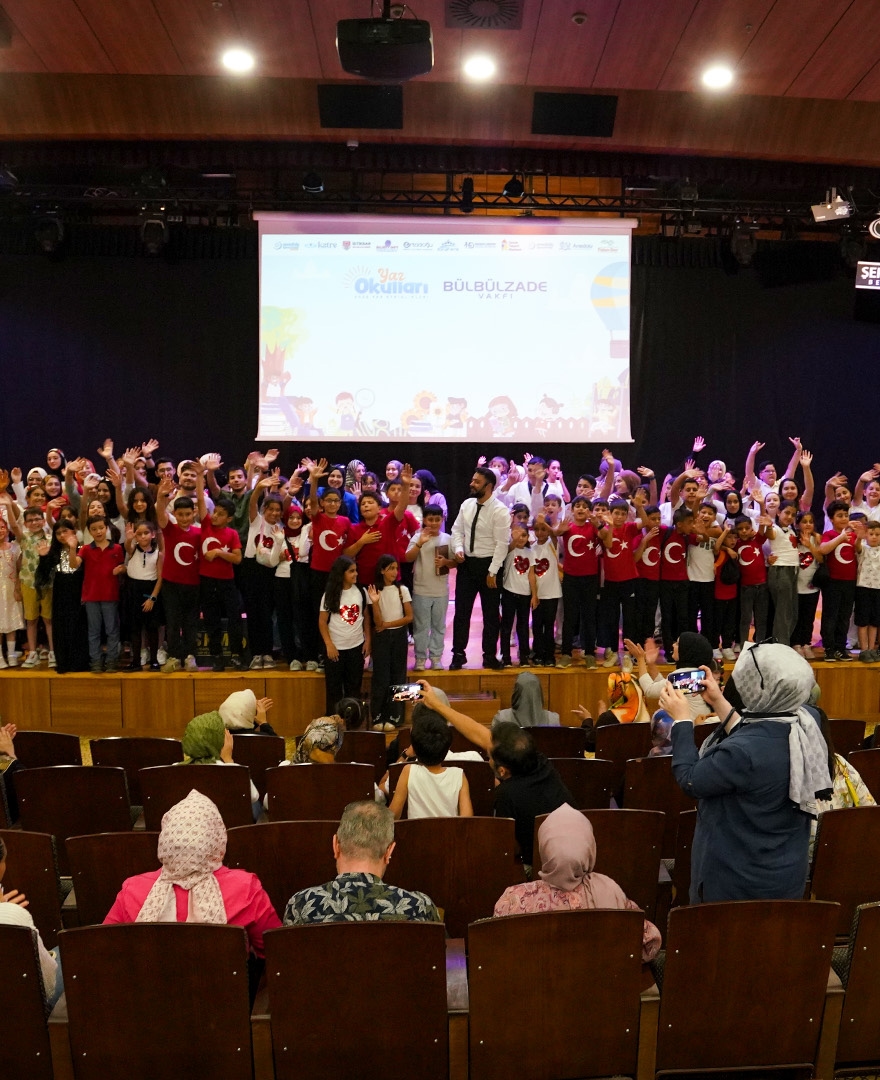
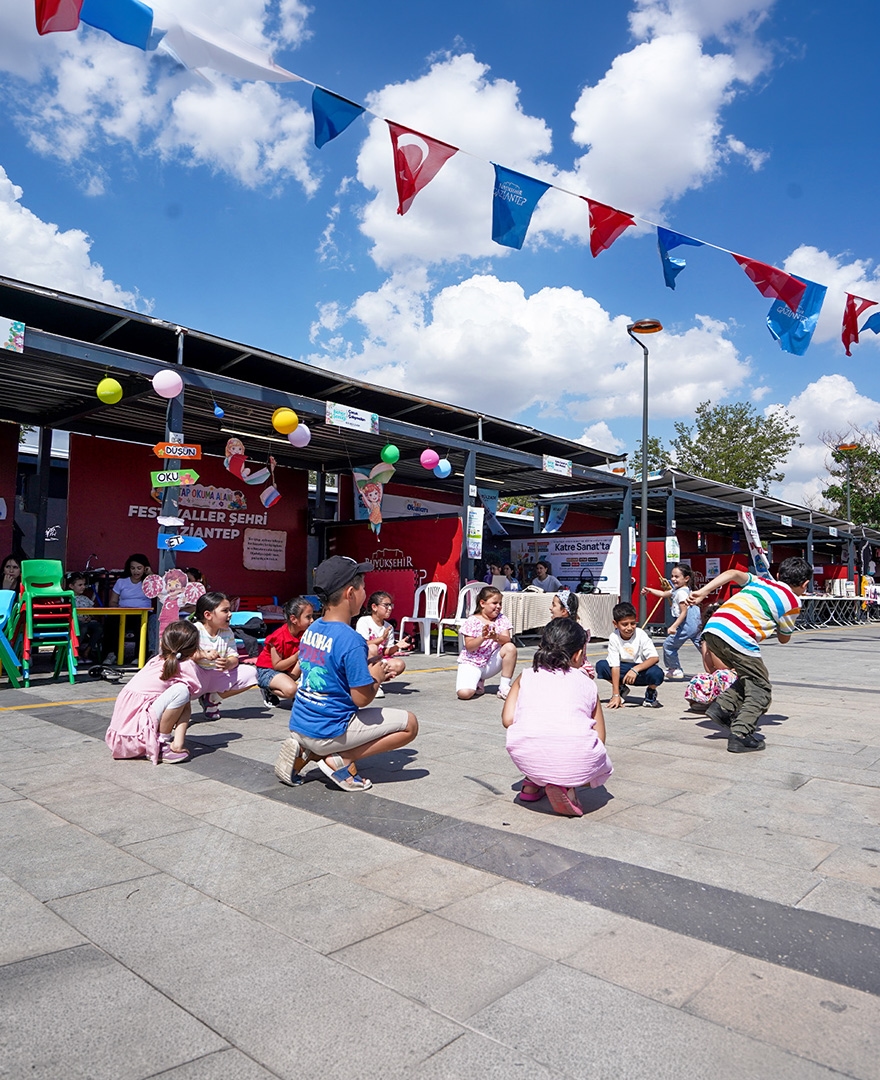
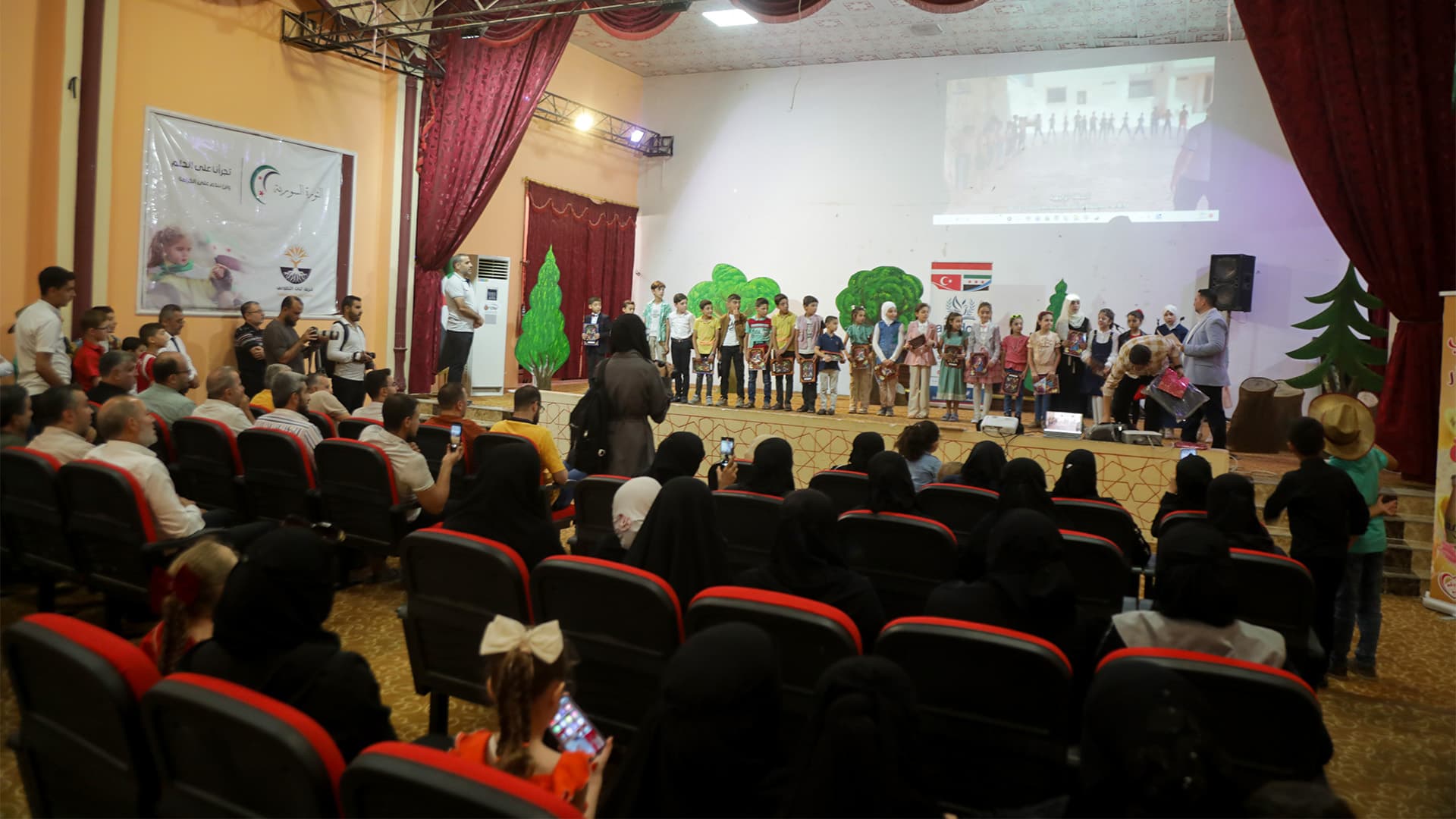
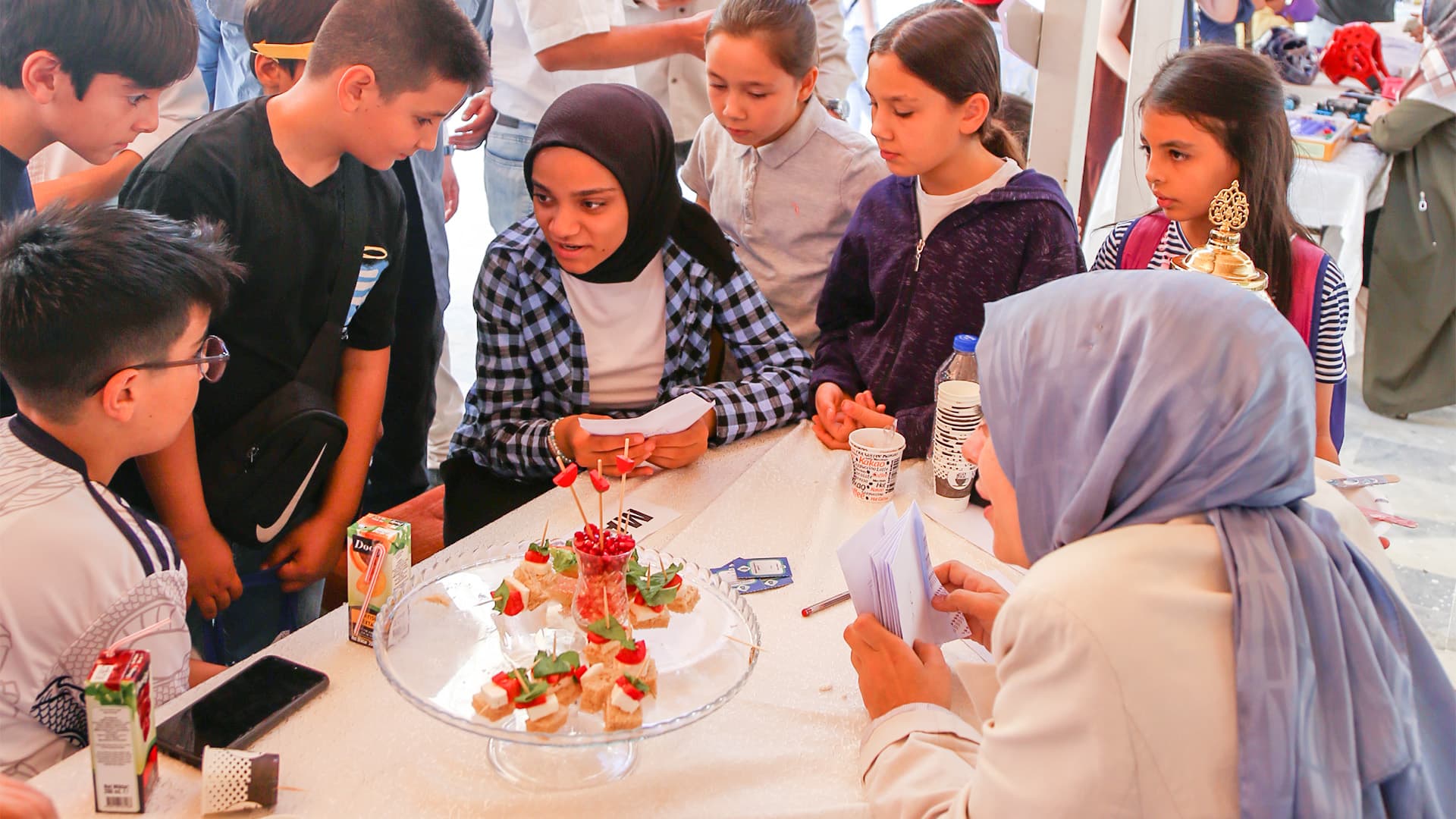
Bülbülzade Foundation is a non-governmental organization that operates for the public good, guided by the principle of "reforming the generation, revitalizing the earth."

OUR PROJECTS

BÜLBÜLZADE FOUNDATION IN NUMBERS

Since 1994, our institution has been operating on a national and international scale, continuing its work with the mission of “qualified people,” “effective speech,” “lasting works,” and “sustainable environment.”

Qualified People

Inspired by a deep-rooted cultural heritage and guided by an understanding that adapts to time and place, our foundation carries out activities aimed at enhancing human quality and increasing the number of qualified individuals. With the goal of raising conscious, resilient, and capable people, we develop projects that touch human lives across a wide spectrum — from education to art, from social aid to scientific research.

Effective Ideas

Inspiring humanity with our powerful words and impactful ideas, and proving that positive change is possible even in difficult times, stand out as important missions of our foundation. Through projects that strengthen social solidarity and touch human lives in many fields — from education to health, from culture to art — we believe that everyone can come together to build a better future.

Lasting Works

The philosophy of “good people and effective ideas” at the core of the Bülbülzade Foundation merges with a desire to serve society and humanity by creating lasting works. While continuing its activities across a wide range — from culture to art, from education to humanitarian aid — the foundation aims to prioritize quality and sustainability in every project. Producing high-quality and enduring works in each field of activity forms one of the cornerstones of our mission and lays the foundation for sustainable development in society.

Sustainable Environment

With the mission of protecting the world we live in, our foundation carries out efforts to create a sustainable environment. In this direction, by investing in renewable energy sources and raising environmental awareness, we aim to leave a greener world for future generations.

Activity Reports

The Bülbülzade Foundation for Education, Health, and Solidarity makes significant contributions in various fields such as culture, art, humanitarian aid, youth, and sports, operating across a wide spectrum of activities.

While projects are developed in line with the goals set at the beginning of each term, the detailed reporting of these activities at the end of the term demonstrates the foundation’s commitment to transparency and its sense of responsibility toward society.

As an institution holding tax-exempt status, our foundation prioritizes financial discipline and transparency principles, focusing on taking conscious and collective steps toward a sustainable future.

These efforts aim to encourage the support and participation of individuals from all segments of society, contributing to the vision of a better world.

ACTIVITY REPORTS
COUNTRY
0
COUNTRY
PROJECT
0
PROJECT
AID
0
AID
VOLUNTEER WORKER
0
VOLUNTEER WORKER

STORIES

NEWS

You can follow all the news related to our foundation here.
Intercultural Communication Discussed at the 20th Anatolian Gatherings in the Age of Digital Homogenization

Intercultural Communication Discussed at the 20th Anatolian Gatherings in the Age of Digital Homogenization

August 12, 2026
Dr. Selman Dilek, Germany NGO Representative, comprehensively addressed the cultural impacts of digitalization and the importance of intercultural communication at the 20th Anatolian Gatherings.The 20th Anatolian Gatherings, organized by the Anatolian Federation in Ankara, continues to host an important exchange of ideas. As part of the program, Dr. Selman Dilek, Germany NGO Representative, gave a presentation titled “Intercultural Communication in the Age of Digital Homogenization,” addressing the historical development of Western civilization and the contemporary process of digitalization. Stating that Western modernity set out with a claim to universal morality and reason, Dilek emphasized that this civilization does not consist of a uniform structure as commonly believed. Pointing out that civilizations can exist through cultural interaction, Dilek said, “Western civilization was never a monolithic, holistic entity. It established a perfect interaction among its own internal diversity.”WE ARE IN AN AGE OF DIGITAL HEGEMONYStating that a crisis of civilization lies at the root of the world wars, Dr. Dilek explained that the technological progress which began with industrialization in the modern era has reached an entirely new dimension today. Stating that technology was used only as a tool in the past, but that today it has come to determine the social and cultural sphere entirely, Dilek pointed to the increasing domination of digital platforms with the words, “Human beings are now moving toward becoming its instrument; the human being itself is becoming a tool.” He stated that the imagination of the new generation has been confined to digital spaces and that adults remain under a consumption-oriented digital hegemony.YOUNG PEOPLE ARE A BRIDGE BETWEEN CULTURESArguing that the way to protect against the destructive effects of digital hegemony is through intercultural communication, Dilek explained that communities need to establish a healthy connection with their own internal dynamics. Stating that withdrawing inward by escaping from problems cannot offer a solution, Dilek noted that it is imperative to create areas of high interaction within our own cultural diversity. Dr. Selman Dilek concluded his presentation with the warning: “Unless we establish strong intellectual communication with the external spheres of Islamic civilization on a solid foundation, it is inevitable that we will dissolve under the digital hegemony, which is the existing new form of civilization.”
Read the News
Building Social Trust in Civil Diplomacy and the DCA Model

Building Social Trust in Civil Diplomacy and the DCA Model

August 12, 2026
Assoc. Prof. Dr. Fatih Kanca explained the U.S. civil society ecosystem and the key role of religious diplomacy at the 20th Anatolian Gatherings.The cross-border dimensions of civil diplomacy were discussed during the evening session on the second day of the 20th Anatolian Gatherings symposium, organized by the Anatolian Federation in Ankara. Assoc. Prof. Dr. Fatih Kanca, Religious Services Counselor at the Embassy of the Republic of Türkiye in Washington, conveyed to participants in detail the structure of the third sector in the United States and the processes through which this structure builds social trust. Emphasizing the principles of transparency and accountability, Kanca drew attention to the strategic importance of strong civil institutions in communication between countries.STRATEGIC LESSONSGiving a presentation titled “Civil Diplomacy in the U.S. from the Perspective of the Türkiye Century: Religious Services, Diaspora and Cultural Interaction,” Assoc. Prof. Dr. Kanca focused particularly on the Diyanet Center of America (DCA) model. Explaining with examples how this model successfully integrates religion, education and social services, the speaker emphasized the power of faith-based institutions in cultural interaction. Referring to the strong understanding of governance and impact-oriented culture of volunteering in the United States, he shared strategic lessons that offer a vision for civil society organizations in Türkiye.
Read the News
Decision-Making Mechanisms in Foreign Policy and the Power of Everyday Diplomacy

Decision-Making Mechanisms in Foreign Policy and the Power of Everyday Diplomacy

August 12, 2026
Dr. Mehmet Köse, Chairman of the Board of the Africa and Middle East Foundation, drew attention to the decisive influence of civil society on foreign policy at the 20th Anatolian Gatherings.At the second session of the 20th Anatolian Gatherings symposium held in Ankara, the role of civil initiatives in global politics was comprehensively evaluated. Taking the podium, Dr. Mehmet Köse, Chairman of the Board of the Africa and Middle East Foundation, participated with his speech titled “The Impact of the Diversification of Decision-Making Mechanisms on Foreign Policy,” offering participants an insightful perspective. Stating that the understanding of diplomacy as being solely the monopoly of official institutions has been left behind, Dr. Köse noted that every individual, from tourists to migrants, has the potential to be a carrier of messages.“EVERYDAY” DIPLOMACYBuilding the fundamental pillars of civil diplomacy around the concepts of message, actor and institutionalization, Dr. Köse explained that creating strong public support is essential for the permanence of public policies. He argued that the term “everyday diplomacy,” which encompasses interactions in daily life, better summarizes today’s diplomatic processes. Pointing to the strong civil diplomacy opportunity contained in regional migration movements toward Syria and the Arab geography, Köse conveyed this strategic situation in the following words: “There are millions of people who speak two languages and know two cultures well in relation to Syria and the Arab geography. If you make proper use of this population’s civil structures and organizations, the interruption that has existed in this geography for a long time will disappear.”
Read the News
Deputy Minister of Culture and Tourism Dr. Serdar Çam Spoke at the 20th Anatolian Gatherings: “Civil Society Is What Endures”

Deputy Minister of Culture and Tourism Dr. Serdar Çam Spoke at the 20th Anatolian Gatherings: “Civil Society Is What Endures”

August 12, 2026
Deputy Minister of Culture and Tourism Dr. Serdar Çam drew attention to the permanence of civil society organizations and explained the strategic vision in public diplomacy at the 20th Anatolian Gatherings held in Ankara Kızılcahamam.The 20th Anatolian Gatherings, organized by the Anatolian Federation and bringing together representatives of civil society, are continuing at full speed in Ankara Kızılcahamam. In one of the most noteworthy sessions of the program, Deputy Minister of Culture and Tourism Dr. Serdar Çam delivered a speech titled “Culture and Public Diplomacy in the Century of Türkiye,” addressing in detail the reflections of the foundation civilization in today’s world. Stating that civil society organizations should cease to be merely an area of aid activities and become a much more strategic element of diplomacy, Çam offered participants an in-depth perspective on the future missions of institutions.OFFICIAL AUTHORITIES ARE SUBJECT TO CHANGEDeputy Minister Dr. Serdar Çam emphasized that the power of states and governments is directly linked to the success of civil society movements. Reminding that official positions may change over time, Çam stated that the structures that form the true foundation of institutions and transmit culture from generation to generation are civil society organizations. Çam expressed this in his speech with the following words: “Governments, government officials, and official institutions may always be in a process of change and transformation. Of course, NGOs will also change and transform, but what endures are civil society organizations, foundations, and associations.” Explaining that civil movements have major responsibilities in the process of preserving the power of the state, Çam pointed to the importance of increasing the institutional capacity of civil society by saying, “In order to have a powerful state, you also need to have powerful NGOs.”OUR MOST IMPORTANT STRENGTH IS SINCERITYAssessing the new world order, the successive crises, and Türkiye’s stance in the face of these crises, Çam shared with the participants the role of international aid in new-generation diplomatic relations. Drawing attention to Türkiye’s approach centered on compassion and justice, Çam summarized the country’s greatest advantage with the following words: “Türkiye’s most important strength is its sincerity. When we sincerely attempt to share what we have, and when we believe in the concept of abundance, no one can stop us, God willing.”LET US PUT AN END TO THE DEBATES OF THE PASTÇam stated that he had also benefited greatly from the insightful speeches of Turgay Aldemir, President of Bülbülzade Foundation and the Anatolian Federation, and noted that they closely follow with appreciation the specific and specialized work carried out within the federation. Saying that the future must be built quickly without getting stuck in the sterile debates of the past, Çam expressed that they expect civil society organizations to take much more innovative steps. Once again, it was emphasized that in today’s world, shaped by technology and artificial intelligence, there is a need for more profound, innovative, and focused work by going beyond classical methods.
Read the News
Turgay Aldemir: Civil Diplomacy Plays a Vital Role in Resolving Global Crises

Turgay Aldemir: Civil Diplomacy Plays a Vital Role in Resolving Global Crises

August 12, 2026
Turgay Aldemir, Chairman of the Board of Directors of Bülbülzade Foundation and Anatolian Federation, emphasized the constructive power of civil diplomacy against the deadlocks in the current global order at the 20th Anatolian Gatherings.The 20th Anatolian Gatherings, organized by the Anatolian Federation, began with an important session titled "The Century of Türkiye and Civil Diplomacy." Addressing the participants at the session, Anatolian Federation Chairman of the Board of Directors Turgay Aldemir pointed out that the modern international system is inadequate in resolving crises and explained the complementary role of civil society in this process. Stating that conflicts, injustices, and humanitarian crises occurring on a global scale trigger one another, Aldemir said that civil initiatives must step in as an essential necessity in matters that states cannot overcome on their own.SOLUTIONS MUST ALSO BE DIVERSIFIEDAldemir stated that the world is changing rapidly and that problems are becoming more complex in parallel with this change, emphasizing that the international system has lost its predictable structure. Recalling that the Russia-Ukraine war and the destruction caused by Israel have triggered an energy and food crisis on a global scale, Aldemir said that solution methods must also be diversified in this environment of multiple crises. Stating that the public sector, universities, think tanks, and voluntary movements have become central to international interaction, Aldemir continued: "These multiple crises we are facing have unfortunately narrowed the areas in which states can produce solutions on their own. The picture before us presents to all of our minds that international issues can only be managed with the joint contribution of different actors."OUR FIRST CONDITION IS TRANSPARENCYAldemir stated that civil diplomacy aims to rebuild trust between societies and establish lasting relations around common values, drawing attention to Türkiye's historical experience in this field. He recalled that the culture of foundations and experience in humanitarian aid are among Türkiye's greatest social capitals in the international arena. Referring to the fundamental principles that civil structures should uphold in order to manage this potential properly, Aldemir summarized the minimum requirements that institutions must comply with in the following words: "If we want to be a legitimate and lasting actor in the field of civil diplomacy, our first condition is transparency. The second condition is competence, the third condition is humility, acting with the awareness that we do not replace the state, and the fourth and final condition is consistency, which determines what we say and how we speak."GREAT RESPONSIBILITIES FALL ON INTELLECTUALSEmphasizing that a strong intellectual foundation is needed for the vision of the Century of Türkiye to find an international counterpart, Aldemir stated that intellectuals, universities, and international student mobility have great responsibilities. Referring to the fact that the short terms of governance in democratic systems make it difficult to sustain permanent state policies, Aldemir stated that strong civil structures are the element that ensures institutional memory and strategic continuity.WE SHOULD CONTRIBUTE TO THE WORLD'S COLLECTIVE KNOWLEDGEReferring to the importance of building bridges between societies and expanding common wisdom, Aldemir concluded his speech with an outward-looking and inclusive call: "We must now stop talking to ourselves and interpreting the world from our own neighborhood. We must open up to the world, listen to the world, and contribute to the world's collective knowledge. In a period when societies in which truth has been damaged are being thrown to opposite sides of the abyss, finding a way forward depends on our ability to build bridges to both sides of that abyss."
Read the News
Civil Society Education Curricula Launched

Civil Society Education Curricula Launched

August 12, 2026
The Civil Society Education Curricula were introduced as part of the 20th Anatolian Gatherings, which began in Ankara under the theme of “The Century of Türkiye and Civil Diplomacy.” Prof. Dr. Ahmet Yayla explained the new educational philosophy centered on the formation of the human being at the launch.One of the traditional meetings organized by the Anatolian Federation, the 20th Anatolian Gatherings brings together civil society representatives in a widely attended program at Eliz Hotel Ankara. This year’s organization, shaped around the main theme of “The Century of Türkiye and Civil Diplomacy” and continuing from August 10 to 14, officially began with the launch of the Civil Society Education Curricula held in the Eliz Hotel conference hall. At the launch program, Prof. Dr. Ahmet Yayla, who led the preparation of the curricula, delivered a speech. Describing educational philosophies as a journey from the formation of the human being to the formation of civilization, Yayla emphasized that education cannot consist solely of transferring knowledge. Stating that they adopted a human-centered approach, Yayla noted that the individual cannot be reduced to an economic or academic element.LET US RAISE A GENERATION THAT SEEKS THE TRUTHYayla stated that the human being should be considered as a whole throughout the process extending from childhood to adulthood. He explained that fundamental concepts such as responsibility begin at an early age with simple acts such as putting away one’s toys and later develop into taking a conscious stance toward social issues. He drew attention to the fact that the education curricula were prepared in accordance with this developmental trajectory and human nature. Referring to the importance of preserving children’s innate sense of curiosity, Yayla stated that they aim to raise a generation that asks questions and seeks the truth rather than one based on rote learning.THE IMPORTANCE OF CRITICAL THINKINGYayla stated that they focus on identity formation during adolescence and noted that young people cannot simply be left to the flow of social media and popular culture. Emphasizing that young people need to make sense of the world and be raised with a culture of verification, Yayla highlighted the importance of researching the source of accurate information and critical thinking. Stating that the language of education should be ethical, Yayla noted that young people should interpret the world while upholding human dignity and justice.EDUCATION IS NOT LIMITED TO SCHOOLSStating that education cannot be confined solely to schools, Yayla said that civil society organizations play a key role in the transmission of values and social solidarity. He noted that, as the Anatolian Federation, they aim to demonstrate through these curricula that civil society can carry out systematic and value-based educational activities. At the end of his speech, Yayla thanked everyone who contributed and added that the real issue lies in the question of what kind of character a person develops through the knowledge they acquire. The launch concluded following a session in which questions from the participants were answered.
Read the News

INITIATE BIG CHANGES WITH ONE SMALL STEP

By joining our projects ranging from education to food security, and from healthcare to social solidarity, you can brighten a life and help us nurture hopes for the future together.


Be a part of change!

Quick Donation
Select Project
₺1.000
₺2.000
₺3.000

EVENTS

SuMoTuWeThFrSa
2627282930311
2345678
9101112131415
16171819202122
23242526272829
303112345

OUR AFFILIATES

OUR FOUNDATIONS

OUR COLLABORATIONS

Subscribe
You can subscribe to our mailing list to stay informed about the latest updates published by the Bülbülzade Foundation.
Logo

Inspired by the deep-rooted history of Gaziantep, the Bülbülzade Foundation operates with the vision of carrying the cultural heritage of the past into the future. Focusing on social development, our foundation remains committed to contributing to the building of modern Türkiye through high-quality projects in the fields of education and culture.

-

XYouTubeFacebookLinkedInIstagram
Logo

As a result of our foundation’s application, with the Presidential Decree No. 8097 dated January 17, 2024, our foundation has been granted “tax exemption” in accordance with Article 20 of Law No. 4962. Some of the rights granted to our foundation under the aforementioned Law No. 4962, the General Communiqué on Granting Tax Exemption to Foundations, and other related laws are listed below.

Copyright 2024 All rights reserved.Nowismedia

Kişisel veriler3