
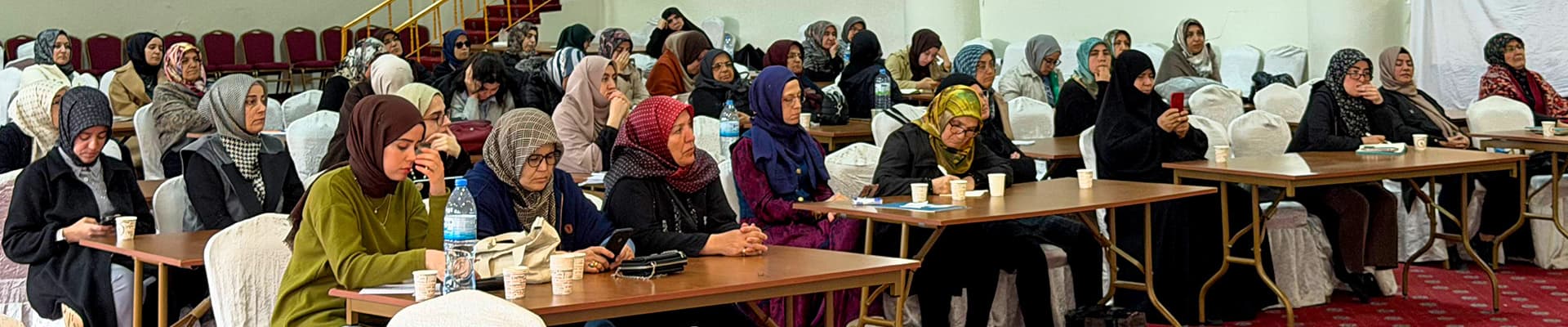
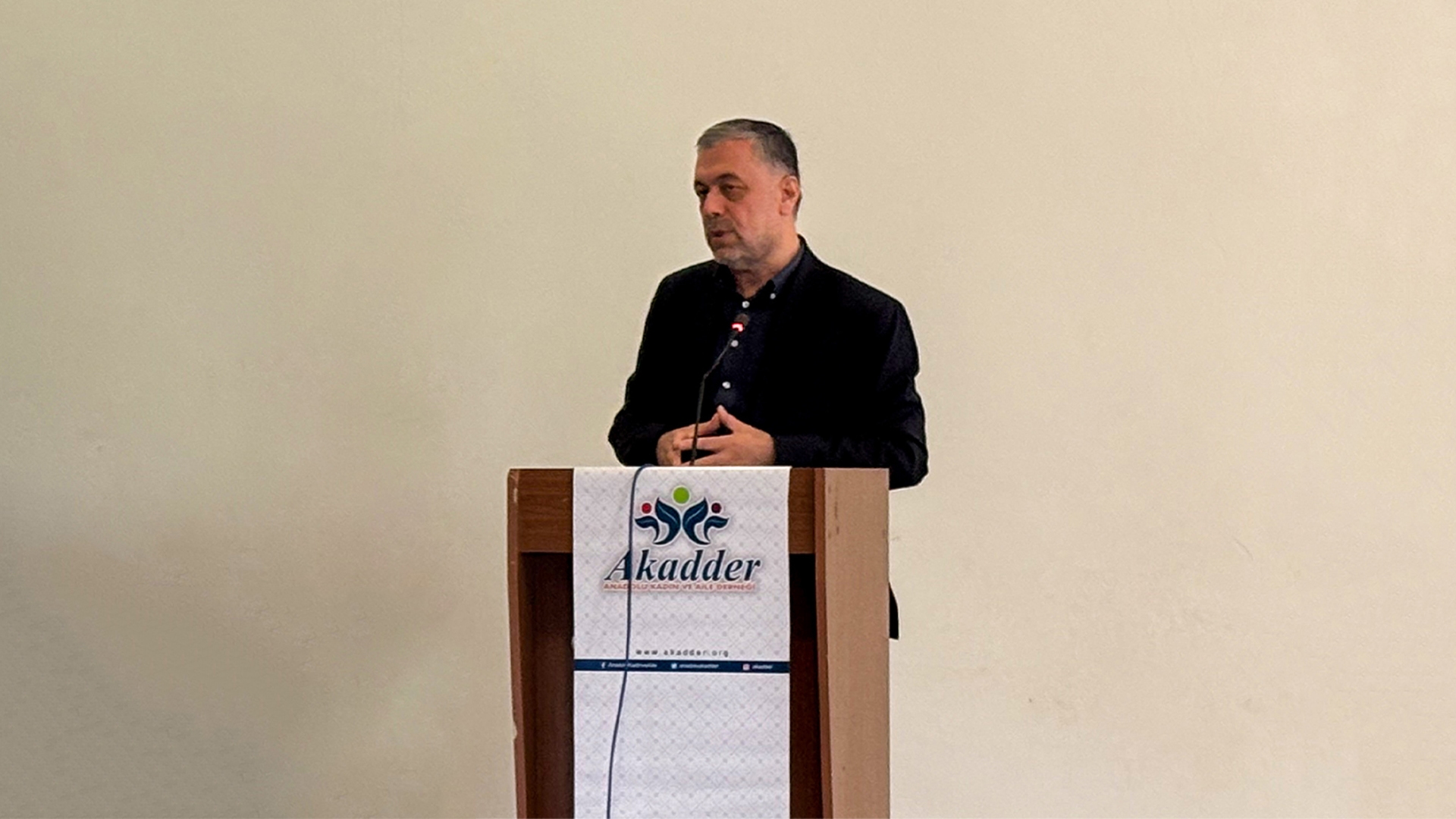
This text contains the full speech delivered by Turgay Aldemir, President of the Bülbülzade Foundation, during the in-service training program held in Nevşehir Kozaklı.
This study examines the role of civil society, the phenomenon of religious fatigue, the need for social revival, and the mental positioning of the individual within the rapidly changing social, cultural, and intellectual atmosphere of the age. Based on the field experiences of the Anatolian Federation, a new model of social renewal is discussed through the axes of children-youth, women-family, education-teacher, and support activities.
As human beings, we live with questions in our minds. Our questions never end and they must never end. A mind that fails to ask questions cannot pursue the truth. If our minds are clear of confusion, it means our ears do not hear and our hearts do not feel. In a period where troubles, efforts, and searches are so intense, expanding our hearts and opening our minds to the new is a necessity rather than a choice.
Highly valuable definitions and evaluations are made regarding civil society, however, the civil society formed by urban, intellectual people with a cause has two fundamental purposes . bu purposes strengthen the social structure and allow the individual to see themselves as part of a larger story. Civil society represents the most visible form of both the social conscience and the collective mind.
The primary goal of civil society efforts is for society to stay standing, maintain its resilience, and produce permanent solutions to the problems it faces. For us, the restoration of society begins with the restoration of the individual. As the Anatolian Federation, we have entered a new renewal process by identifying the needs we encountered in the field through research conducted both domestically and abroad. In this direction, we have determined three main areas of work: children-youth, women-family, and education-teacher.
We build our future through our educational activities and the events we organize. We strive to provide our children and youth with basic religious knowledge, values education, social norms, and the competencies required by the age. We know that every child is born upon the natural disposition of "fitrah" and we are entrusted with protecting, nurturing, and beautifying this disposition. Our goal with these studies is to contribute to the upbringing of a generation kneaded with faith, morality, and wisdom, to increase goodness in every segment of society, and to build a strong will that stands against evil. Every activity we perform is a response to the divine call to "compete in goodness" and an effort of loyalty to the command "be upright as you are commanded".
The women-family field is one of our most critical work areas that forms the essence of society, determines the direction of the generation, and lays the foundation for social peace. Woman is the heart of the family, the wisdom of the home, and the primary element that makes the revival of society possible. The family is the first school, the first refuge, and the first home of morality for a human being.
As the Anatolian Federation, we view our work in the women-family field as a divine responsibility rather than just a social activity. We are the followers of a Prophet who said, "The best of you is the one who is best to his family". With this awareness, we adopt an approach that centers on empowering women, strengthening families, and protecting the generation. Our work in this field is shaped by programs that protect the dignity and labor of women , strengthen the family , support marriage and parenting awareness , increase social solidarity , and keep moral and cultural values alive.
The women-family field is a strategic backbone that builds the future of society. When this backbone weakens, society dissolves. When it strengthens, society revives, finds peace, and gains direction.
The education-teacher field is one of our most fundamental work areas that shapes the future of society, determines the path of the generation, and carries the blessing of knowledge to society. An educator is a guide who exemplifies morality and directs young minds in addition to transmitting information. Education is the most important journey where a person recognizes themselves, their Lord, and their responsibilities.
As the Anatolian Federation, we handle education-teacher work with a sense of entrustment. We are the heirs of a civilization that says, "The ink of scholars is more precious than the blood of martyrs". Therefore, empowering the educator, making education high-quality, and providing young people with a solid ground of values is a strategic priority for us. Our work in this field is shaped by programs that support the professional and spiritual development of educators , provide guidance in values education and basic religious knowledge , provide the competencies of the age , and make educational environments more inclusive and qualified.
The education-teacher field forms the backbone of our federation's accumulated experience. If there is no education in an organization or no program that touches the educator, a weakness in goals and a drift in purposes are inevitable. The revival of society is only possible with knowledge, wisdom, and dedicated educators. With this awareness, we continue to build an educational climate that strengthens the educator, makes education qualified, and brings the young generation together with faith, morality, and competence.
We believe that a social revival kneaded with love, mercy, and knowledge is possible. With this faith, we continue to work to prepare our children, youth, and families for a more peaceful, conscious, and stronger future.
Another area of work we maintain as a federation is support activities. These studies encompass the whole of the efforts that keep the conscience of society alive, sustain the vein of mercy, and strengthen the consciousness of the ummah. These activities, which embrace orphans, the poor, migrants, earthquake victims, and brothers and sisters who need support in various fields of education, are a requirement of a human entrustment rather than just a social responsibility. While determining these areas, we carefully analyze the needs in the field. We base our approach on protecting the dignity of our people, increasing solidarity, and strengthening social justice. We know that believers are like one body in loving, showing mercy, and showing compassion to each other. Every support activity carried out with this awareness is a hand of mercy that heals the wounds of society and a breath of goodness that regrows hope.
As the Anatolian Federation, we identify the most effective practices through research conducted both at home and abroad to fulfill this responsibility properly. We make our support efforts more systematic and inclusive with the models we develop. The main goal of our support activities is to try to untie the actual knots that create the problem with an understanding that will make the victim resilient and a part of the solution table. Thus, while reaching those in need, we aim to create a climate of goodness that carries a spirit of trust, solidarity, and brotherhood in addition to material aid.
One of the most important elements that increases the blessing of our work, strengthens our impact in the field, and keeps the ummah consciousness alive is collaborations. For this reason, we prefer to walk with whichever institution or person is good in which field and possesses experience and accumulation in which subject. We know that competing in goodness is possible only by joining forces and creating common grounds for goodness.
The areas of children, youth, women, family, and education are indispensable work fields that form the basis of the Anatolian Federation's legacy. These areas have the quality of a backbone that ensures the revival of society. If there is no sensitivity, program, goal, or effort regarding these areas in an organization, it means there is a blurriness in purposes, a weakness in goals, and a deformation in the working spirit.
We establish our collaborations with this awareness. We see each partnership as a ring of goodness that will lead to the benefit of the ummah. Our goal is to put forward permanent and qualified works that touch every segment of society by creating a strong solidarity network where experience, knowledge, and labor merge.
Regarding support activities and collaborations, we do not have to do every single job ourselves. A person from a village or a small town does every job on their own. An urban person partners with others based on who does what well. Working together means working with the "other" rather than just with people like ourselves. I believe there is no "other" in Anatolia. The only "other" of these lands is the devil. There may be sinners or traitors, and we will care for them as members of our family. Working with those who are different means ensuring they feel safe. These works provide a renewal in the subjects we call "deeds that keep the conscience of the people alive".
Another issue we emphasize with sensitivity as the Anatolian Federation is presenting strategic proposals and files to the management mechanisms of the society we live in. This includes the state, bureaucracy, politics, universities, institutions of the Islamic geography, or global institutions and human-related studies. It involves suggesting studies and preparing people to make them preferred candidates. Therefore, civil society has two roles: first, keeping the conscience of the people alive, and second, proposing strategic people and projects that will solve the problems of the society it lives in. Where do we stand in this? What are the studies we conduct regarding this and what is the quality of these studies?
Of course, while carrying these out, it is necessary to "break the routine". We need to break the routine and acquire new routines. We need to be purified from the religious fatigue upon us. We observe a distinct religious fatigue in people trying to serve with religious motivation in communities and societies that have been active in civil society organizations in our country for many years. While there are many reasons for this fatigue, two main factors should be emphasized.
The first is the tendency to try to carry the past into the present without producing current and authentic solutions suitable for the problems of the age. Yesterday's prescriptions cannot cure today's issues. Copying historical experience exactly into today creates new problems instead of producing solutions.
The second factor is that the purposes and goals set by individuals are not realistic, sustainable, or rational. When people do not achieve the success they expect in the activities they carry out, they blame religion for this. They begin to see religious works themselves as an inextricable problem area.
However, this religion was revealed for all times. It possesses a strength and flexibility that can be implemented in every condition and context. The problem is the person's perception, interpretation, and application of religion rather than religion itself. Therefore, the expression "I will be a normal person now," which has been frequently heard in religious circles in recent years, is actually a reflection of the desire for ordinariness. This is the tendency to leave oneself to the general flow of society. This discourse appears as a symptom of both religious fatigue and identity dissolution.
We are people who carry a message. Our existence carries a meaning that keeps the conscience of society alive, determines its direction, and shows its signs. If we become ordinary, society loses its guides. Today, a trend of saying "I will also wear brands, I will also eat there, I will live like everyone else" blurs the difference between the person carrying a message and the ordinary person. This is a line of death for us. Living simply, staying away from ostentation, and being distant toward the world is part of our personality. When this line disappears, the weight of the message also disappears.
Years ago, after a talk I gave in Kayseri, a newspaper ran this headline: "Becoming conservative is the death of the revolutionary". This expression is a very clear summary of the transformation we are experiencing today. Becoming ordinary, withdrawing into a comfort zone, and saying "I am like everyone else now" are all part of this. These have turned into a great field of trial, especially with the meeting of Turkey's religious people—who went through periods of pressure, othering, and exclusion for many years—with the public sphere. As public visibility increases, protecting values has become equally difficult.
Power, opportunity, and visibility either mature a person or make them ordinary. If a person cannot preserve themselves along with these opportunities, the claim they once carried, the value they represented, and the responsibility they undertook gradually fade. But if they can carry these opportunities with a sense of entrustment, power does not corrupt them. On the contrary, it matures them, deepens them, and turns them into a more authentic stance.
The trial we are experiencing today is exactly this: not getting lost as visibility increases, simplifying as power increases, and growing responsibility as opportunities multiply. The issue for us is this: the person carrying a message walks ahead of society as long as they can protect themselves. The moment they lose themselves, they melt into society, become invisible, and lose their influence. If we say we "exist" in a place, environment, or space, it is not enough for our bodies to be there. If our ideas, minds, thoughts, and claims are not there, it cannot be said that we truly exist in that space. I encounter this often: someone says "I am here" but they are not. Everything is like everyone else. This is why we must break the routine. We must exist as ourselves and never lose the awareness that we are people with an essence and a message.
Of course, one day everyone might say, "I will no longer carry a message". There is no word left to say to a person who has drifted into self-denial because they have extinguished the light within themselves. Therefore, intention lies at the very root of this confusion. When you intend for a task, you are now focused. Just as blurriness in intention spoils the humility of worship, blurriness in life's intention spoils a person's direction. We intend for a subject, we do that work, and then we sit and negotiate. However, for the intention to be solid, the preparation processes before the intention must be operated very well.
In this context, the "three places" concept frequently emphasized by İhsan Fazlıoğlu is important. İhsan Hodja brought this concept, which actually belongs to a Western philosopher, into our world of thought. These three places offer a critical framework for understanding the mental and existential ground where a person positions themselves.
Where we came from: Where did we come from? Who are we? What kind of history do we come from? What kind of past do we have? What is in our genetics and philosophy of history? We must not go and get trapped there, like what Ali Shariati calls the "prison of history".
Where we are: Sometimes we speak as if we are not truly here. It is as if today's people, today's problems, and today's sociology do not exist. It is as if we are living in history. There is a book called "Second-Hand Time". It tells the stories of people who still thought they were at the Communist Party headquarters even after the Soviet Union collapsed. The Soviets were gone and the world had changed, but the mind was still in an old time.
A similar situation exists in a portion of our religious people. Time has passed over them ten times. The body is in a new time, but the discourses, concepts, and reflexes are in another past. It is not possible for us to solve today's youth, today's cities, or today's problems by taking them and escaping into history. We might go, but our children will not come. Their world, set of concepts, and needs are different.
For this reason, we need to speak about problems with today's concepts and today's reality. Our most beautiful side should be the effort to read, the strive to produce concepts, and the will to establish a new language. As İhsan Fazlıoğlu frequently emphasizes, the matter consists of three "places": yesterday, today, and the future. We came here, to this moment, and to this time with the accumulation of yesterday. But now we need to have an authentic idea about where we are located. Psychological resilience, mental clarity, and social existence are based on a person knowing where they stand. What we had yesterday is not what matters; what matters is what remains in our hands after the disaster. First, it is necessary to make a situational assessment and then reposition oneself. Taking a new position involves knowing the city, knowing the dynamics of the city, knowing ourselves, our opportunities, our needs, and our partners. Briefly: we cannot determine our direction without knowing where we are. We cannot walk toward the future without determining our direction.
Where do we want to go: What do we want to be? What do we want to do? The things we talk about are extraordinary, but the things we do are often completely different. This disconnection makes a person psychologically unsupported and fragments them over time. Therefore, we must conceptually establish the integrity between the three times (yesterday-today-future) and the three places.
If this integrity is not ensured, what we will face is inactive mercy. This is one of the most dangerous concepts of this age. In a period where digital loneliness has increased and everyone has hundreds of "friends" but touches no one, people seem to be talking, commenting, and producing ideas. However, when it comes to action, they withdraw. It is a mercy that is merciful but unaware of its neighborhood, unaware of its relatives, and unaware of its mother and father. This is the greatest weakness of the modern age. Our Lord's address "O you who have believed, why do you say what you do not do?" should be engraved in our hearts at this very point.
For this reason, horizon scanning is very valuable. What the German thinker Gadamer calls the "fusion of horizons" is the effort to inoculate each other, to hold on to each other, and to produce a greater meaning together. In psychology, the value of purposeful communities produces an effect far beyond numbers. But when we come together, sometimes the opposite happens. The average drops and the most aggressive one becomes decisive. Therefore, one must be careful.
A person of civil society is someone who hears the weak voices, the faint signals, and the lower layers of the city. It means noticing those signals before a crisis emerges and carrying them to the relevant party. If we do not hear, it means a deafening has begun in our hearing organs. Therefore, our first task is to strengthen this sensitivity within the people. Our second task is to contribute to the creation of a legal response by delivering these voices to the strategic mind of the state.
In the recently published book titled "The Second Coming," a minor Italian philosopher asks: "What will the future be? A new industrial revolution, a new flood, or a new ideology? Islam is possible, but are Muslims ready for this?". The real question is: are the organizations of Muslims ready for this? Today, a terrible genocide is happening in Gaza. The thing we do best is collecting aid. But what about workshops, symposiums, new concepts, and new approaches? We need a mental effort regarding how we will solve this issue.
There are fourteen fully equipped and two half-equipped Palestinian camps in Syria. We talk to many organizations and say, "Let's take care of these". The answer is: "We are taking care of Gaza". However, the fortification point of Palestine is Damascus. There are Palestinians in Syria who are refugees within refugedom. The conditions they live in are heartbreaking. If we do not put new needs and new approaches on the table, the process will drift us elsewhere.
To summarize these: the thing we need most today is an ontological strengthening that establishes a bond with existence. This is beautifully explained in İbrahim Kalın’s books "Heidegger’s Hut" and "The Modern Barbarian and the Civilized". On the other hand, information systems, epistemology, and new generation education models are also needed. We no longer have the luxury of saying, "We are an elite community that has come together". No. We must discuss the summary produced by this elitism and talk about productivity. This is a responsibility. Therefore, the knowledge we produce needs to be transferred to axiology, which means values.
Turkey is going through an extraordinary process. Kurds, Turks, and Arabs are the new founding elements of this region. Regarding the issue of minorities, a priest said to me, "We are not the minority of Syria; we are the children of Islamic civilization". Are we conceptually ready for this? Will we be able to discuss these topics in an environment where non-Muslims are present? Is our set of concepts suitable for this? The Prophet used to speak and come together with them in the mosque. When oppression was at stake, everyone took part in the conquest of Mecca.
The security of mind, generation, life, property, and religion of everyone should be under the guarantee of this community. Mind security means respecting every idea. New ideas are an opportunity to renew, sharpen, and keep ourselves alive. The transformation of knowledge into action is the most important thing that will keep us vibrant. We need to wake each other up to escape the sickness of "falling asleep within the role you are accustomed to". As Ibn Arabi said: "What you are accustomed to makes you blind".
What will we change and what will we renew? May my Lord make us instrumental in the works that will turn this horizon tour into a fusion of horizons and contribute to the resilient, resistant, and hopeful future of our nation.