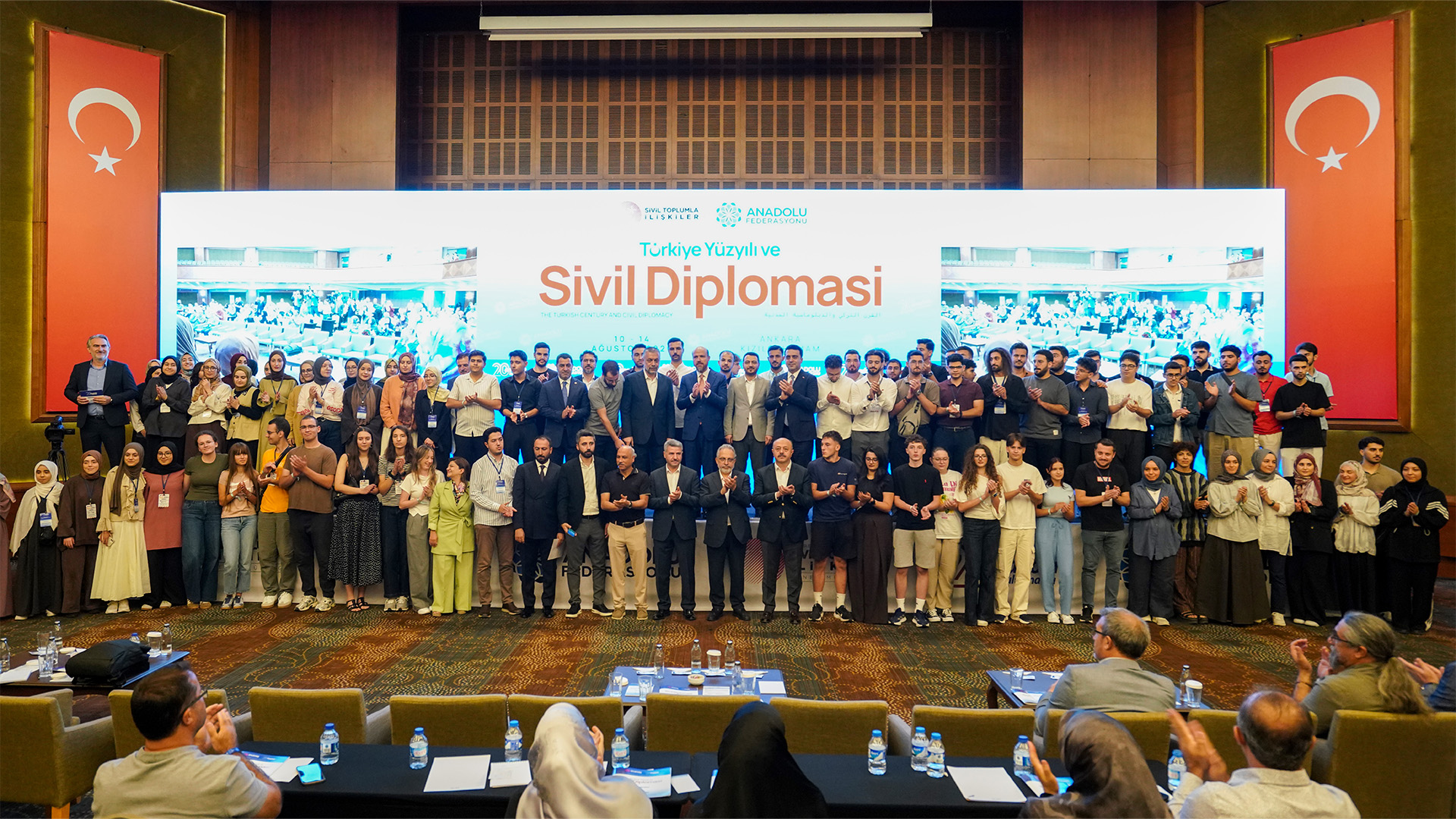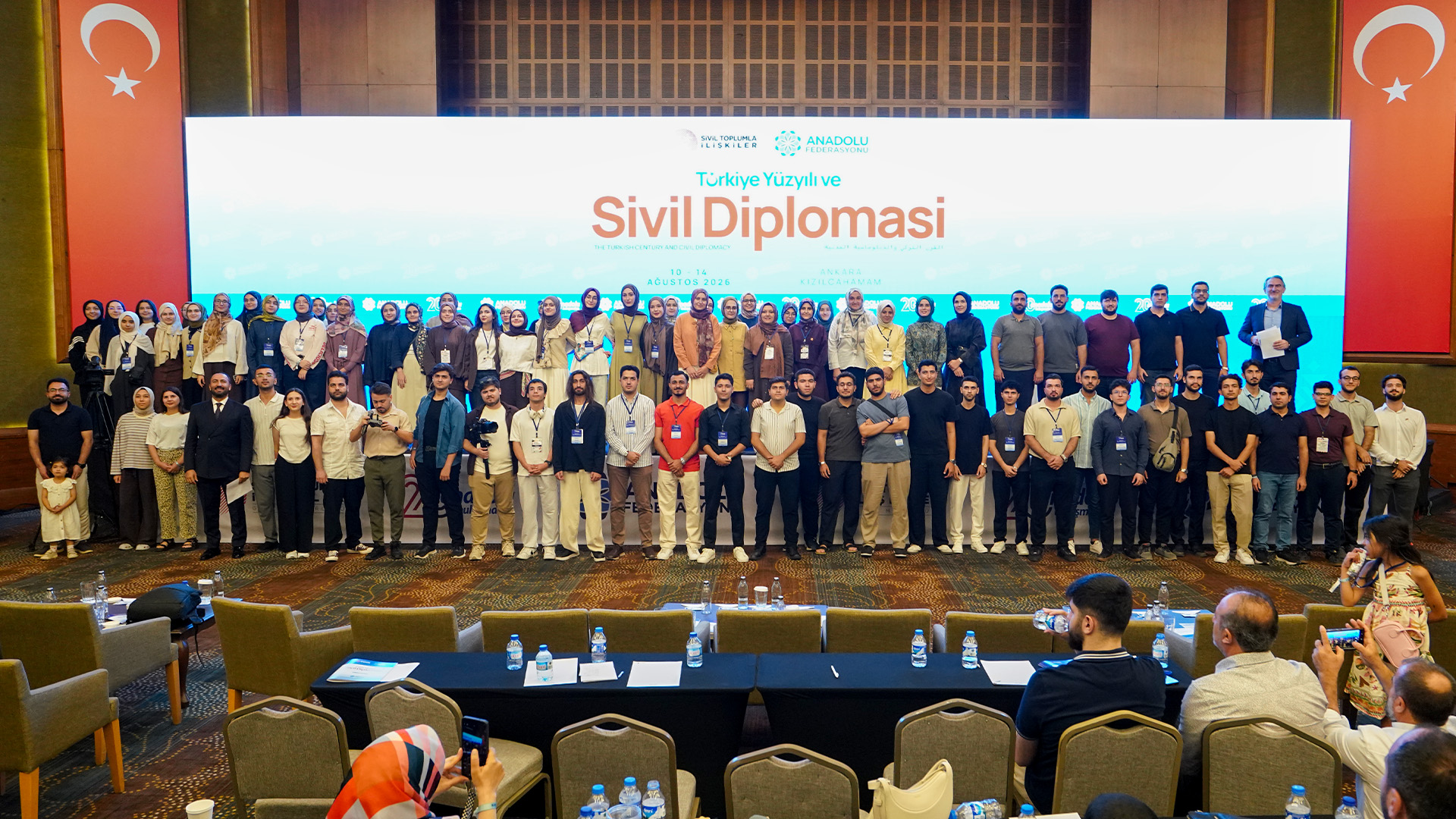
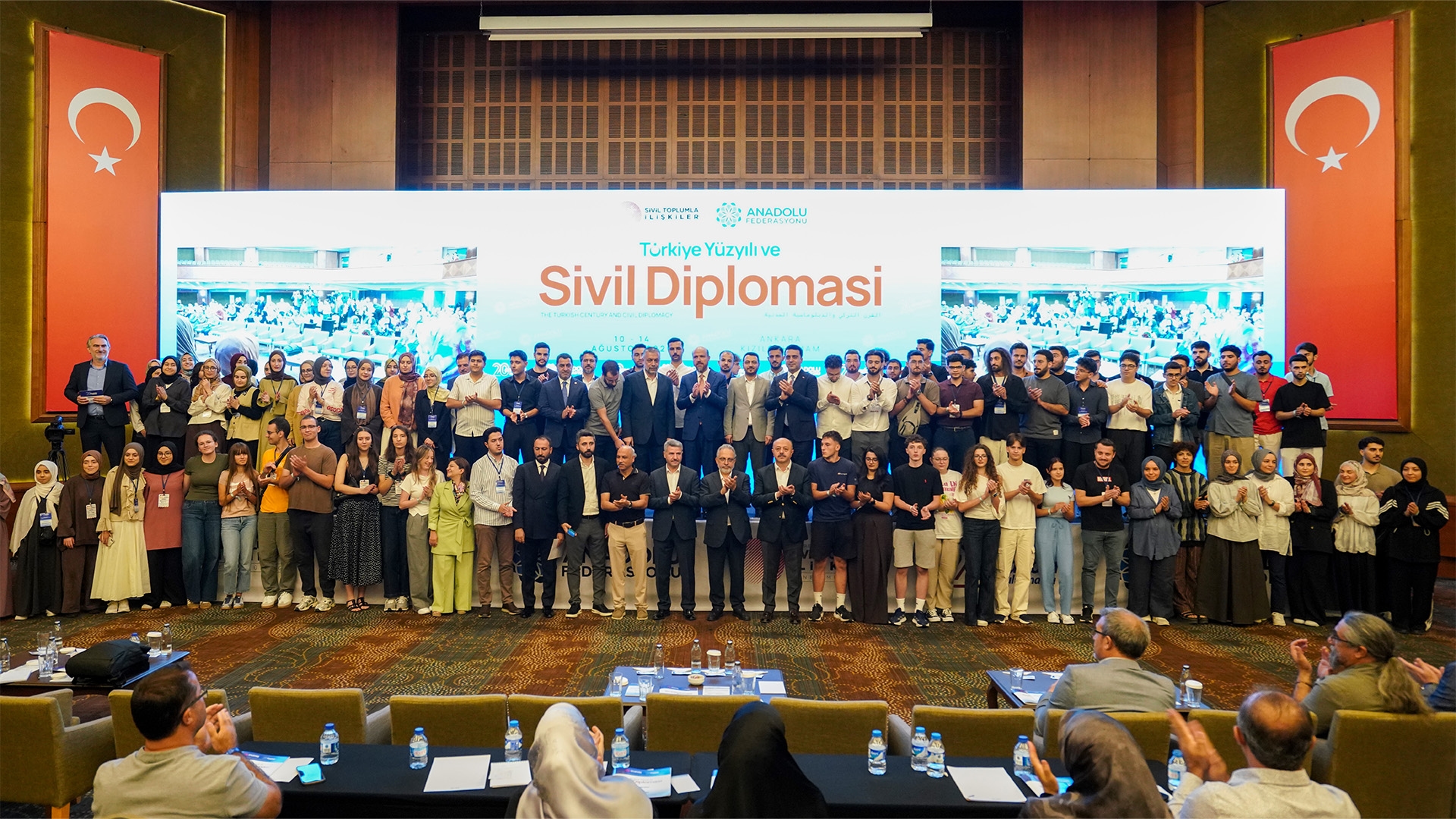
The 20th Anatolian Meetings, organized by the Anatolian Federation in Ankara under the theme of “The Century of Türkiye and Civil Diplomacy,” came to an end following an intensive five-day program. The gathering brought together many prominent figures from national and international circles.
Held between 10-14 August 2026 to discuss solutions that civil society can produce in response to crises around the world, the 20th Anatolian Meetings concluded with comprehensive sessions and workshops. Bringing together academics, bureaucrats and civil society volunteers from Türkiye and abroad under the same roof, the gathering was held at Kızılcahamam Eliz Hotel Convention Center. In today's world, where global crises cannot be managed through traditional diplomatic methods, the constructive power of civil diplomacy was discussed for five days. Aiming to strengthen the grounds for solidarity among institutions, the gathering functioned as a strategic platform where new policy proposals were discussed.
CIVIL SOCIETY EDUCATION CURRICULUM LAUNCHED
On the first day of the organization, the Civil Society Education Curricula Launch was held, marking an important beginning. The curriculum, which was the product of long-term academic and practical work, was introduced to the public with the aim of providing civil society volunteers with the theoretical background they would need in the field. The launch program was recorded as a major step toward integrating innovative approaches in education into the civil sphere.
CIVIL SOCIETY AS A KEY ACTOR
The official opening of the Meetings began with the recitation of the Holy Quran, followed by welcoming speeches by İnönü University Rector Nusret Akpolat and President of the Serbia Türkiye Alumni Association Nazım Liçina. Subsequently, Anatolian Federation President Turgay Aldemir outlined the vision of the gathering with his opening speech titled “The Century of Türkiye and Civil Diplomacy.” Emphasizing that, in a period when balances of power are rapidly changing and wars and waves of migration are increasing, the areas in which states can produce solutions on their own are gradually narrowing, Aldemir stated that civil society organizations have risen to the position of key actors in international interaction.
THE PERMANENT IMPACT OF CIVIL STRUCTURES
In sessions where the vision of the public sector met the energy of civil society, Deputy Minister of Culture and Tourism of the Republic of Türkiye Dr. Serdar Çam took the floor with his presentation titled “Public and Cultural Diplomacy in the Century of Türkiye.” Çam recalled that official authorities may remain limited by their terms of office, whereas civil structures that transmit culture from one generation to another create a lasting impact, and stated that a strong state needs qualified civil society organizations. Supporting this vision, TİKA Vice President Yahya Coşkun spoke about TİKA's activities around the world and drew attention to the bridges of trust that Türkiye's development assistance and cultural restoration projects have built in the field of civil diplomacy.
CONFRONTING THE PAST
Peacebuilding and humanitarian diplomacy were also examined in depth at the gathering through presentations by experts. İHH Humanitarian Relief Foundation Vice President Hüseyin Oruç shared his experiences from the Bangsamoro peace process, demonstrating the vital role of civil society in conflict resolution. Stating that, instead of weapons being handed directly to the state, entrusting them to an independent commission helped overcome a psychological threshold, Oruç expressed that confronting the past and demonstrating a will for fair coexistence are essential for lasting peace.
WE MUST BUILD PERMANENT CAPACITIES
In another important session, Dr. İbrahim Altan, Deputy Secretary General of the Union of NGOs of the Islamic World (UNIW), delivered a speech titled “Crises, Humanitarian Aid and Volunteer Diplomacy.” Explaining that civil teams working in the field can establish a much faster and more impartial bridge of trust with local people, Altan emphasized that preserving the pure intentions of volunteers in the field is their greatest strength. Drawing attention to the necessity of going beyond meeting only immediate needs in crisis zones and creating permanent capacities, Altan stated that the foundation and guild culture of the ancestors provides inspiration for modern humanitarian aid practices today.
YOUNG PEOPLE ADDED DYNAMISM
In addition to the main sessions, projects carried out simultaneously also added great dynamism to the 20th Anatolian Meetings. Within the scope of the project “Young People's International Networking and Civil Diplomacy Skills in the Digital Age,” young people from different countries came together at common tables. The program, which aimed to increase young people's awareness of active citizenship, artificial intelligence, disinformation and inclusivity, included workshops, policy development studies and thematic forums. At the closing, Youthpass certificates documenting the achievements they gained throughout the activities were presented to the young participants. Alongside this intensive agenda, the 6th Children's Meetings were also held simultaneously, ensuring the participation of people from all age groups in the organization.
UNIVERSAL HUMAN RIGHTS ADVOCACY
One of the sessions that enhanced the academic depth of the gathering was the presentation by Prof. Dr. Muhittin Ataman, Member of the Presidential Council for Foreign Policy and Security, titled “The Crisis in the Global System: The Increasing Influence of NGOs.” Analyzing the deadlocks in the current global system, Ataman stated that civil society has become a proactive force transcending borders at points where nation-states are locked in deadlock. Prof. Dr. Bekir Berat Özipek, a faculty member at Medipol University, emphasized universal human rights advocacy transcending geographical borders in his speech titled “Global Civil Communication and the Possibilities of a Transnational Conversation.” Özipek elaborated on the intellectual and moral responsibility that civil society should undertake in building a just world.
TÜRKIYE'S MOST NATURAL CIVIL DIPLOMACY AMBASSADORS
In the section where the cross-border effects of diplomacy were discussed, Abdulhadi Turus, President of the Presidency for Turks Abroad and Related Communities (YTB), spoke on “Diaspora Networks and Cultural Diplomacy,” one of the most strategic topics of the program. Turus stated that citizens in the diaspora are Türkiye's most natural civil diplomacy ambassadors and explained the vital function of these networks in keeping global ties between the homeland and its communities alive. Assoc. Prof. Dr. Fatih Kanca, Counselor for Religious Services at the Embassy of the Republic of Türkiye in Washington, shed light on the intercontinental effects of institutional structures across the Americas with his presentation titled “Civil Diplomacy in the USA from the Perspective of the Century of Türkiye: Religious Services, Diaspora and Cultural Interaction.” Dr. Selman Dilek, an NGO representative from Germany, shared with participants the dialogue mechanisms established by civil society in Europe while preserving its unique culture in the face of digitalization under the theme “Intercultural Communication in the Age of Digital Homogenization.”
FROM LOCAL EXPERIENCES TO THE GLOBAL DIPLOMACY TABLE
While the reflections of decision-making processes on foreign policy were addressed from a broad perspective, Dr. Mehmet Köse from the Africa and Middle East Foundation evaluated the multidimensional contribution of civil actors to policymakers in his presentation titled “The Impact of the Diversification of Decision-Making Mechanisms on Foreign Policy.” At the point where field practices met theory, Mehmet Ali Eminoğlu, Head of Foreign Relations at the Anatolian Federation, explained how local experiences are carried to the global diplomacy table in the session “The Effects of the Local and International Activities of NGOs on Civil Diplomacy.” Oktay Çetin from the Aziz Mahmud Hüdayi Foundation added a deep spiritual framework to the issue with his presentation “The Importance of Moral Education in Civil Diplomacy and the Role of Foundations.” Çetin stated that the foundation tradition centered on compassion and mercy leaves much more lasting traces than diplomatic contacts.
THE UNITING POWER OF CINEMA AND LITERATURE
In the sessions centered on culture and the arts, renowned director Derviş Zaim and writer Peren Birsaygılı Mut took the floor. Within the scope of the gathering, Derviş Zaim's film Flashmemory was screened for the audience, and drawing on his own film, he explained through cinematographic examples the powerful contribution of cinema to the processes by which societies understand one another through its universal language that eliminates borders. Peren Birsaygılı Mut also drew attention to the unifying power of literature and written culture in building the common memory of societies.
THE CRITICAL ROLE OF NGOS
At the Meetings, Necmeddin Bilal Erdoğan, Chairman of the Board of Trustees of the İlim Yayma Foundation, and Fatma Şahin, Mayor of Gaziantep Metropolitan Municipality, also addressed the participants. Necmeddin Bilal Erdoğan drew attention to the critical role of civil society organizations in revitalizing younger generations and building civilization, stating that voluntary organizations serve as load-bearing pillars in Türkiye's global vision. Fatma Şahin, meanwhile, explained through examples from her presentation “Resilient City Gaziantep” how cooperation between local administrations and civil society can transform into a life-saving practice in times of crisis. Şahin particularly emphasized that the integration of civil initiatives with the public sector in disaster management gives great momentum to civil diplomacy.
THE DIPLOMACY VISION OF THE FUTURE
The gathering, during which vital issues such as the collapse of the global system, humanitarian crises, regional conflicts, invisible diplomacy and diaspora networks were addressed from multiple dimensions over five days, concluded with an evaluation meeting. The 20th Anatolian Meetings, which strengthened Türkiye's humanitarian stance on the international stage and shed light on the diplomacy vision of the future, concluded by drawing attention to the constructive role of civil society in producing peace and security.