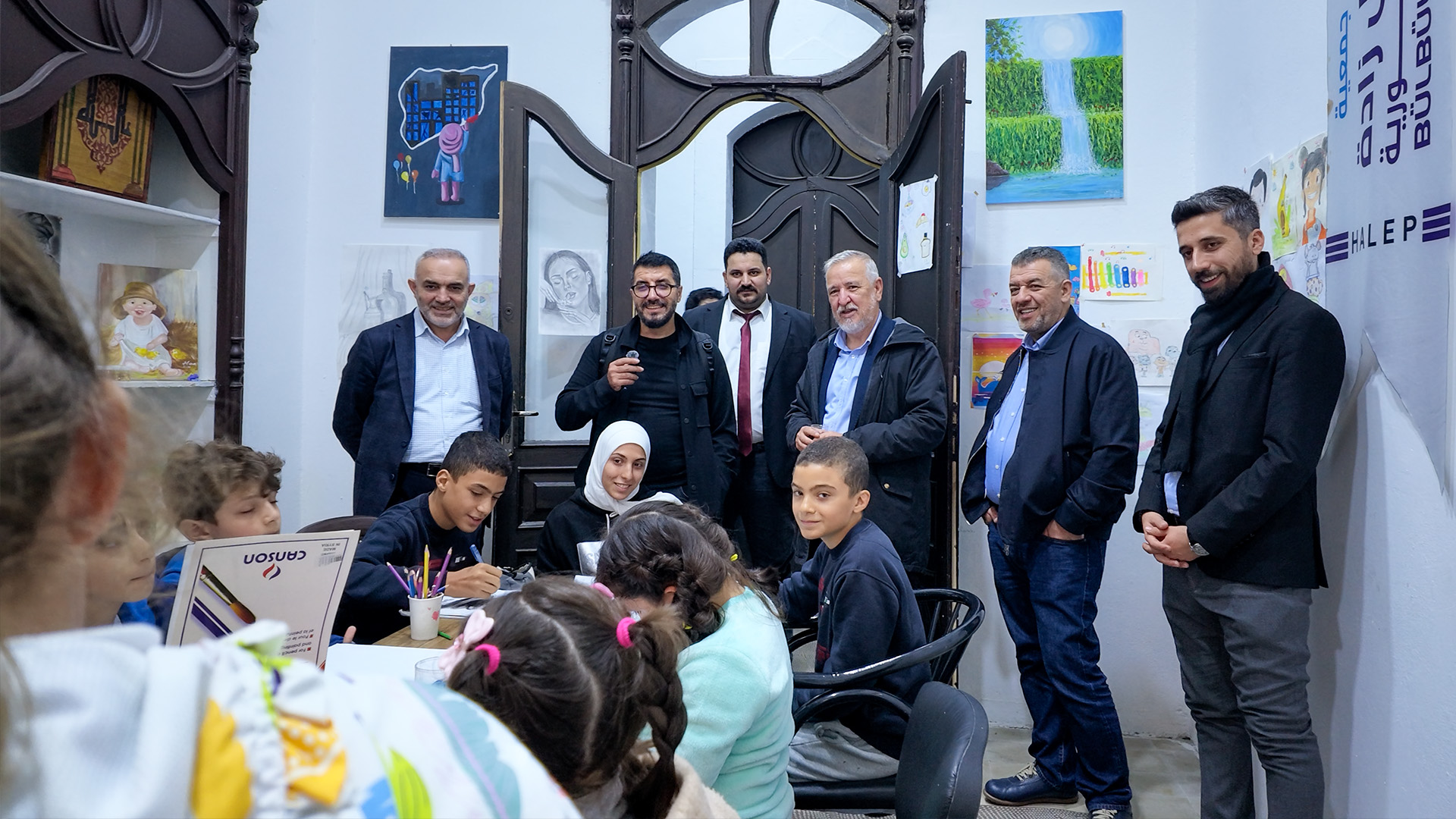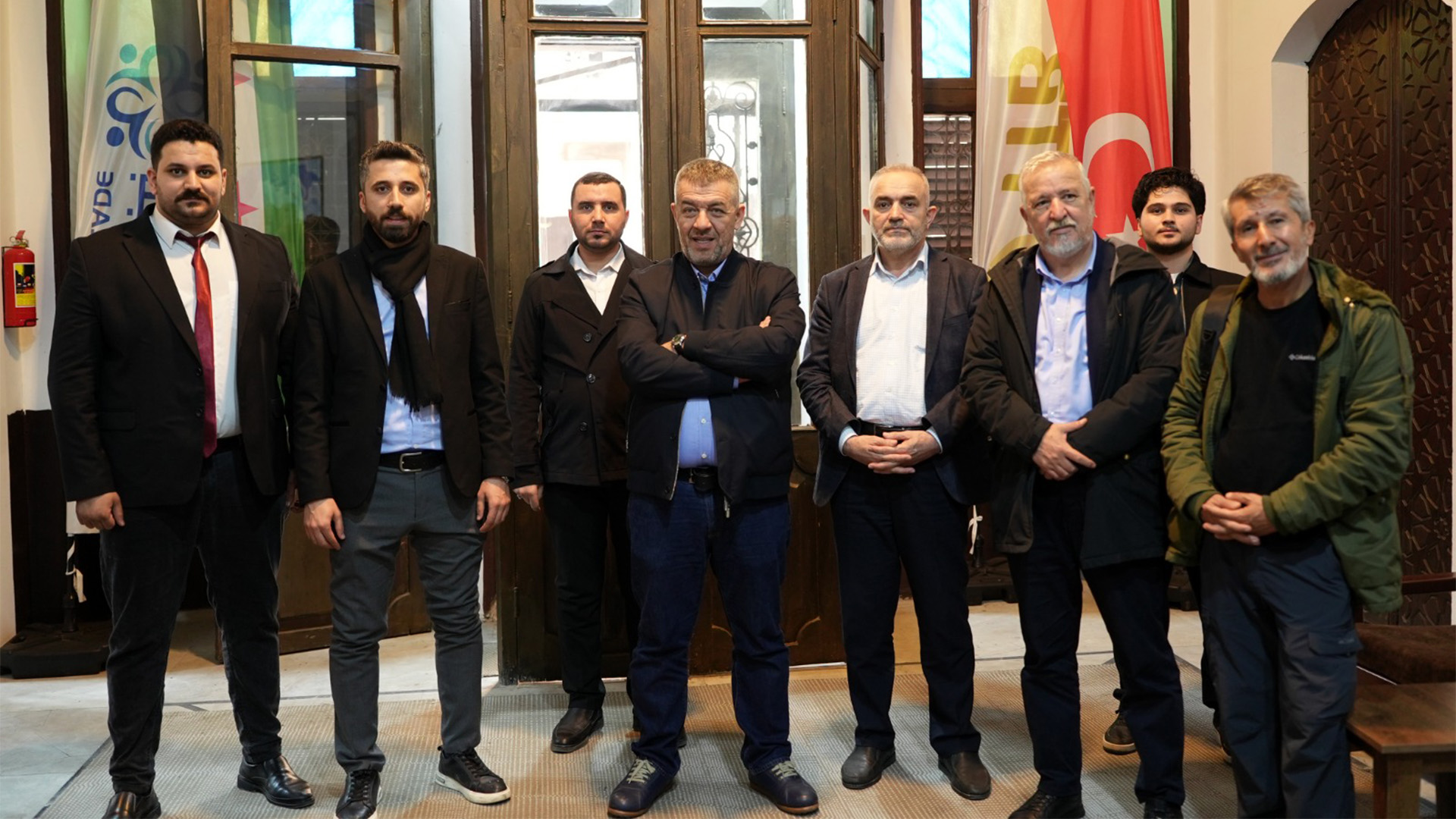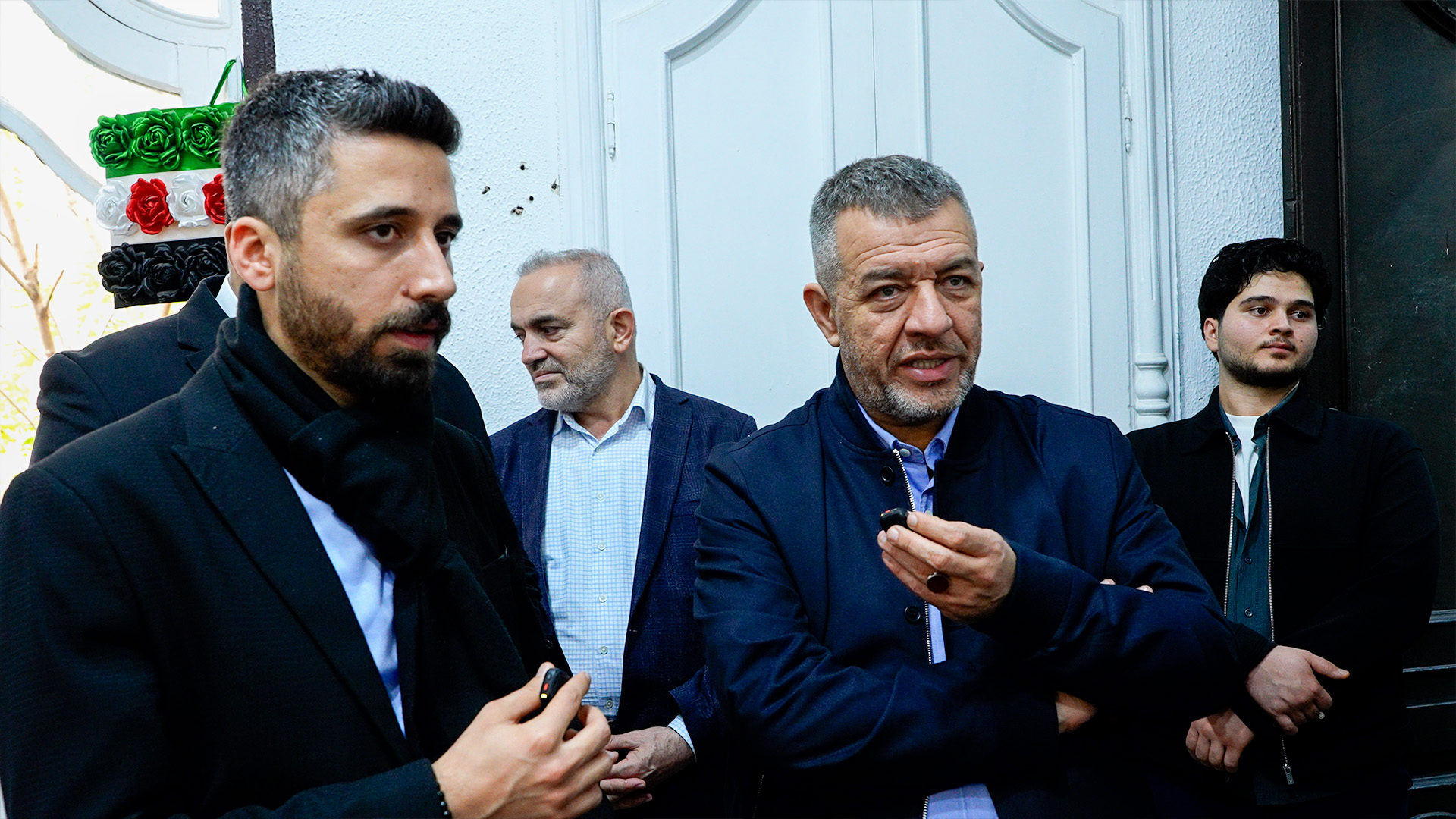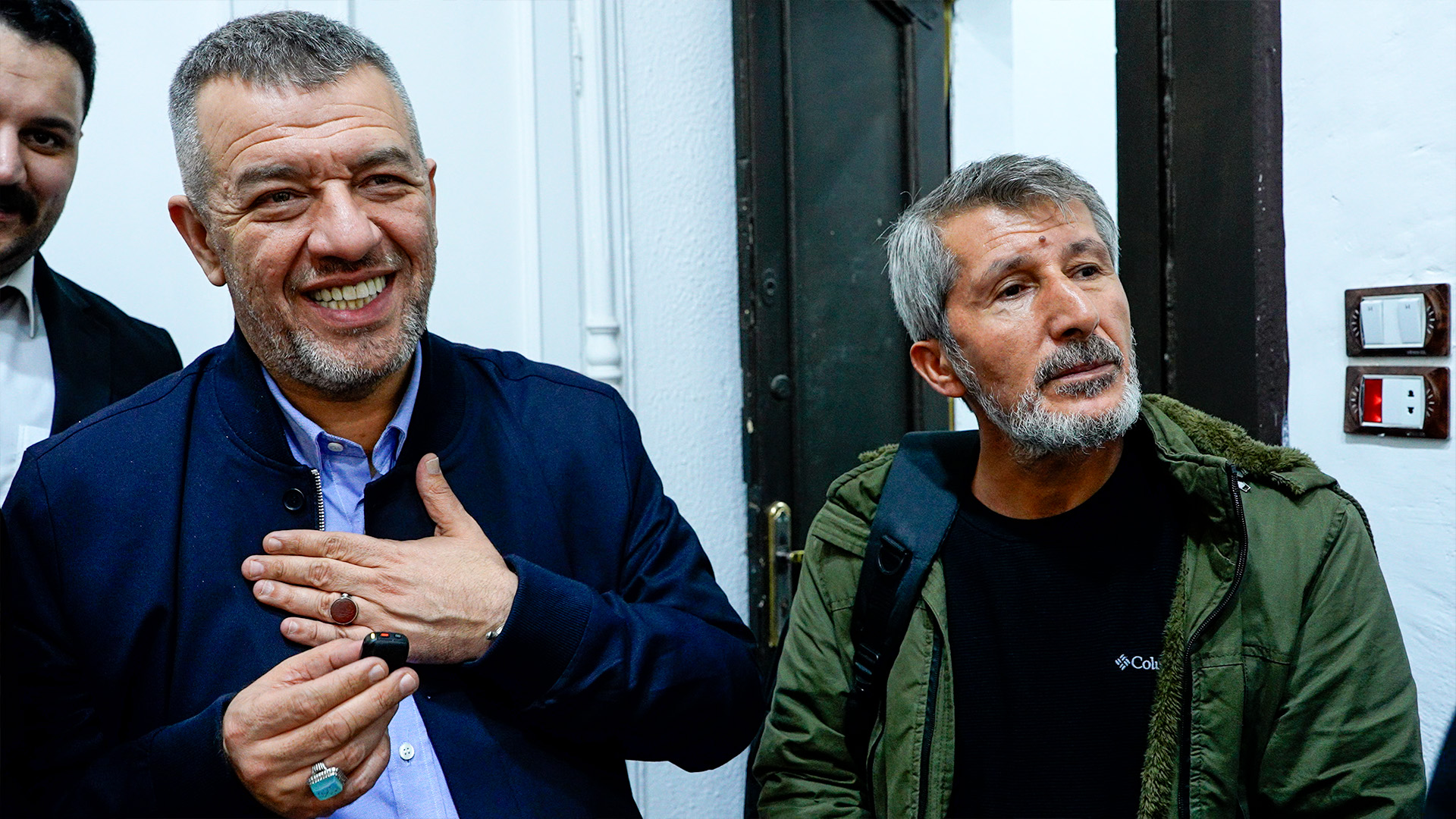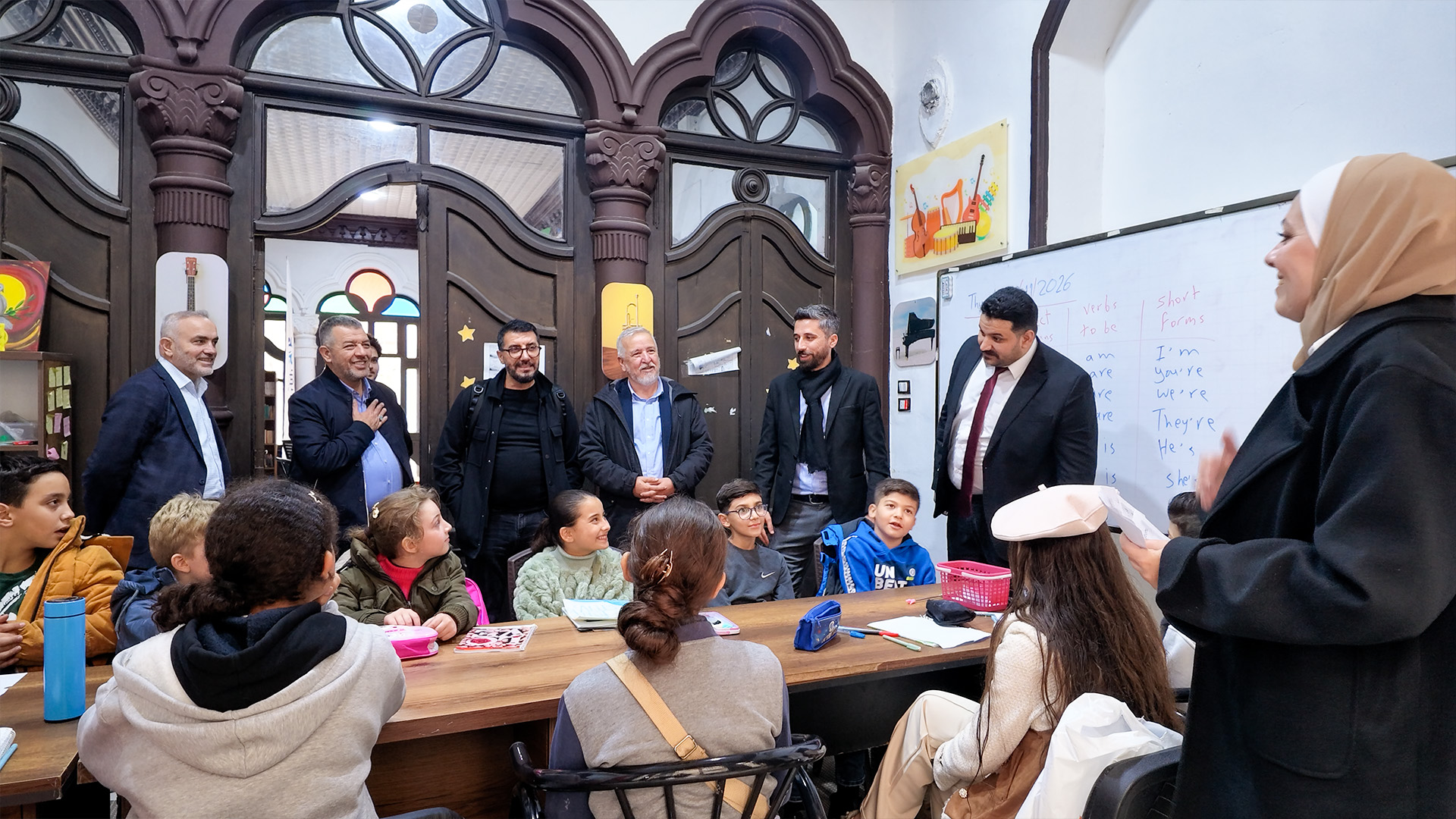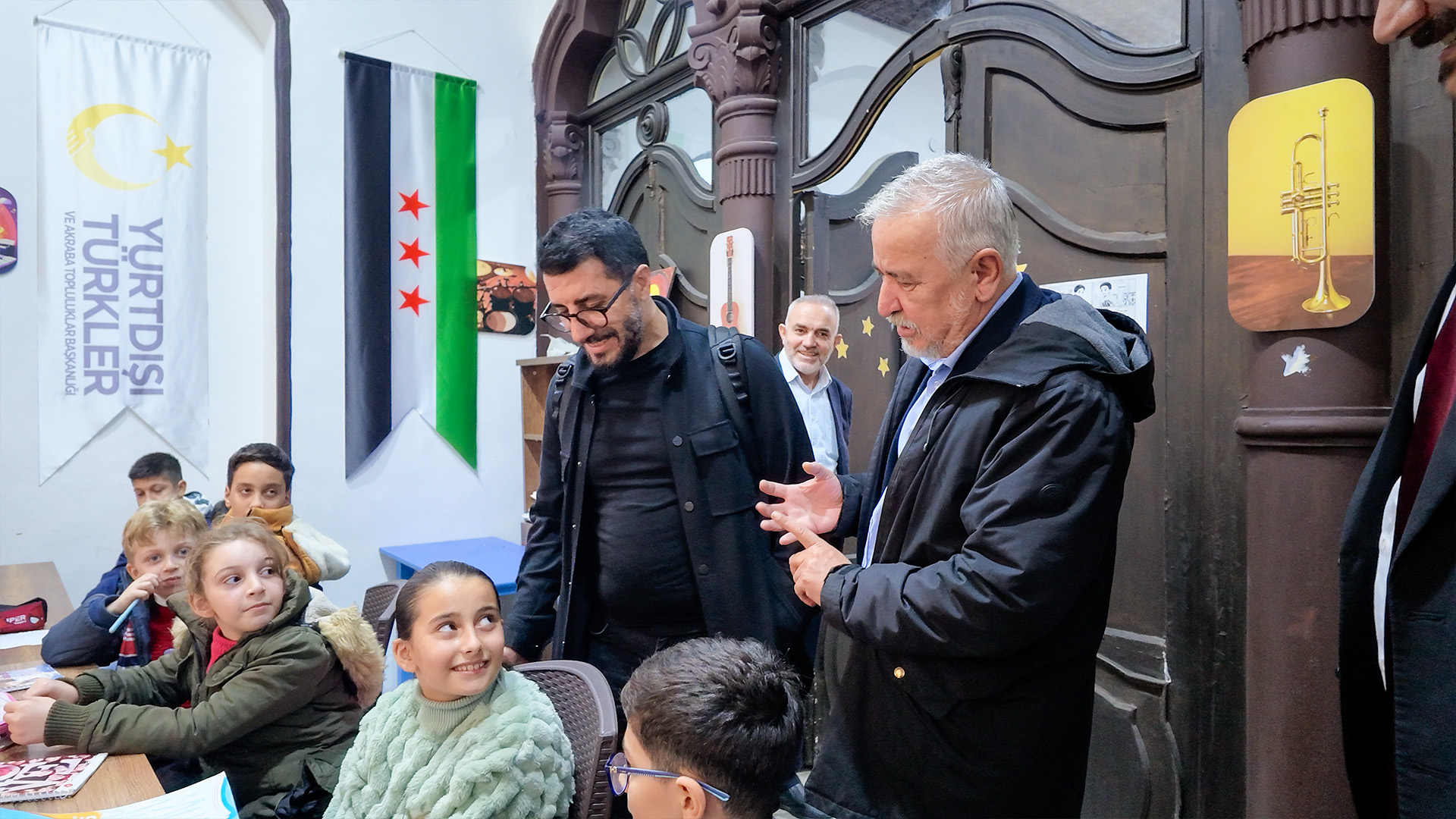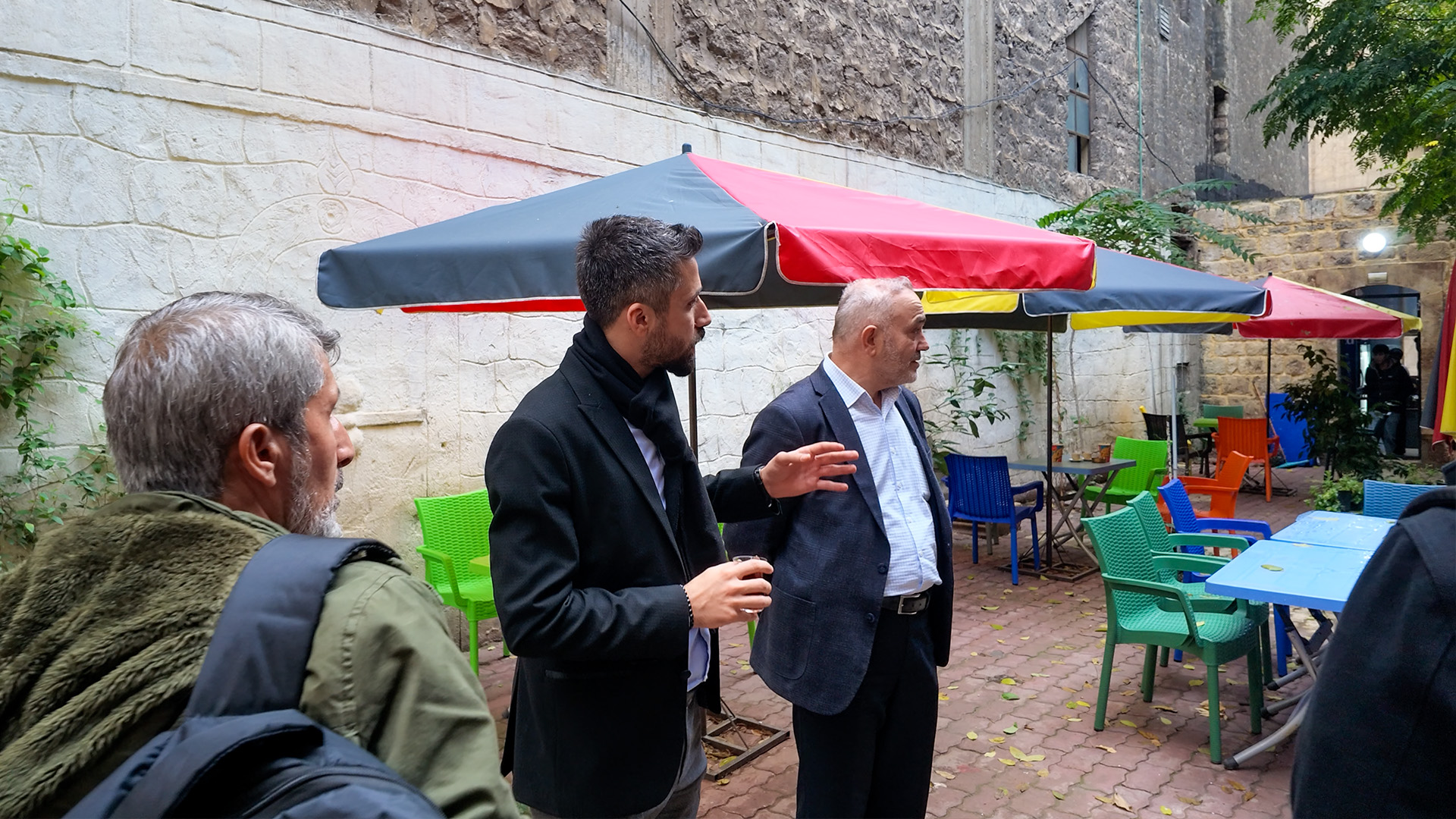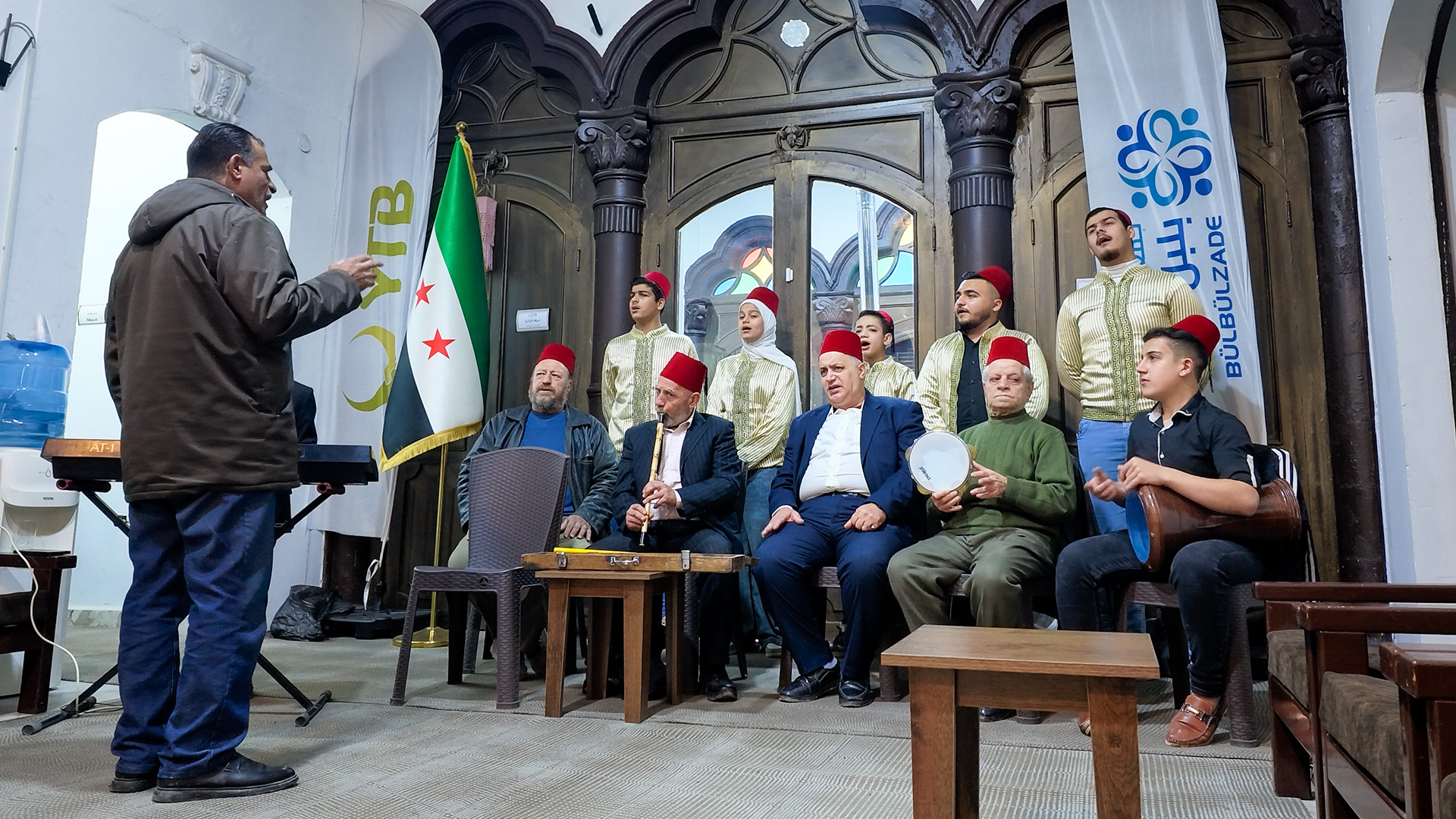
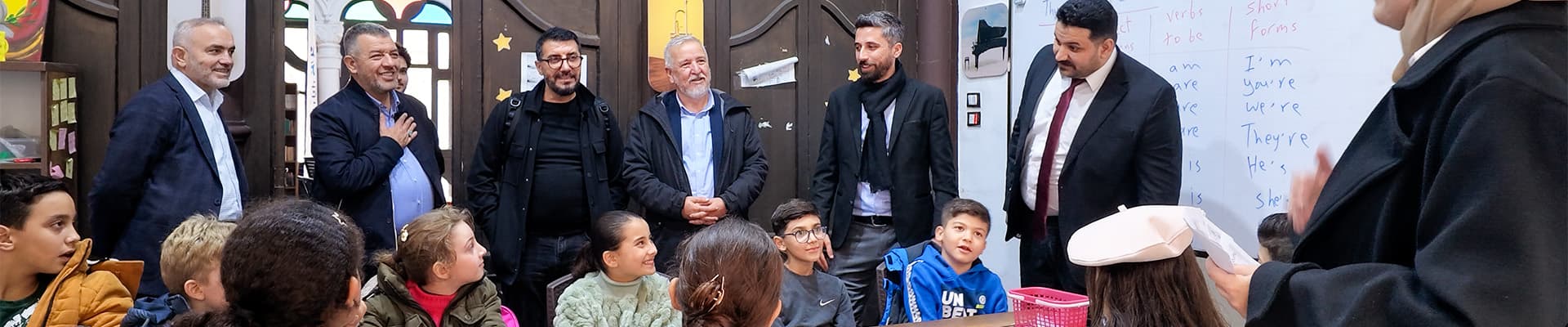
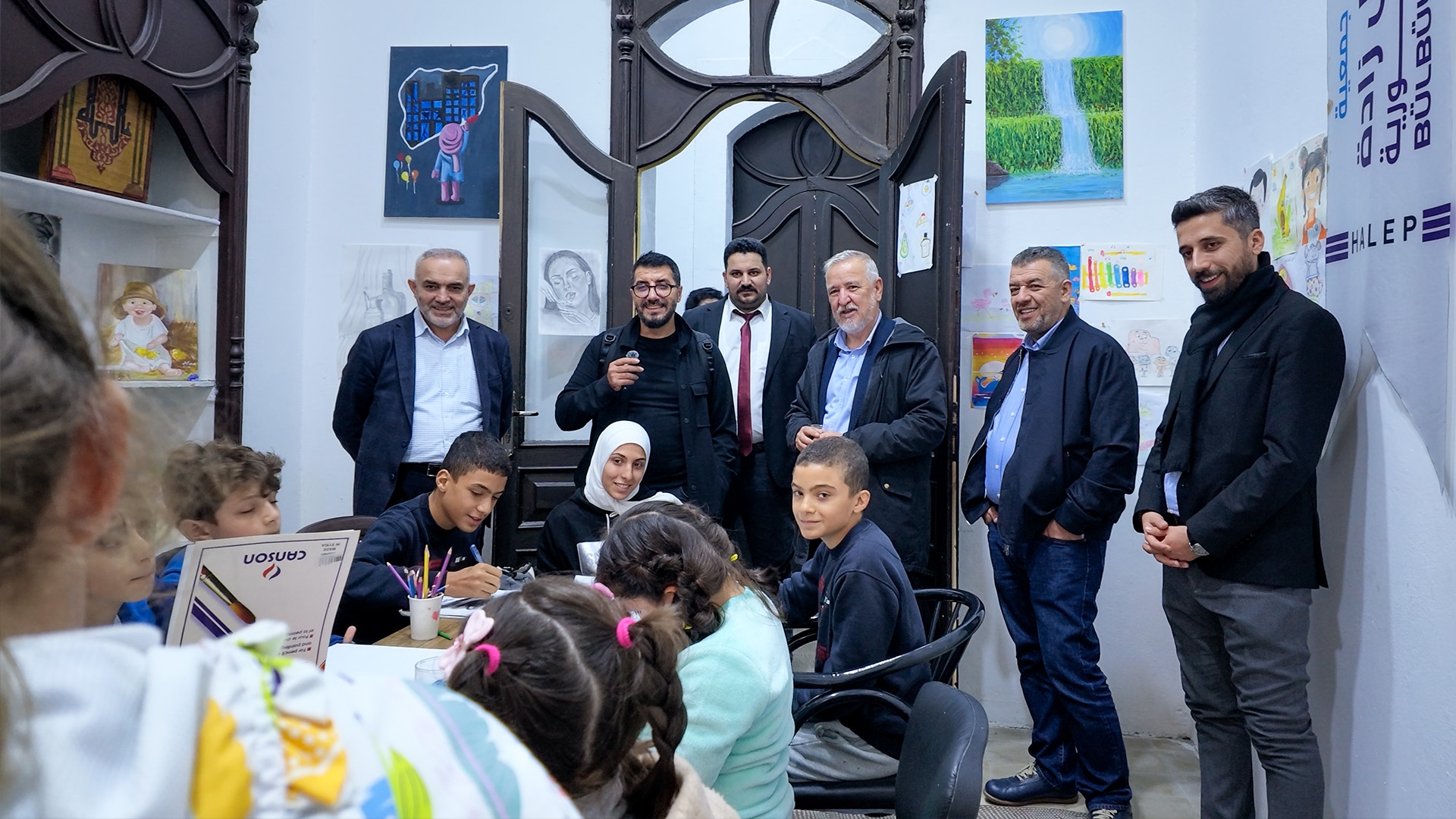
Journalist-writers Ersin Çelik, İsmail Kılıçarslan and Aydın Ünal, who were holding meetings in Aleppo, visited the activities at the Aleppo Anatolian Cultural Center, established by the Bülbülzade Foundation in a historic stone mansion, and inspected the work on site.
Journalist-writers Ersin Çelik, İsmail Kılıçarslan and Aydın Ünal, who were in Aleppo as part of the “Türkiye Century and Civil Diplomacy” workshop, visited the Aleppo Anatolian Cultural Center (AKM), established in the city by the Bülbülzade Foundation in cooperation with the Presidency for Turks Abroad and Related Communities (YTB). During their tour of the center, which was opened after the restoration of a historic stone mansion dating back to 1912, Çelik, Kılıçarslan and Ünal received information from officials and evaluated on site the educational, cultural and social development activities being carried out.
A MULTIFACETED DEVELOPMENT INITIATIVE FROM EDUCATION TO ART
During the visit, the center's extensive range of services for the people and young people of Aleppo was examined. It was stated that the center, established by the Bülbülzade Foundation with the vision of “reforming the generation and developing the land,” offers Turkish and Arabic language courses, vocational training programs, painting workshops and musical instrument lessons. In addition to psychosocial support and counseling services provided to help erase the scars of war, legal consultancy for individuals who have suffered rights violations, special education programs supporting the social inclusion of people with disabilities, safe play areas for children and youth projects were also stated to constitute the center's main areas of activity.
THE RAPID IMPACT OF CIVIL SOCIETY
In their remarks during the visit, Çelik, Kılıçarslan and Ünal stated that they had personally witnessed the rapid and transformative impact of civil society in Aleppo. Emphasizing that restoring such a historic building and preparing it for educational activities within a short time after the revolution required tremendous effort, the guests stated that such an achievement could only be accomplished by a well-established and qualified civil society organization. Çelik and Kılıçarslan noted that carrying out activities in which art and painting are given prominence in the heart of Aleppo was a precisely targeted step toward reviving the city's spirit, and emphasized that the center had brought strong vitality to the city's cultural fabric.
A MESSAGE OF COOPERATION
Stating that they wished to make tangible contributions to the activities at the center, Ersin Çelik, İsmail Kılıçarslan and Aydın Ünal also shared their suggestions regarding potential areas of joint work. The writers noted that they would like to support the production of high-quality translated works so that more books and a greater variety of books could be made available at the center, adding that they wished to contribute to these efforts. Çelik and Kılıçarslan also emphasized that they were ready to provide the necessary support by remaining in contact to help establish the infrastructure for a media course and workshop within the Aleppo AKM.