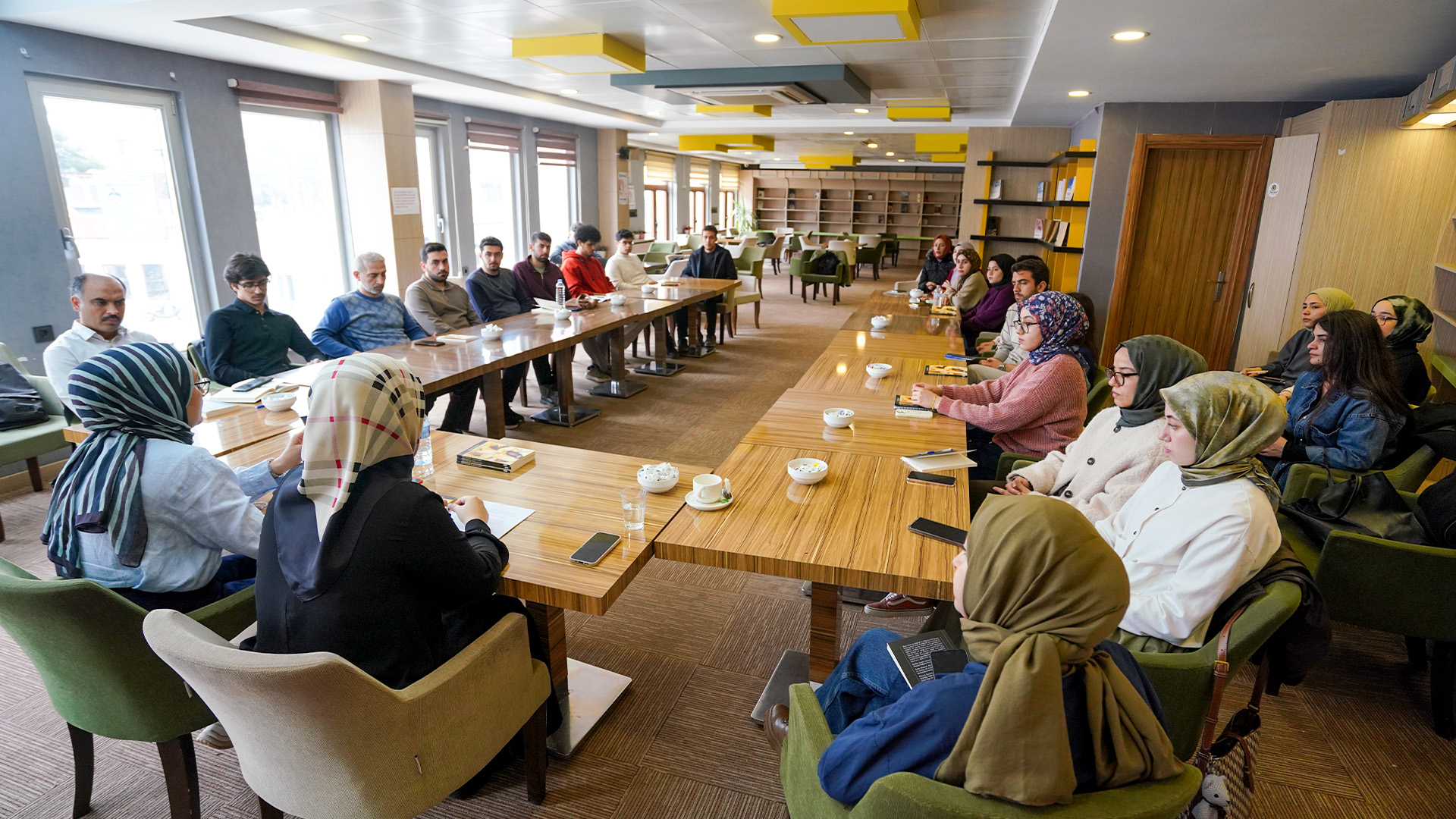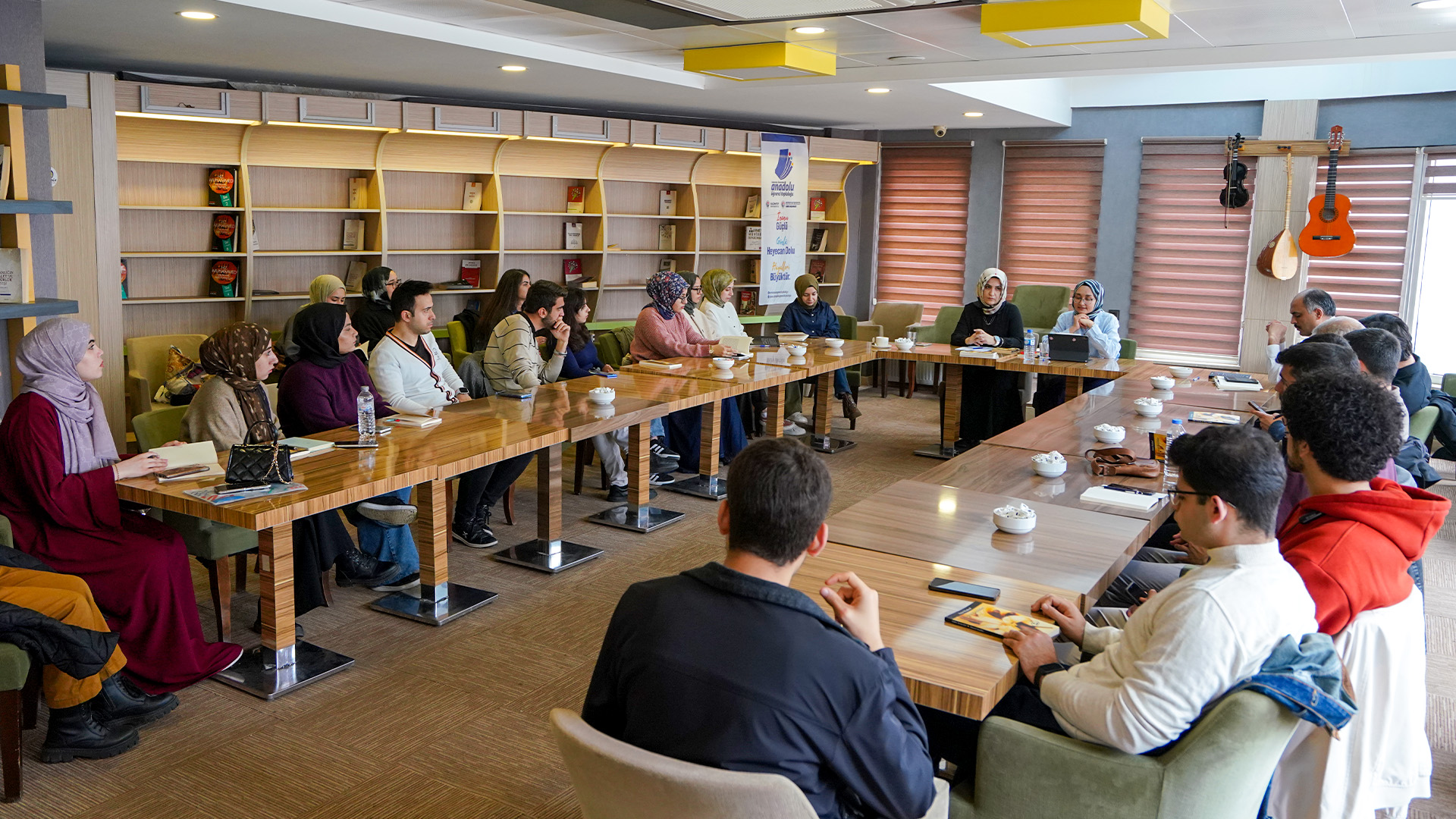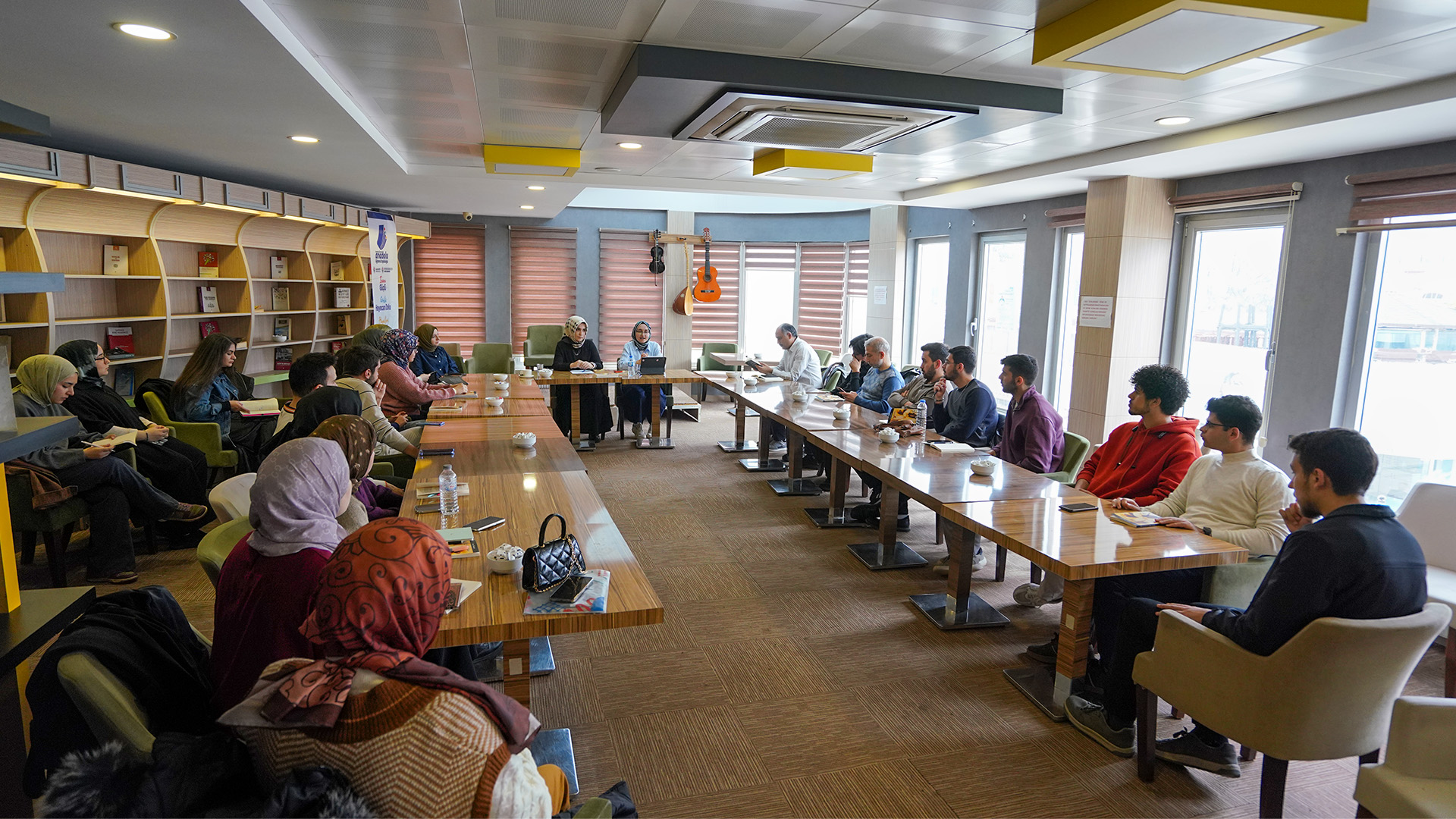
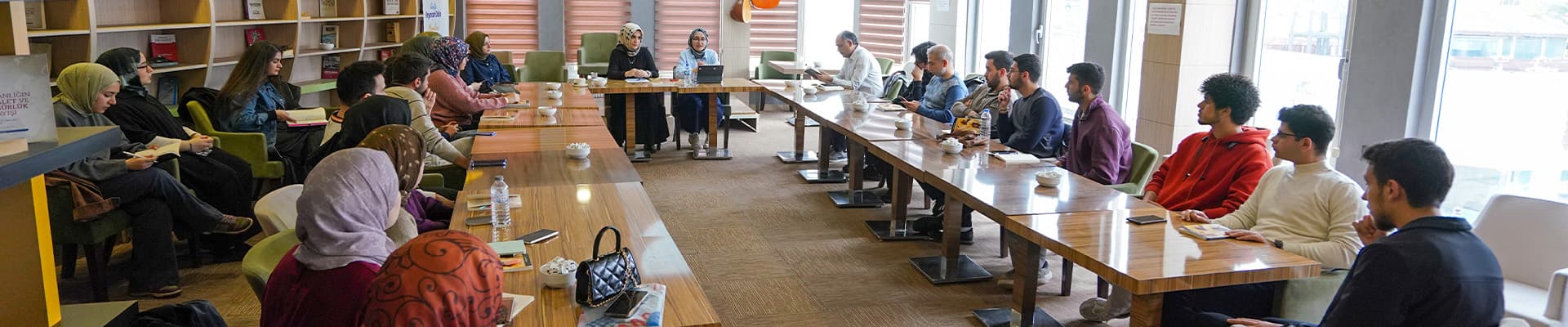
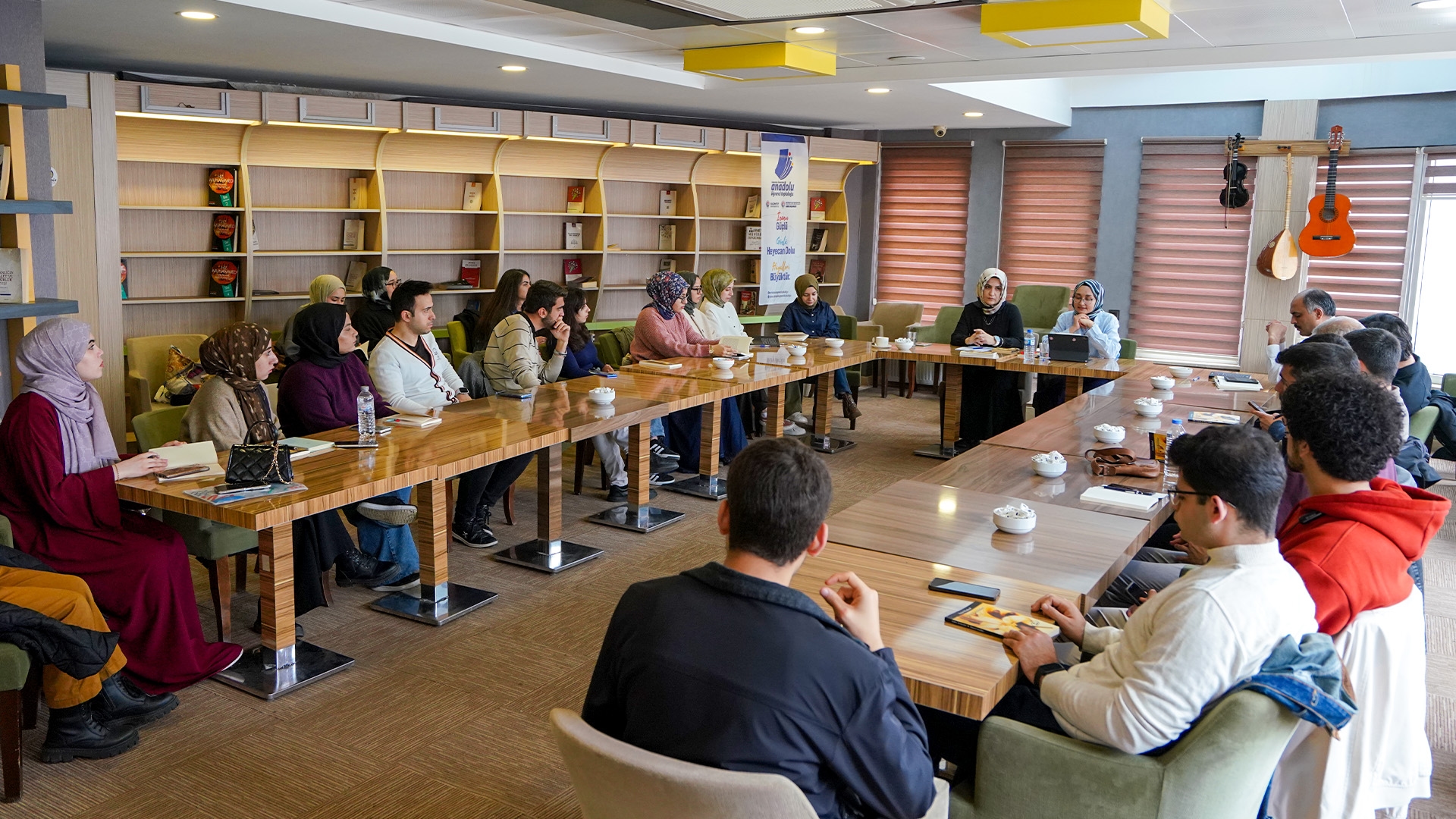
We conducted an in-depth analysis of Amin Maalouf’s work “In the Name of Identity”, in which he examines the phenomenon of identity and crises of belonging, together with participants from different cities and disciplines at Pusula Book & Coffee.
The Anatolian Student Union, operating under our foundation, and the Gaziantep University Anatolian Student Community continue to bring book lovers together through the Oku’yorum Project. In this meaningful reading initiative, which has continued uninterrupted for three years, we held the first analysis session of the second term. We selected Amin Maalouf’s striking work “In the Name of Identity” as the opening book of the term. We gathered at Pusula Book & Coffee on the Gaziantep University campus and thoroughly examined the concept of identity—one of the most pressing issues of the modern world.
AN INTERDISCIPLINARY ANALYSIS ACROSS CITIES
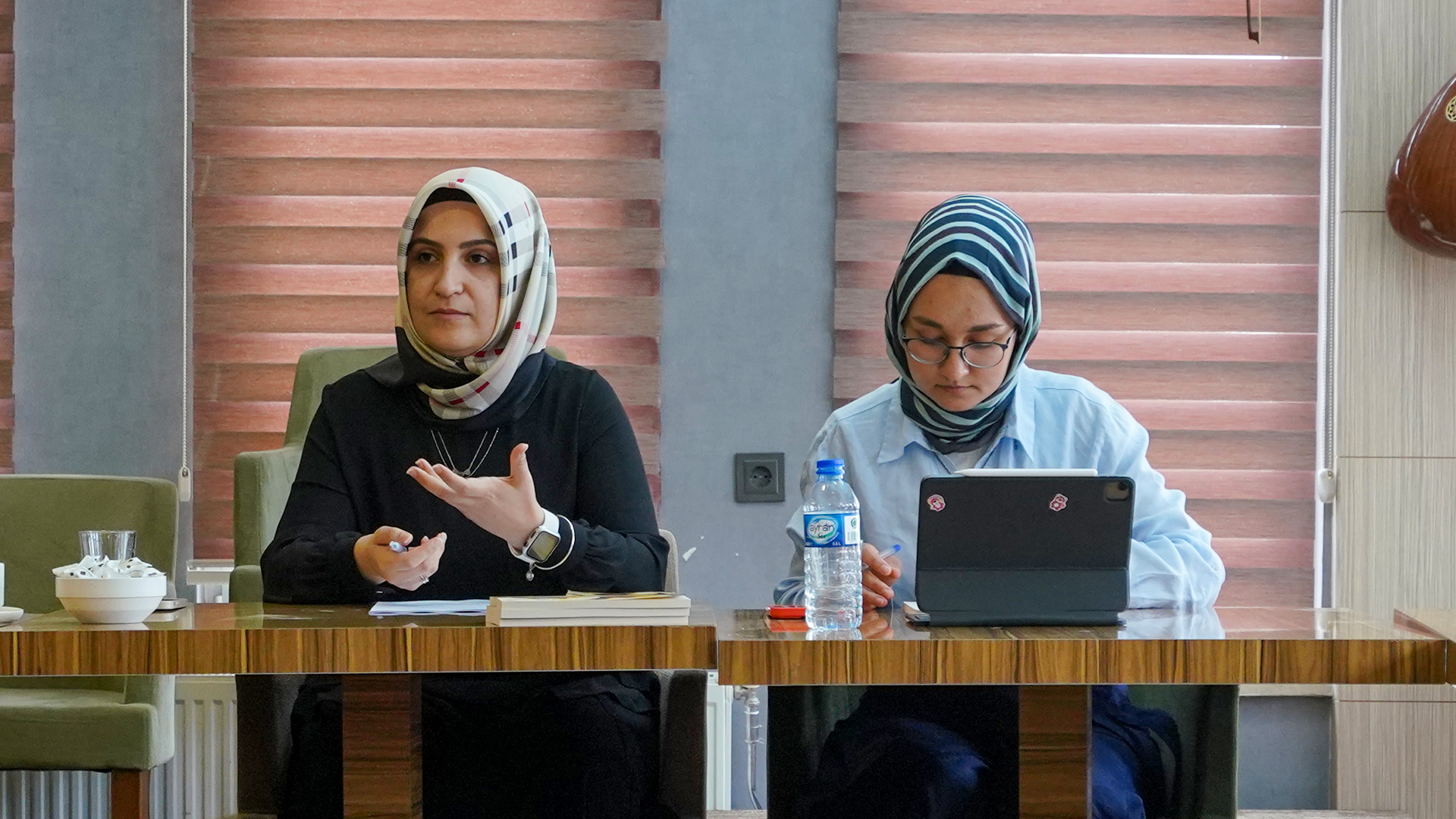
Our event was not limited to students in Gaziantep. The participation of guests who traveled from other cities specifically for this session further enriched the diversity of ideas at the table. In the session moderated by Rukiye Kaplan, we explored in depth the dual impact of identity on the human psyche. We discussed how identity can be both a foundational element that shapes us and, at the same time, a factor that can lead to polarization and conflict.
The unique perspectives offered by participants studying in a wide range of disciplines—from engineering to theology, from medicine to social sciences—added both academic and human depth to our discussions. This interdisciplinary approach greatly contributed to interpreting Maalouf’s universal messages along a broad line extending from the local to the global.
ON AMIN MAALOUF AND “IN THE NAME OF IDENTITY”
In this essay, Lebanese-born French author Amin Maalouf raises the question of why many people resort to violence in defense of their identities, and throughout our discussion, we pursued this critical question. We examined in detail how reducing a person to a single identity leads to dangerous consequences, emphasizing the indivisibility of identity. We also explored how the distinction between “us” and “them” transforms identity into a deadly weapon and analyzed the crises of belonging at the root of social conflicts.
As the author suggests, we sought to develop a universal perspective by looking beyond mere tolerance and exploring how different parts of our identities can coexist without being denied in today’s world.
During this productive gathering at Pusula Book & Coffee, we also shared our own journeys of identity inspired by the lines of the book. Through the Oku’yorum Project—where we deepen as we read and grow richer as we discuss—we continue to read, understand, and make sense of the issues of our civilization and our time together.