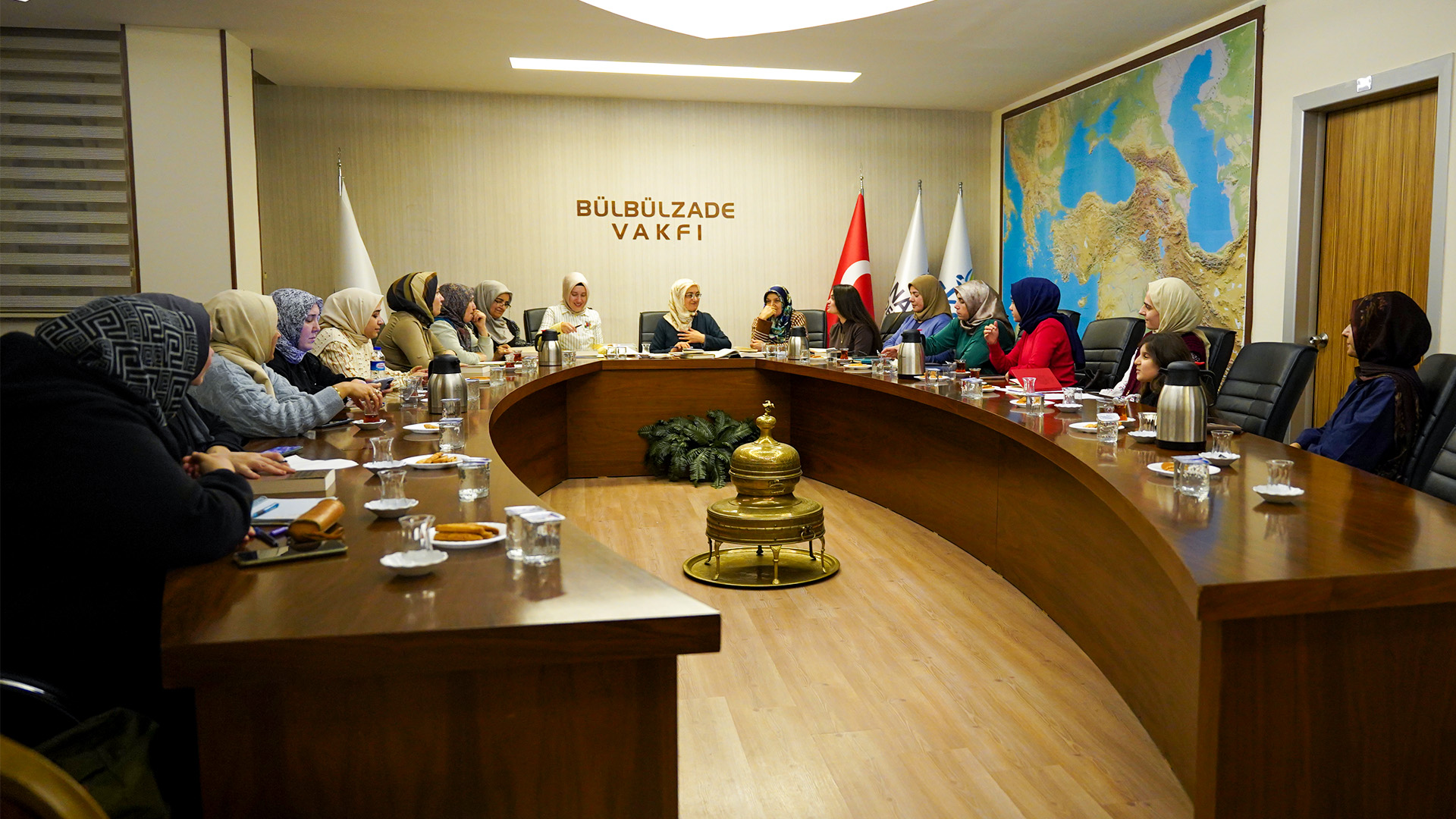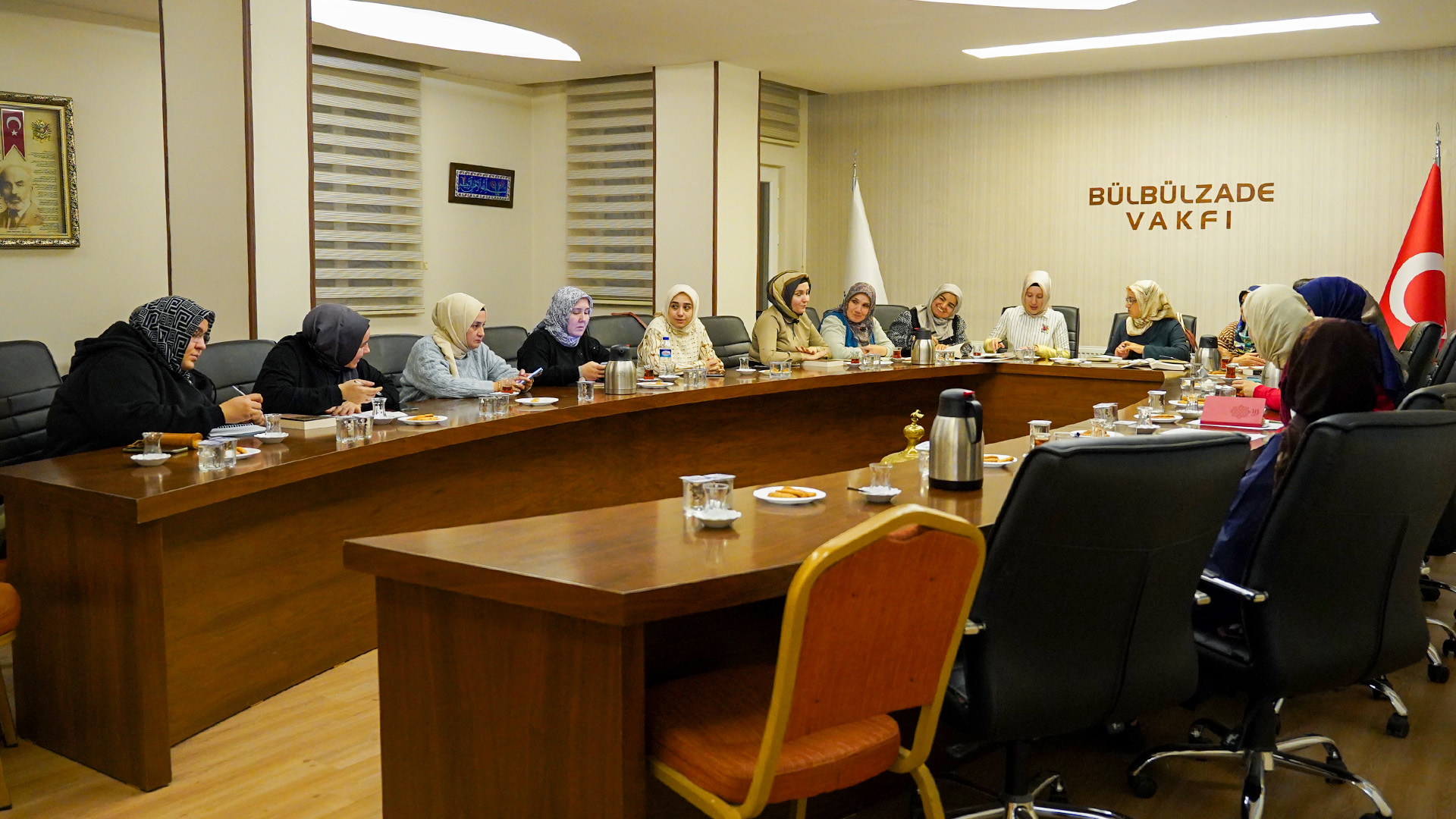
This week’s session of Mozaik Tafsir Readings examined the historical, sociological, and conceptual dimensions of the environment in which the Qur’an was revealed and the mindset of Jahiliyyah.
At this week’s session of Tafsir Readings, organized by the Mozaik Women and Family Association, pre-Islamic Arab society and the concept of Jahiliyyah were brought into focus in order to gain an accurate understanding of the social environment into which the Holy Qur’an was revealed. The programme began with a reading from the introductory section of İzzet Derveze’s tafsir. During the opening of the session, it was emphasized that the revival of the besieged Islamic world would only be possible by placing the Qur’an at the centre of life. It was stated that, through the work he wrote in the libraries of Istanbul during the years he spent in exile from Palestine, Derveze regarded tafsir not merely as an academic pursuit but as a historical responsibility. This approach was associated with the understanding of “tafsir as a method of resistance,” which has been emphasized since the beginning of the course.
THE CONCEPTUAL WORLD OF THE FIRST ADDRESSEES
In the introductory section of the programme, the tribal system of the period was discussed with reference to Montgomery Watt’s book Muhammad at Mecca. The concepts of protection, qisas (retaliatory justice), and diyah (blood money) were examined through verses 45 of Surah al-Ma’idah and 178 of Surah al-Baqarah. It was noted that although the practice of qisas may appear harsh from today's perspective, it established a certain mechanism of justice by placing shared responsibility on the tribe in an environment where no public order existed. Attention was also drawn to the fact that the words “wali” and “mawla,” as used in the Qur’an, meant “a friend prepared to provide support through armed force” in the understanding of the first recipients of revelation.
JAHL IS UNDERSTOOD AS THE OPPOSITE OF HILM
In the second part of the session, the concept of Jahiliyyah was discussed in light of the works of Mehmet Azimli, Toshihiko Izutsu, and Ekrem Demirli. Considering the Mu‘allaqat poems, caravan trade extending to distant geographical regions, and established tribal law, it was stated that describing pre-Islamic Arab society as ignorant or primitive did not reflect historical reality. Referring to Toshihiko Izutsu’s conceptual analysis, the session explained that the word “jahl” is not the opposite of knowledge (‘ilm), but rather the opposite of the concept of “hilm.” It was stated that jahl means being unable to control oneself, regarding power as the measure of right, and confusing revenge with justice, whereas hilm means restraining one’s anger and upholding justice despite having the power to act otherwise. It was emphasized that Amr ibn Hisham, who was known as “Abu’l-Hakam” during his time, was given the name “Abu Jahl” not because of his intelligence, but as a reference to his arrogance in the face of truth. Supported by verse 63 of Surah al-Furqan and examples from Surah Yusuf, this section also introduced the participants to Ekrem Demirli’s approach, which examines Jahiliyyah on three levels: historical, Qur’anic critique, and mindset.
UNDERSTANDING THE TRANSFORMATION REQUIRES KNOWLEDGE OF THE REVELATION CONTEXT
In the following part of the session, attention was given to Adem Apak’s historical perspective. It was stated that understanding the profound transformation brought about by Islam requires first understanding the social structure that preceded it. Accordingly, the commercial, economic, legal, and human relations of pre-Islamic Mecca were evaluated. The first audience of revelation, consisting of Christians, Jews, Zoroastrians, and polytheists, was also discussed, with deliberations held around the question, “Why was revelation sent down in Mecca?” It was reported that Apak preferred the expressions “pre-Islamic Arab culture” or “the period of revelation” instead of the term “Jahiliyyah period” when referring to the period in which the Prophet Muhammad was born and raised, during which the Companions were nurtured, and which covered four-fifths of the Prophet’s lifetime. It was also recalled that the term “Asr al-Sa‘adah” (the Age of Happiness) emerged later in the course of history.
JAHILIYYAH IS A MINDSET BEYOND A HISTORICAL PERIOD
In the final section of the session, a contemporary reflection was undertaken through the question, “Can we say that Jahiliyyah ended when Islam came?” It was emphasized that Jahiliyyah should be regarded not merely as a period confined to the past, but also as a form of mindset. Therefore, the responsibility for eliminating it in our own age rests with the people of today. The session concluded with the observation that Islam did not completely overturn the established customs of society; rather, it preserved those customs that were recognized as good (ma‘ruf) and endowed them with new value.