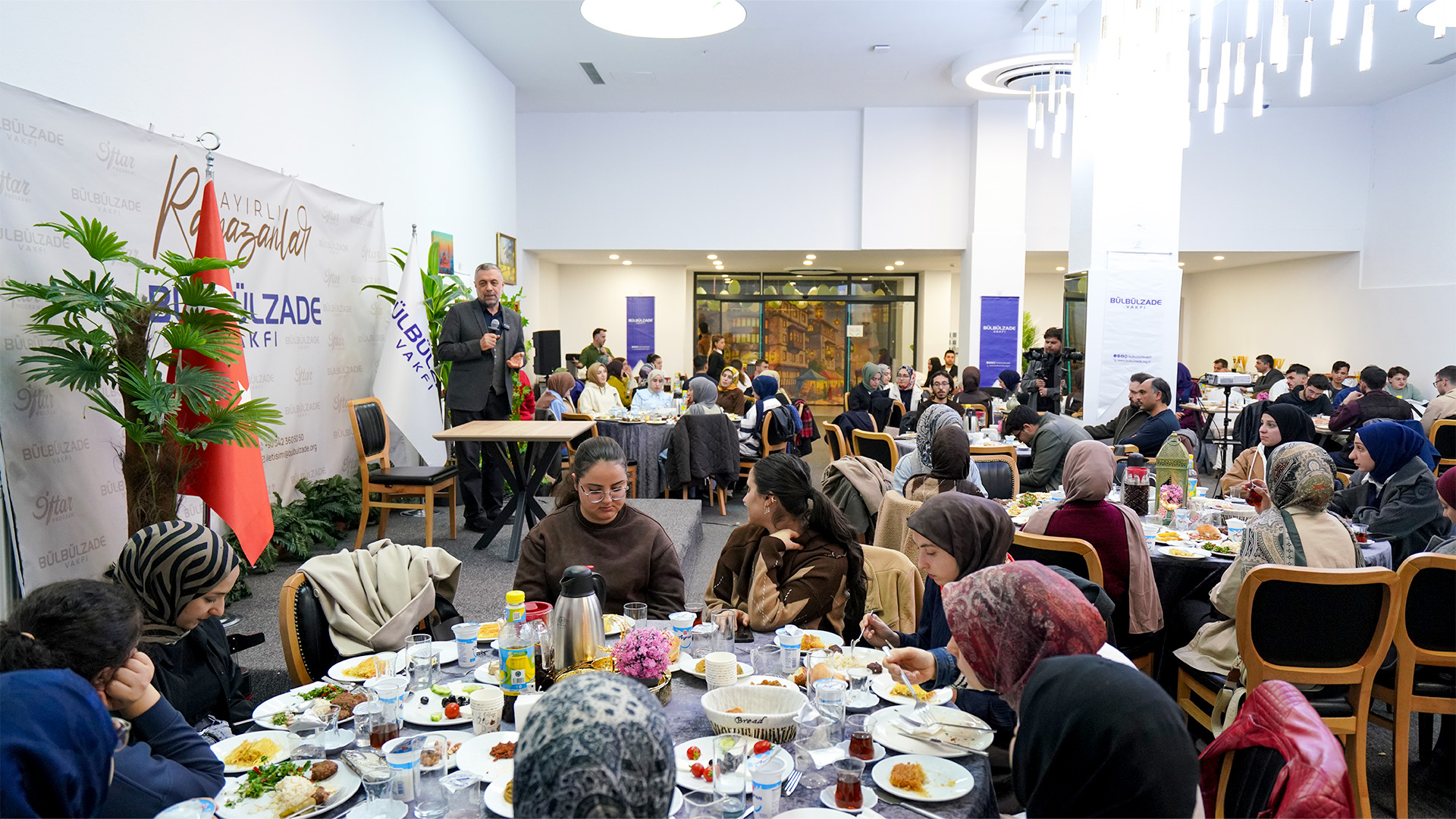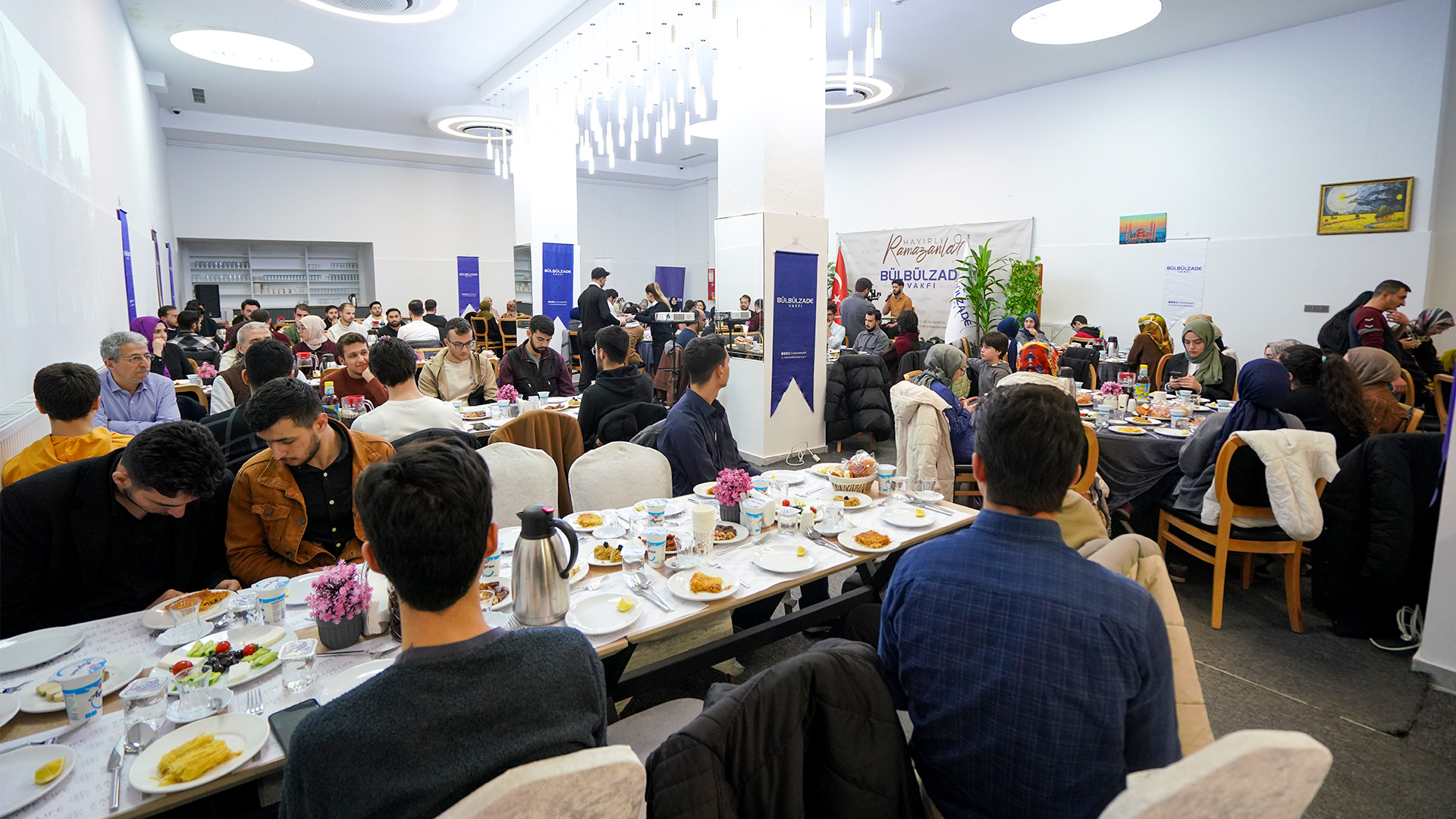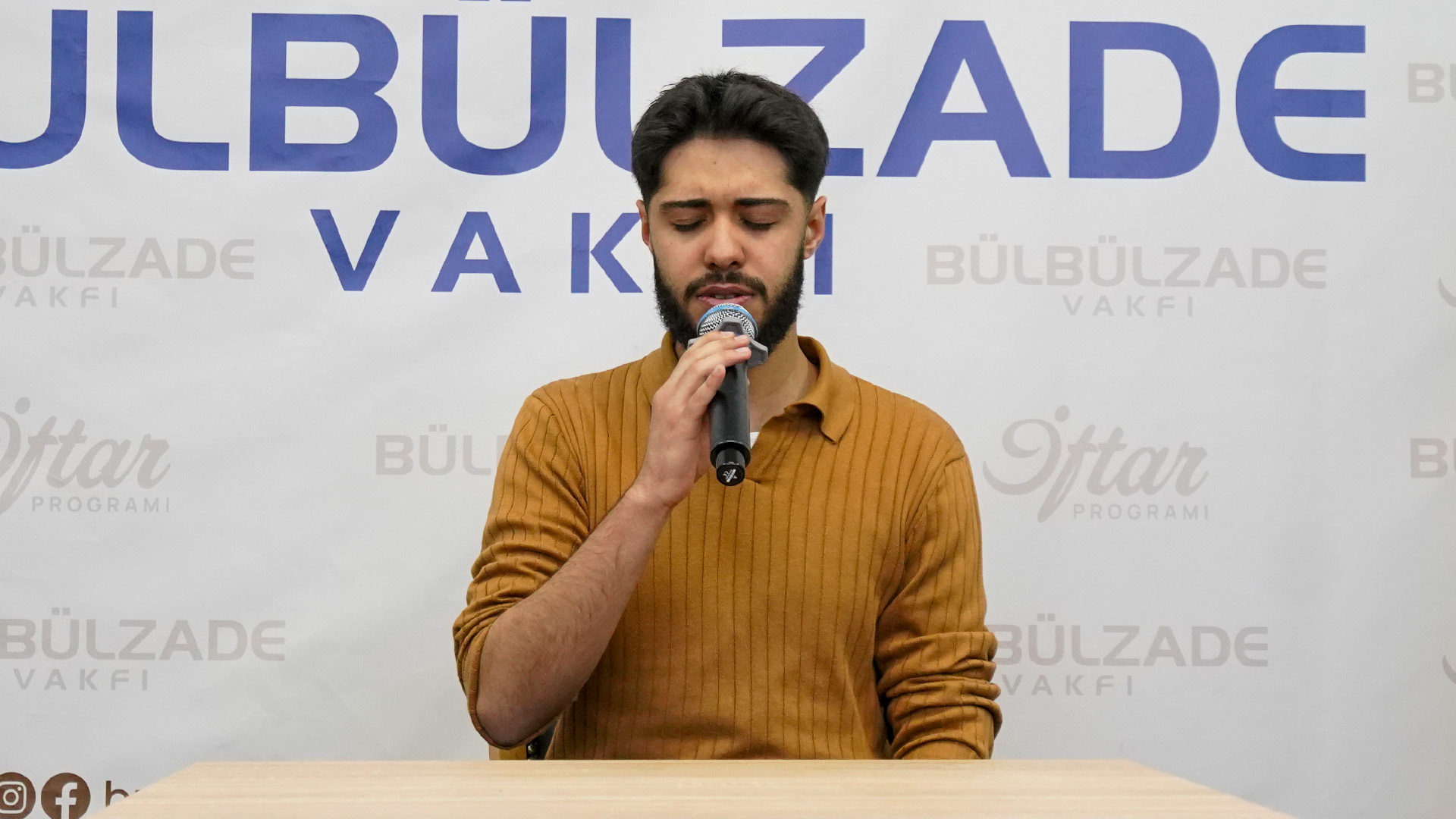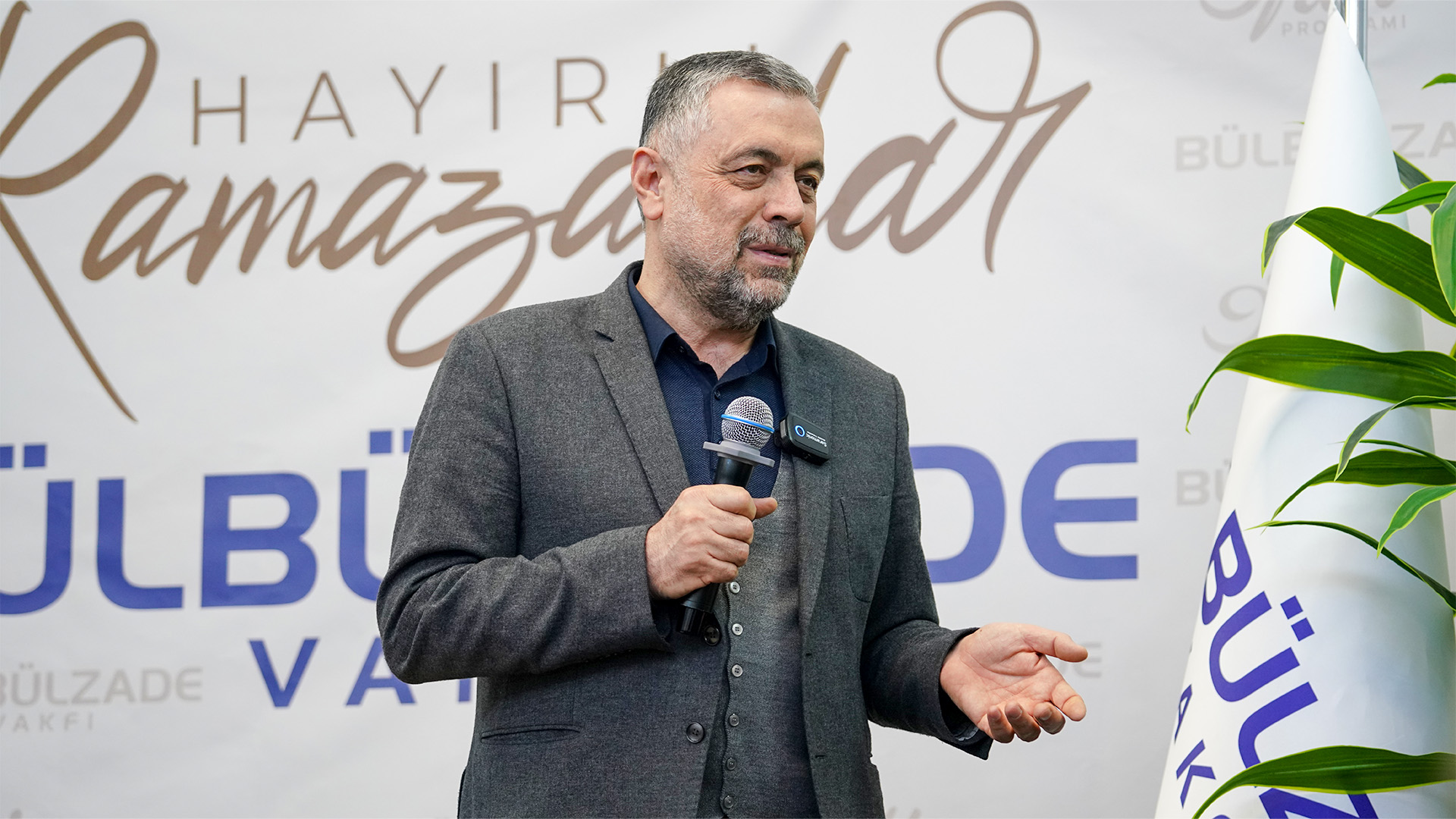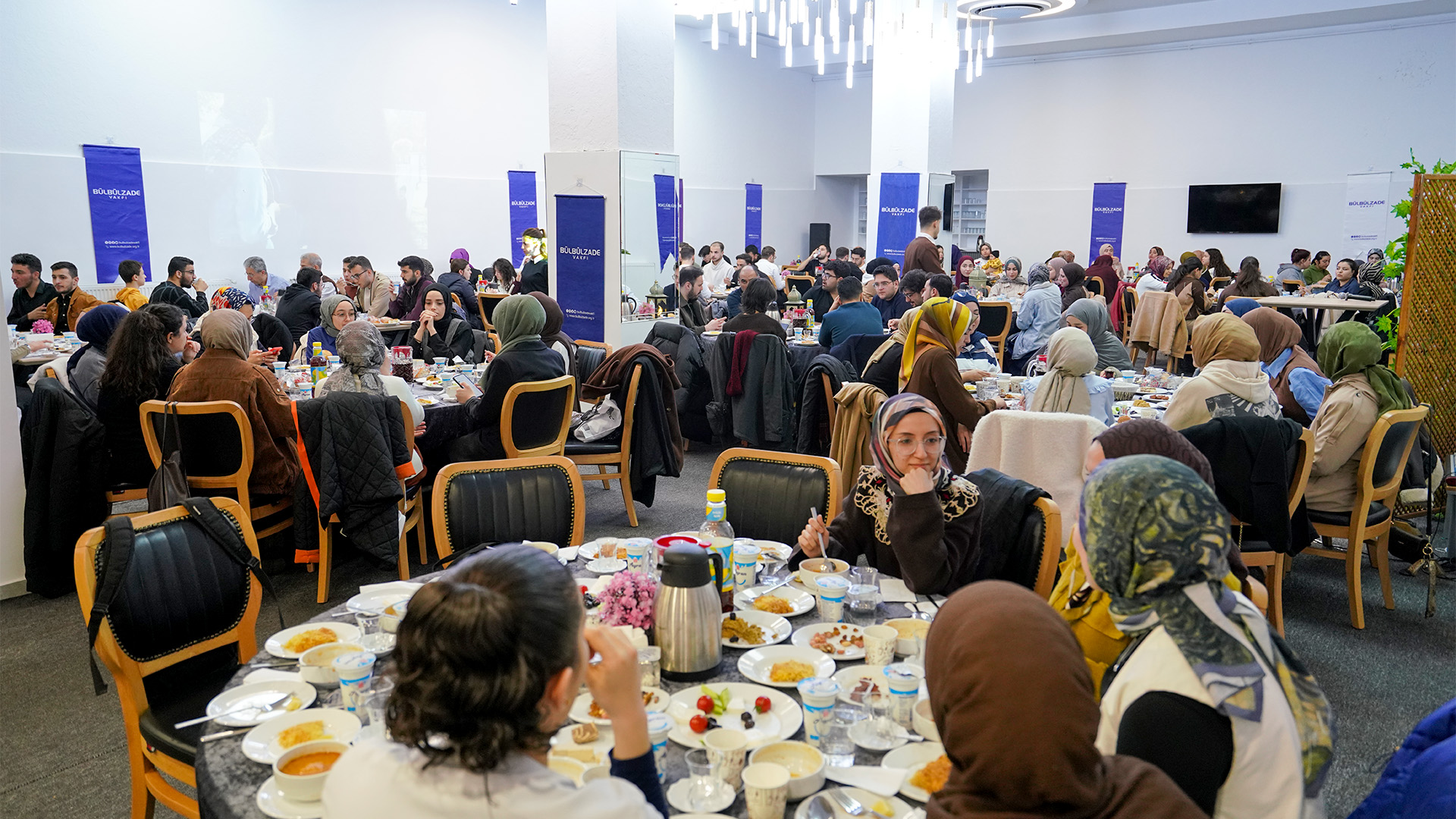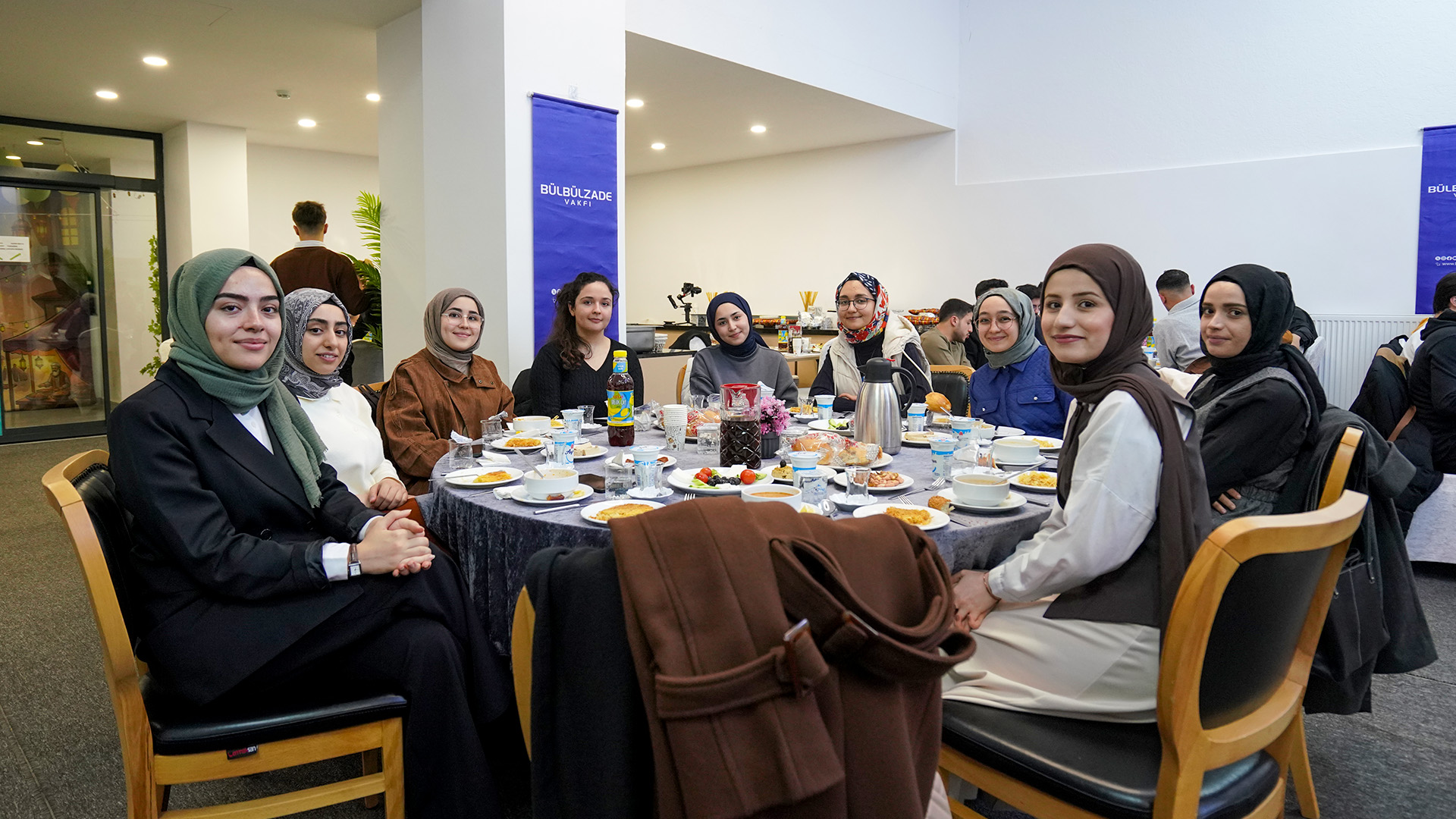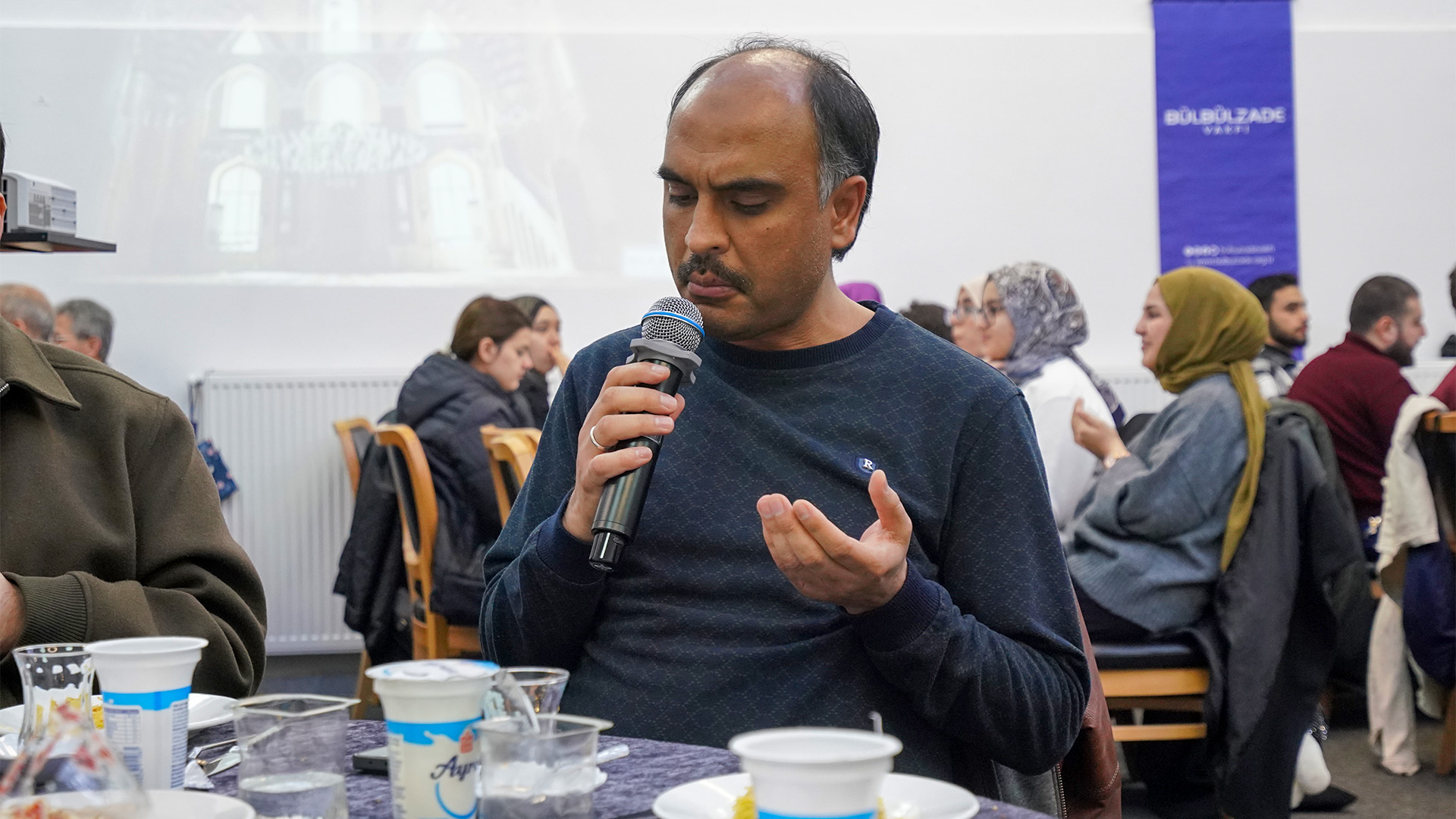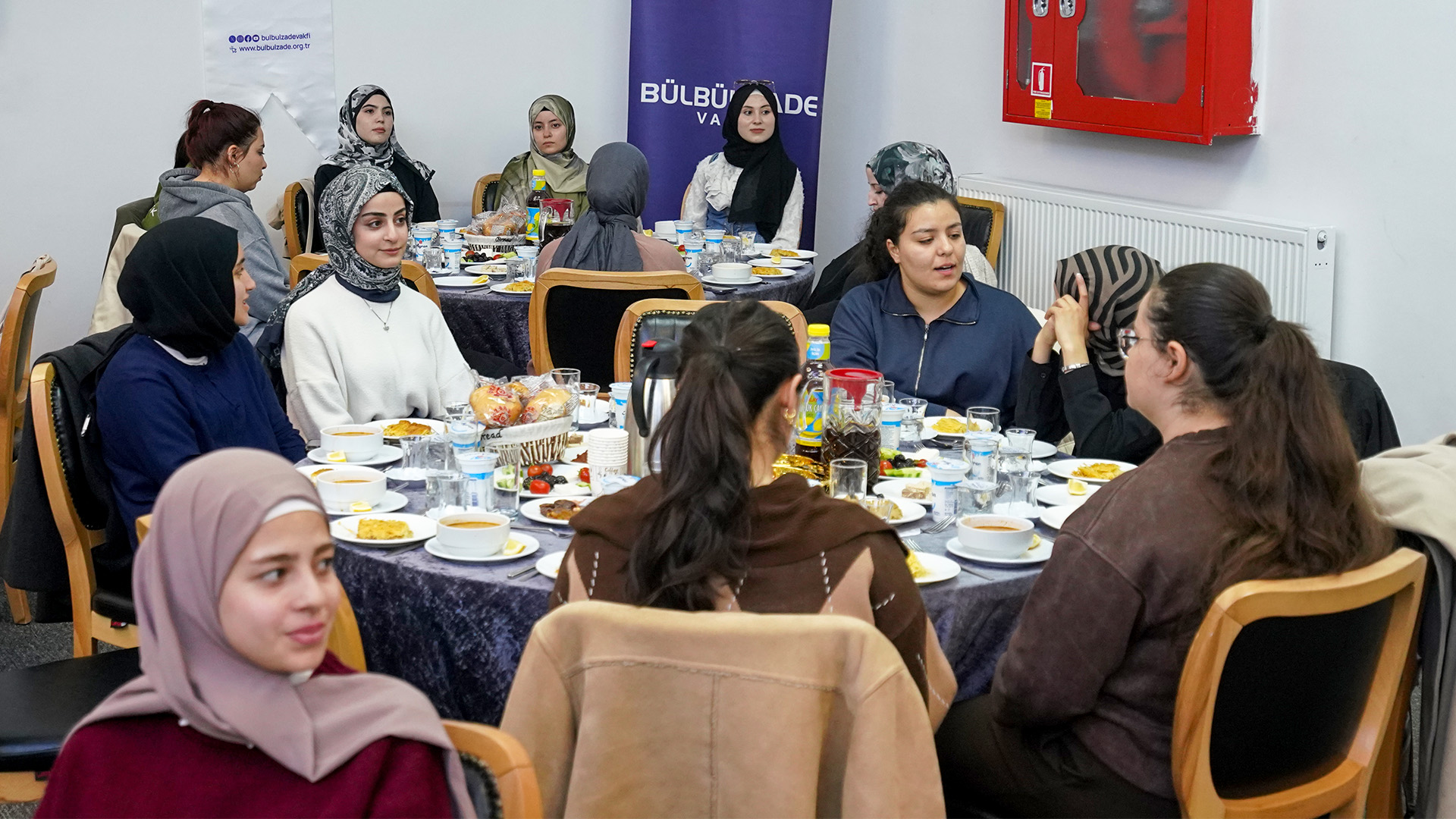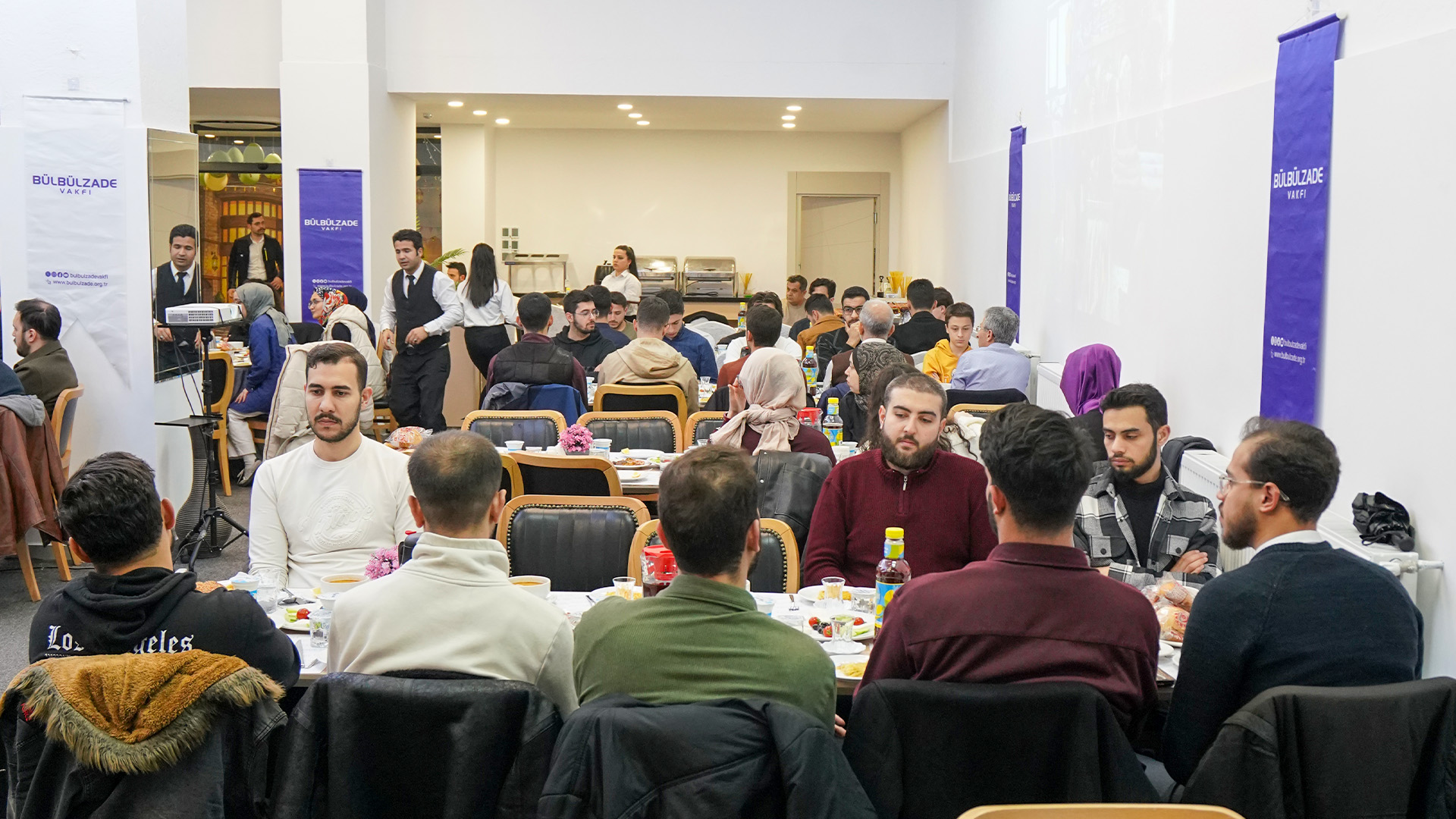
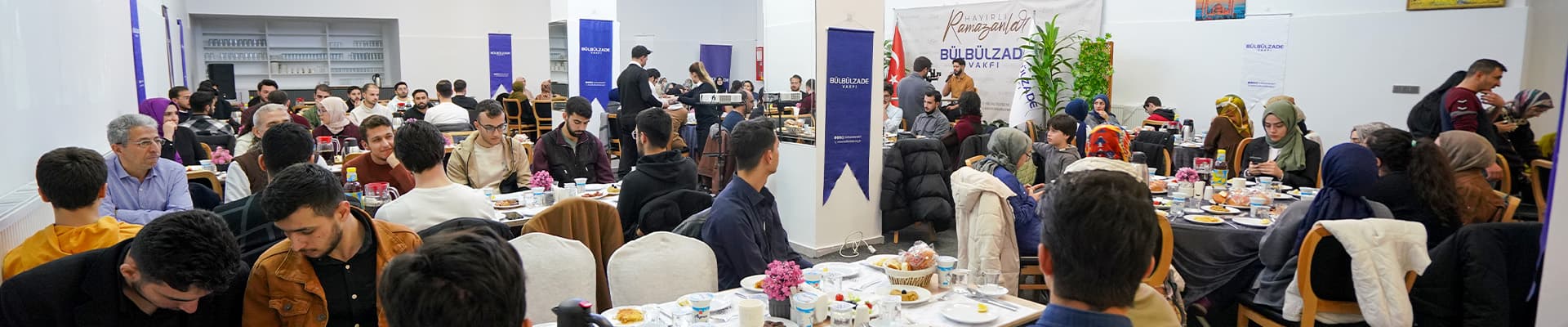
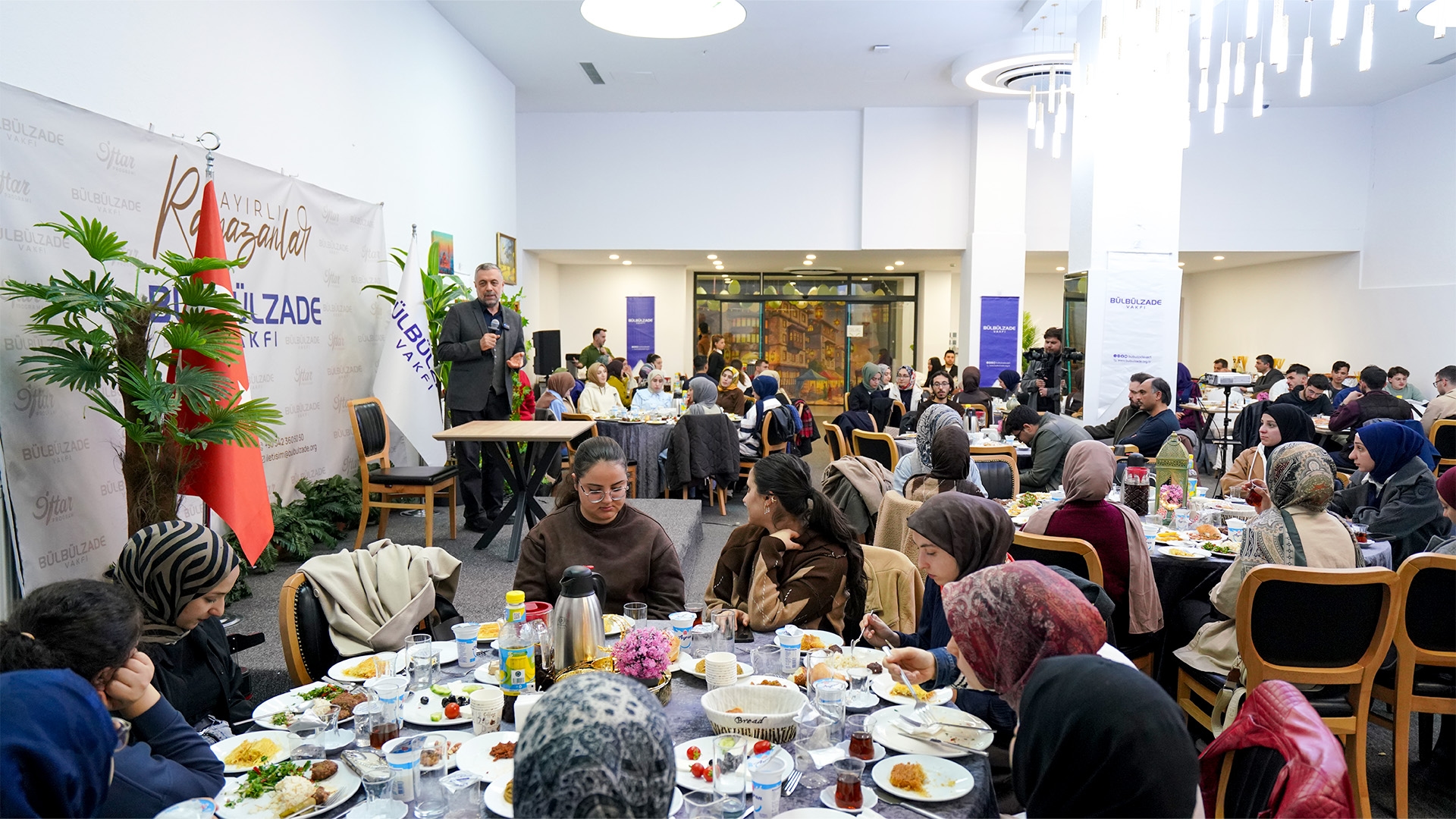
Turgay Aldemir, President of the Bülbülzade Vakfı, met with university students at the traditional iftar gathering organized by the Anadolu Öğrenci Birliği and emphasized that Ramadan is a “pause to slow down and rediscover the essence” in contrast to today’s obsession with speed.
Operating under the umbrella of the Bülbülzade Vakfı with a focus on youth-oriented initiatives, Anadolu Öğrenci Birliği once again held its now traditional iftar gathering this year with strong participation at Zade Life Otel. The program, attended by many students from different universities across the city, combined the spiritual atmosphere of Ramadan with the energy of youth. In his speech after iftar, Turgay Aldemir, President of the Bülbülzade Vakfı, drew attention to Ramadan as a point of “resistance” and “pause” against the relentless speed and digital noise of the modern world.
THOSE WHO KNOW HOW TO PAUSE CATCH THE RHYTHM OF TIME
Referring to today’s rapidly flowing agenda and the intensity of social media, Aldemir cited Prof. Dr. Kemal Sayar’s emphasis on “slowing down,” stating that Ramadan is a break within this pace. He expressed that Ramadan is not only a form of worship but also a time to stop and reflect, saying: “The time of imsak teaches us restraint. We discipline what we reach for with our hands and what we look at with our eyes. Those who know how to pause catch the rhythm of time.”
A PERSON WITHOUT ONTOLOGICAL DEPTH
CANNOT BE TRULY HAPPY OR VIRTUOUS
Addressing human development through three fundamental concepts—physiology, sociology, and ontology—Turgay Aldemir summarized these dimensions as follows: “Our body, the spaces we inhabit, our campus life, and our relationship with the physical world constitute our physiology; the bonds we form with others and our way of existing within social life constitute our sociology; and our consciousness of being—woven with reason, comprehension, and moral principles—which truly makes a human being human, constitutes our ontology.” Aldemir noted that a life lacking ontological depth cannot be completed merely through physical and social activities, and that true happiness and virtue are only possible through the construction of this awareness.
Continuing with examples from his own life, Aldemir described Ramadan as a period of “balance adjustment.” He stated that a soul nourished by the Qur'an, worship, and qualified readings would manage both its sociology (friendships) and its physiology (actions) more properly.