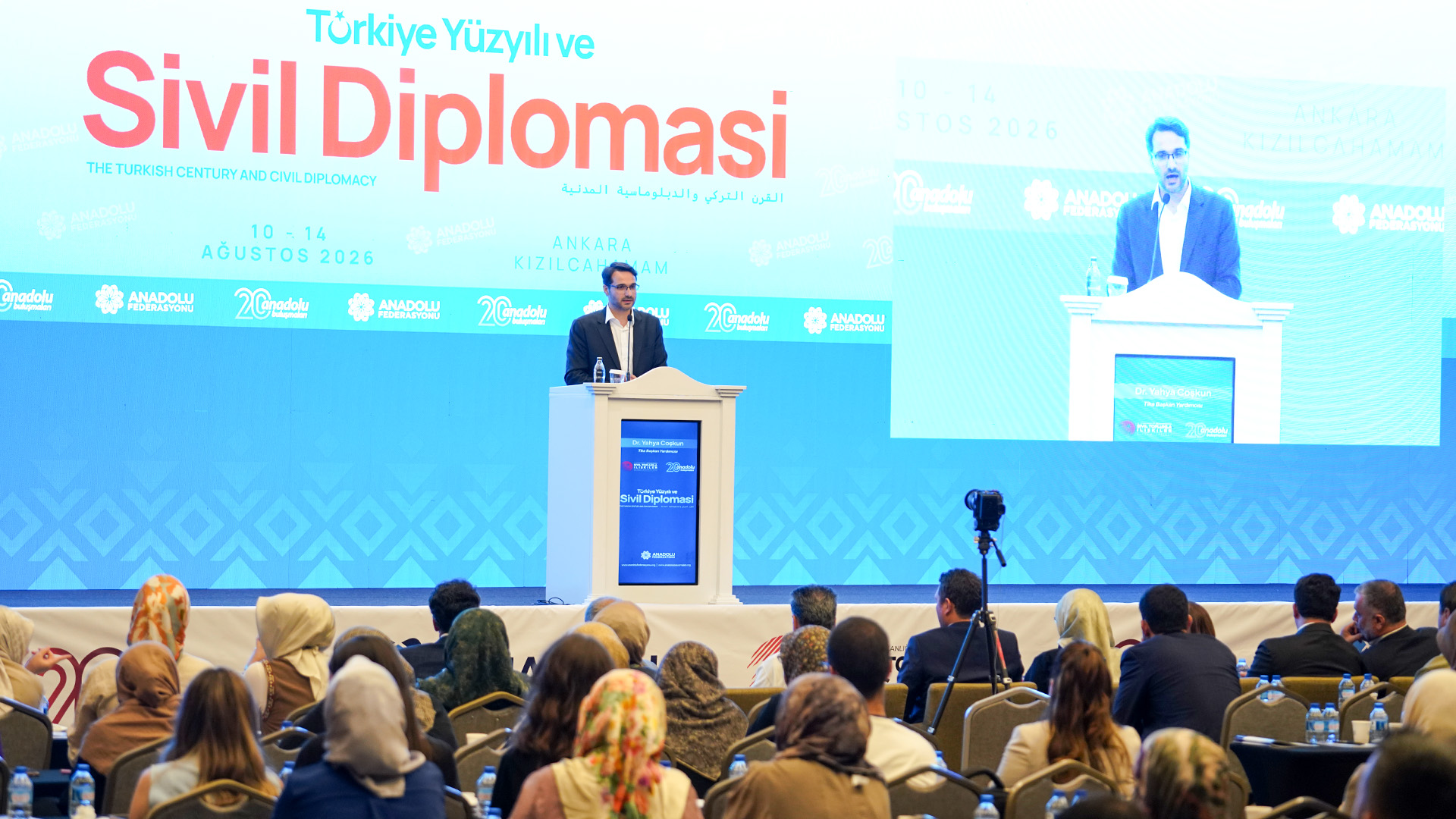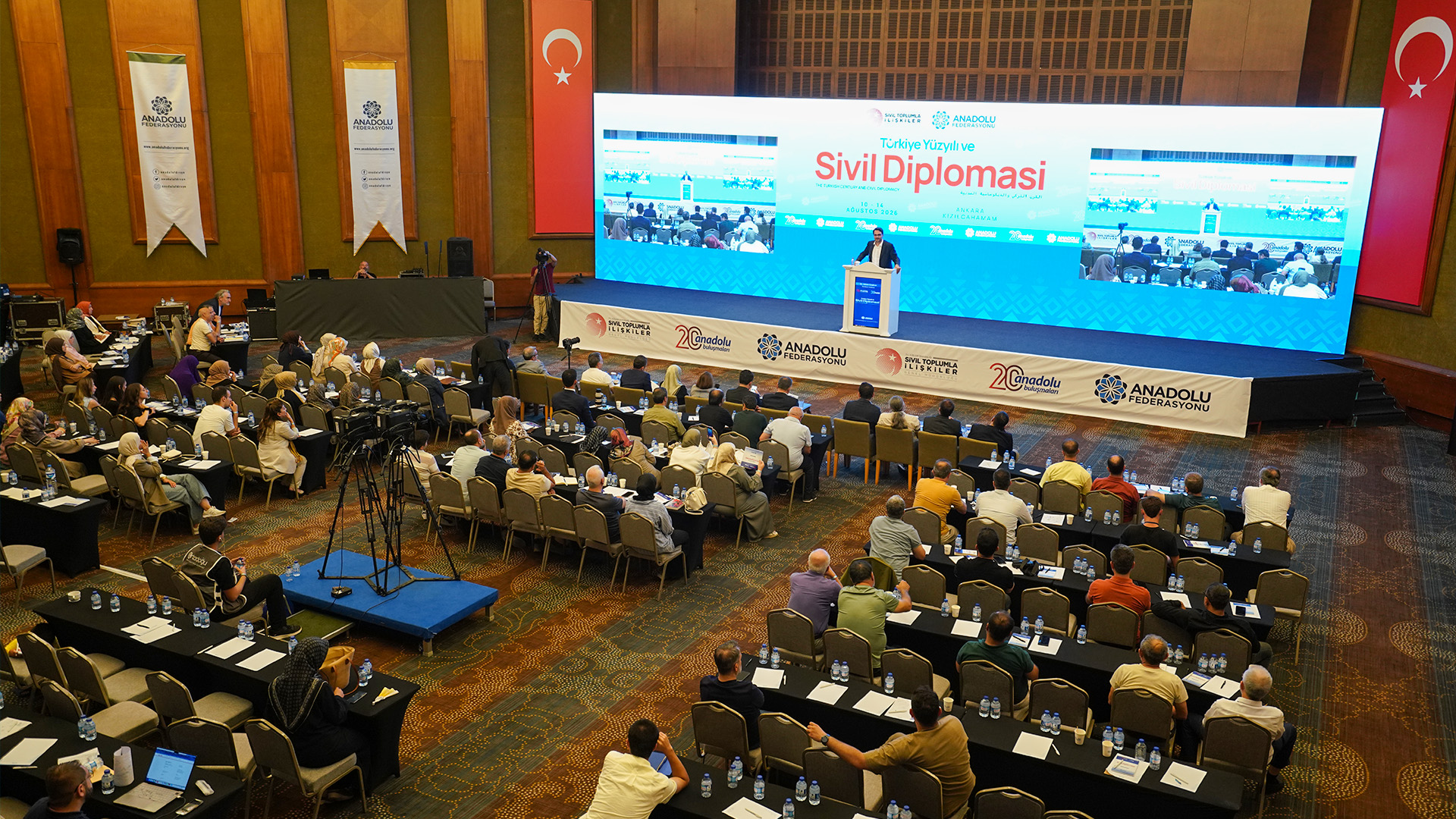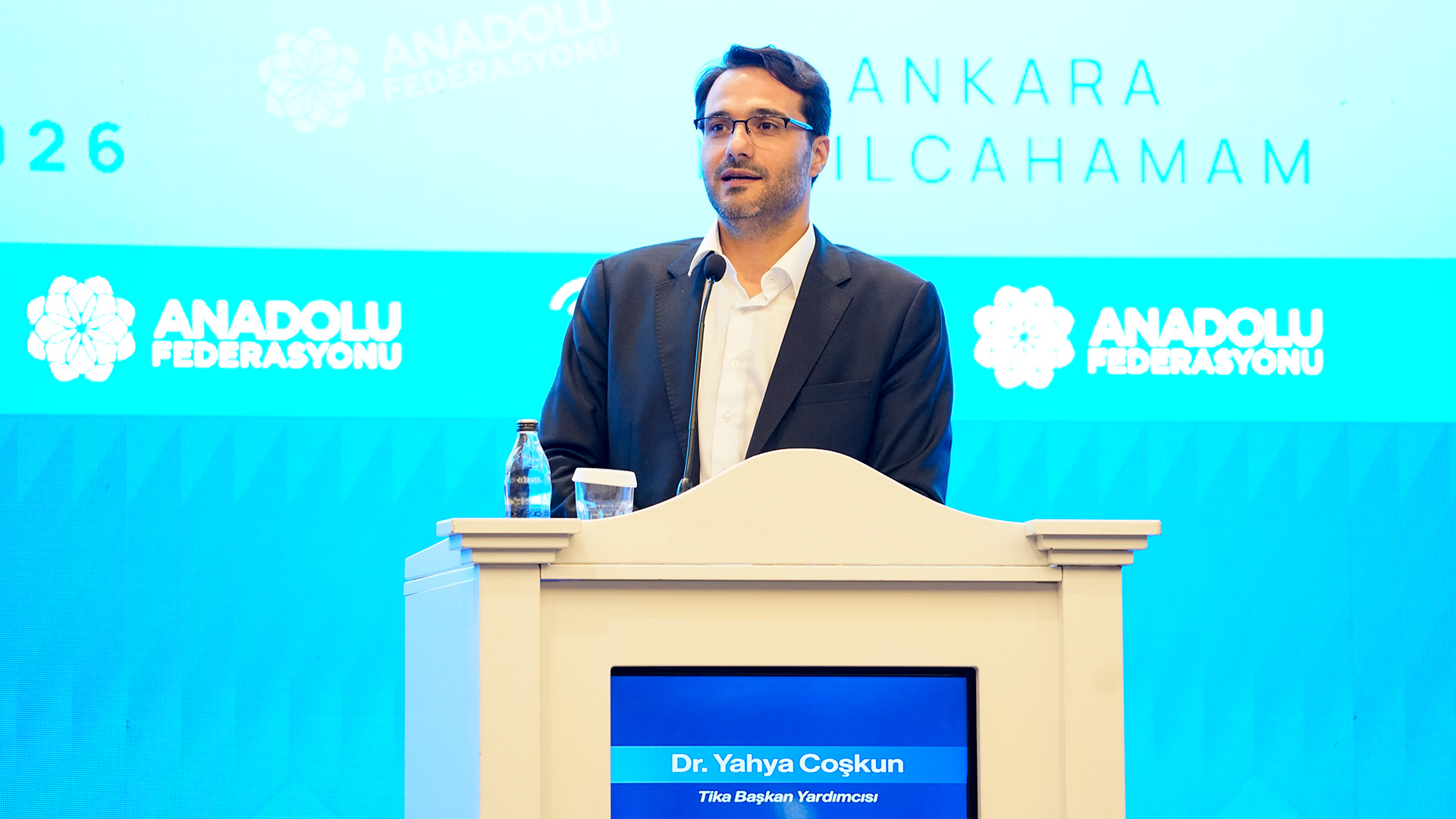
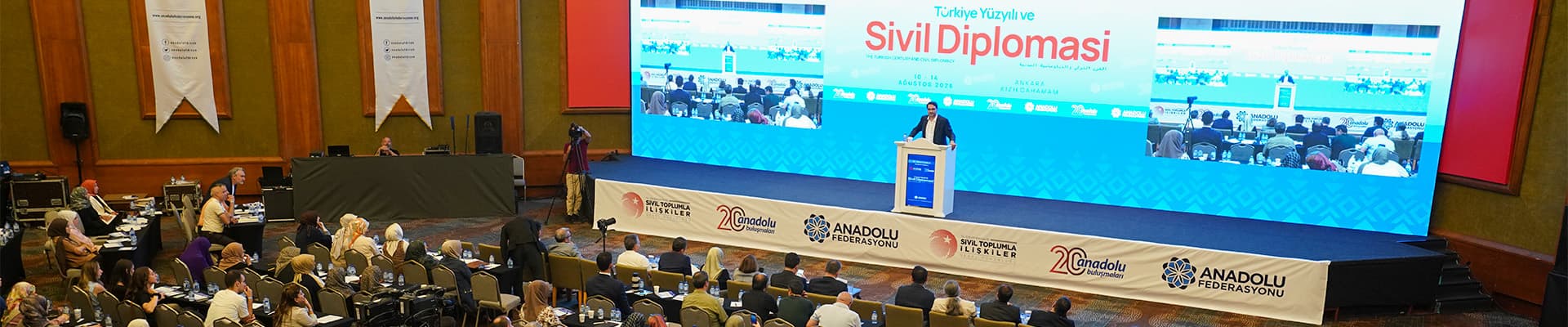
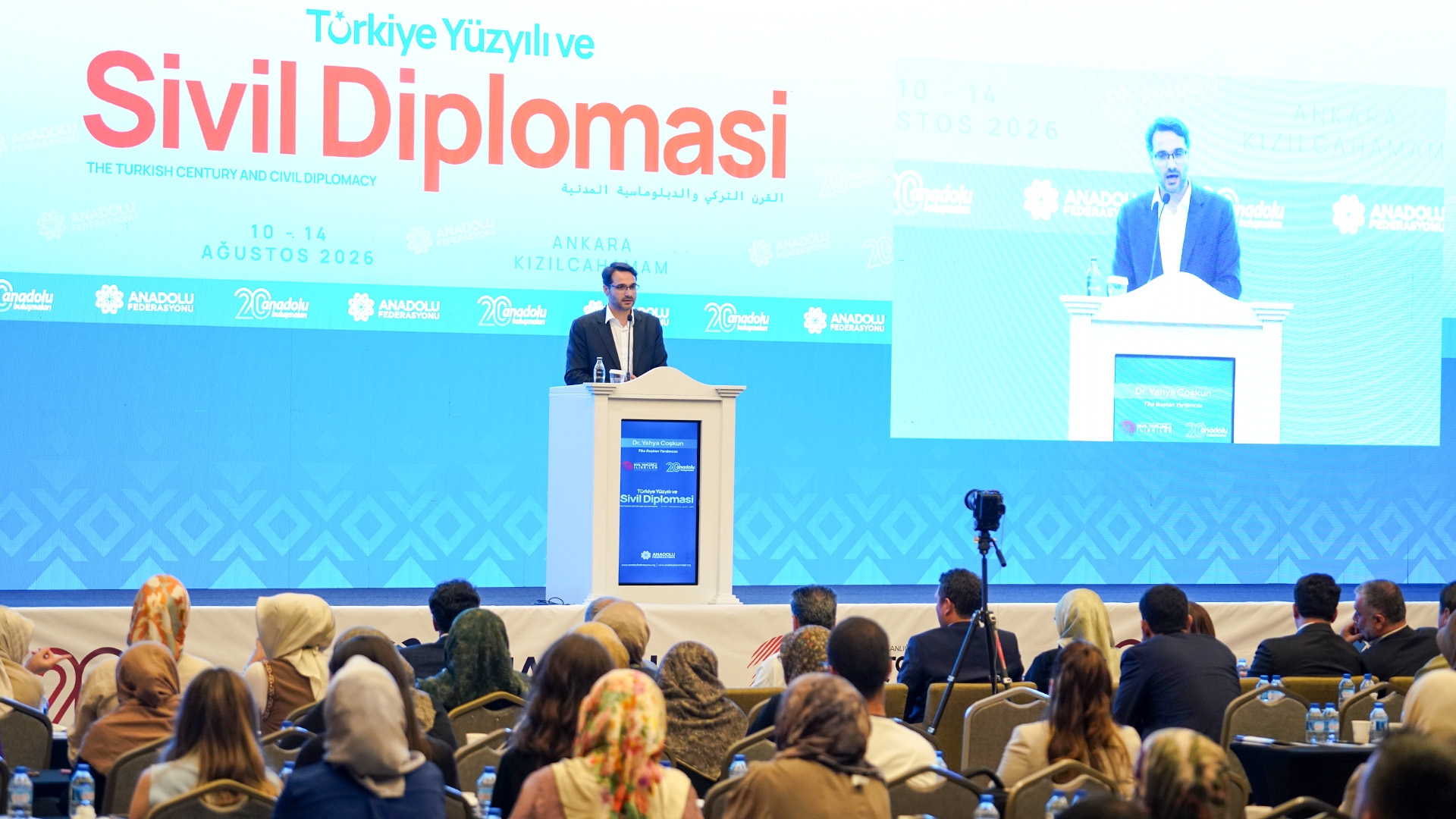
Speaking within the scope of the 20th Anatolian Gatherings, TIKA Deputy President Yahya Coşkun explained Türkiye’s international aid philosophy and its vision of cultural diplomacy.
The 20th Anatolian Gatherings, held in Ankara, hosted a session titled “Sustainable Development and Civil Initiatives.” In his speech at the event, Turkish Cooperation and Coordination Agency (TIKA) Deputy President Yahya Coşkun drew attention to the philosophical differences between the aid approach of Western countries and Türkiye’s compassion- and coordination-oriented approach. Coşkun emphasized that Türkiye carries out development assistance without expecting anything in return.
AIMING FOR A BETTER WORLD
Beginning his remarks by referring to geostrategist Friedrich Ratzel, Coşkun stated that the borders of a country cannot be measured by physical lines. According to Coşkun, the borders of a country are shaped by the territories it reached in the past, the works it left behind, and its cultural ties today. In his speech, Coşkun touched upon the aid sent by the Ottoman Empire to the Sultanate of Aceh and the present-day counterparts of these aids, emphasizing the importance of cultural diplomacy and the geography of hearts. Comparing Türkiye’s development assistance concept with examples from around the world, Coşkun continued: “There is a philosophical difference between the answer given by Western aid organizations and development organizations to the question of why development assistance is provided and the answer we give.” Coşkun stated that Western states use aid as a tool of exploitation and aim to prevent migration, while Türkiye aims to build a sustainable and better world in cooperation with partner countries.
20 PERCENT HUMANITARIAN AID, 80 PERCENT DEVELOPMENT
Sharing data about TIKA’s activities around the world, the Deputy President stated that, contrary to common perception, the institution does not only carry out restoration and humanitarian aid operations. Coşkun said that restoration and humanitarian aid account for only twenty percent of TIKA’s budget, while the remaining eighty percent is allocated to development cooperation. He also stated that TIKA carries out projects in 170 countries through 60 offices. Citing a school project carried out in Syria as an example, Coşkun also explained to the audience how efficiently TIKA uses its resources. He stated that school desks that would cost one hundred dollars were refurbished for twenty-five dollars by working together with local craftsmen and making use of old materials, thus both contributing to the local economy and achieving significant savings.